
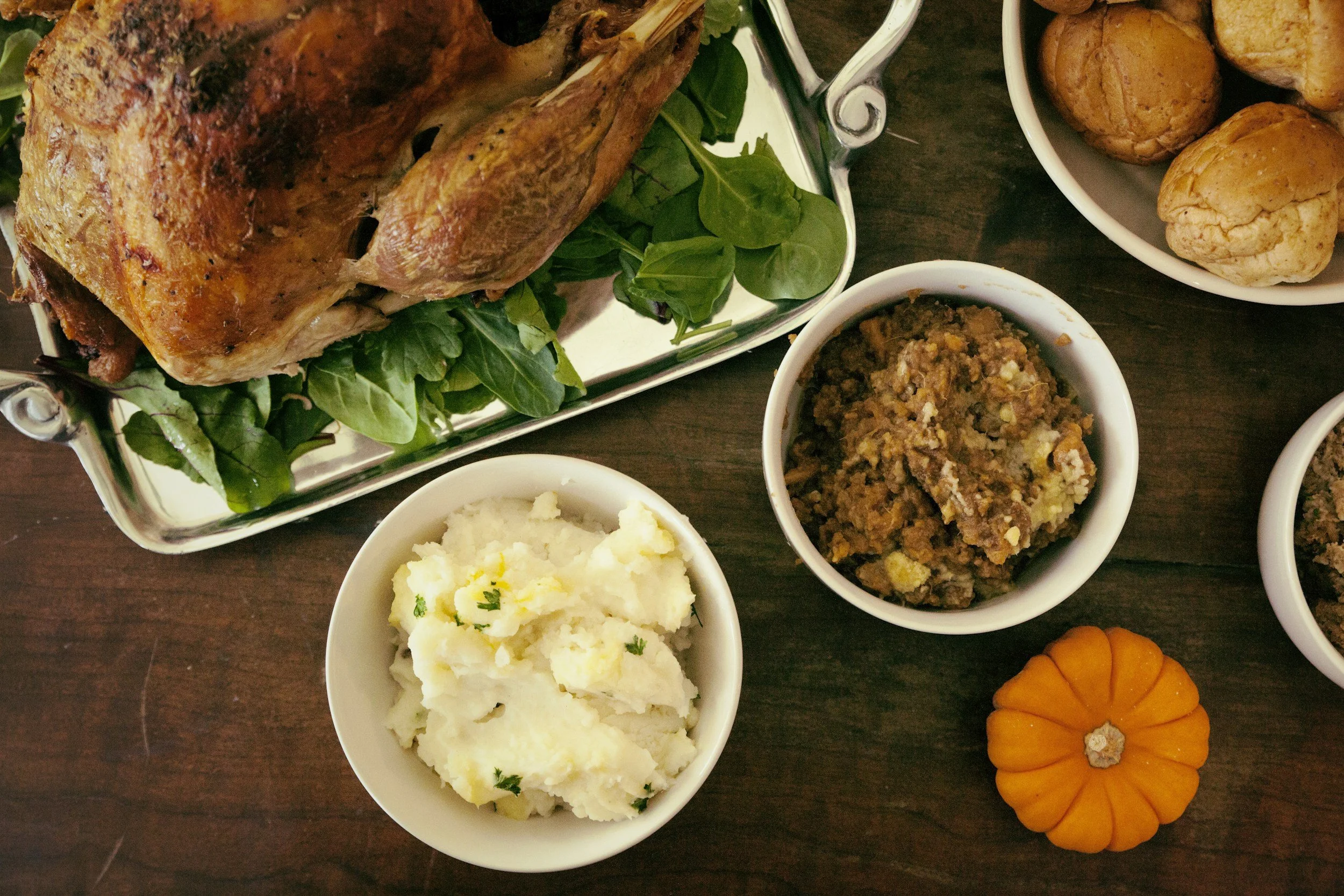
Thanksgiving is one of my favorite holidays because it brings together three things I love: good food, quality time with people I care about, and an opportunity to practice gratitude. But as a Registered Dietitian, I also know that holidays can also bring up complicated feelings about food, body image, and health. Whether you're working on improving your relationship with food, managing a health condition, taking a GLP-1 medication, or navigating eating disorder recovery, I want to remind you that Thanksgiving is just one day, and you deserve to enjoy it… Instead of dreading or regretting it.
Food is sooo much more than fuel for our bodies. It's tradition, culture, connection, celebration, and memories. You don't have to choose between enjoying your favorite holiday foods and taking care of your health. In fact, the two can absolutely coexist! Here are three simple Thanksgiving nutrition tips to help you nourish your body, quiet the food noise, and enjoy the holiday with a little less guilt.
1. Nourish Your Body: Don't Skip Meals to Save Calories
One of the biggest mistakes I see people make around Thanksgiving is skipping breakfast, eating less throughout the day, or "saving calories" for the big meal.
Here's the problem: Restricting food intake is a major contributor to overeating and binge eating. When we arrive at a meal overly hungry, it's much harder to control our appetite, make satisfying food choices, and easier to swing to overly full.
Instead, try these strategies:
Eat normally throughout the day: Enjoy your usual meals and snacks leading up to the Thanksgiving feast.
Build a nourishing plate: Choose your favorite holiday foods and include a variety of foods that provide protein, carbohydrates, fats, and fiber.
Give yourself permission to enjoy your favorites: Yes, that includes mashed potatoes, stuffing, rolls, and pumpkin pie!
Listen to your body: Notice your hunger, fullness, and satisfaction without feeling obligated to eat a certain amount.
If you're taking a GLP-1 medication and it’s your first Thanksgiving, you may notice that your appetite and fullness cues feel different than previous years. Starting with smaller portions, eating slowly, and checking in with your comfort can help prevent uncomfortable fullness or nausea.
And for those in eating disorder recovery, remember that hunger and fullness cues aren't always reliable. Following your established meal plan and maintaining consistent nourishment may be more helpful than relying on hunger alone.
Remember: You don't have to earn your Thanksgiving meal, and you don't have to compensate for enjoying it either.
2. Turn Down the Food Noise and Challenge Food Guilt
Ever notice that annoying little voice in your head around the holidays?
Maybe it sounds something like:
"You shouldn't eat that."
"You've already had too much."
"You don't deserve dessert."
"Go back for seconds, even though you're already stuffed."
"You'll have to work this off tomorrow."
These thoughts are examples of what many people describe as food noise: persistent thoughts about food, eating, and what we think we should or shouldn't do.
Food noise can be especially loud during holidays when food is everywhere, and conversations about dieting, weight, and calories seem unavoidable.
But here's the good news: Just because your brain tells you something doesn't mean it's true!
Here are three strategies to help quiet those thoughts:
Talk back: Challenge the thought with something like, "Stop. That's not true," "Food isn't something I have to earn," or my personal favorite, "Shut up!"
Redirect your attention: Engage in a conversation, play a game, help with a holiday activity, or spend time with someone you enjoy being around.
Take a moment: Step outside for some fresh air, take a few deep breaths, or give yourself a break from the food-centered environment.
It's also okay to set boundaries around conversations about weight and dieting. If someone comments on your plate or starts talking about how many calories they're eating, you have permission to change the subject.
And remember, you can acknowledge a food-related thought without acting on it.
You don't need to eat perfectly to have a healthy relationship with food.
3. Move, Connect, and Enjoy the Moment
Thanksgiving isn't just about what's on your plate. It's about the people around the table, too!
Instead of spending the day worrying about calories, portions, or what you'll eat tomorrow, focus on being present and enjoying the experience — the best that you can.
Here are a few ways to support your physical and mental well-being this Thanksgiving:
Take a walk after your meal: Gentle movement can help support digestion and blood sugar regulation. More importantly, it can simply feel good! Invite a family member to join you and enjoy some fresh air. Personally, my family loves to do this between the meal and dessert!
Practice gratitude: Share something you're thankful for, reflect on the past year, or take a moment to appreciate the people around you.
Check in with your body: Notice how you're feeling physically and emotionally throughout the day. You can honor your fullness while also giving yourself permission to enjoy foods that bring you satisfaction.
Focus on connection: Play games, share stories, watch football, or participate in your favorite family traditions.
Let go of the food rules: Thanksgiving doesn't require a perfect plate, a calorie budget, or an exercise plan.
And if you end up feeling a little too full? That's okay, too! Your human, that’s normal, and use your positive coping skills to deal with any discomfort you may feel. And know the feeling will pass. It always does.
Eating past fullness occasionally is a normal part of life, especially during celebrations. It doesn't mean you've failed or that you need to restrict your food intake the next day.
Movement should also be something you enjoy, not a punishment for what you ate. You don't need to "burn off" your Thanksgiving dinner.
A Special Reminder for Families and Those Navigating Nutrition Challenges
Thanksgiving can look different depending on your individual nutrition needs, and that's okay!
For parents and children: Focus on making holiday meals a positive experience. Encourage children to explore different foods, enjoy family traditions, and listen to their bodies without pressure to clean their plates or avoid certain foods. Try to keep conversations about weight and dieting away from the dinner table.
For individuals taking GLP-1 medications: Enjoy your favorite holiday foods while paying attention to your physical comfort. Smaller portions and a slower eating pace may help you feel your best. You can always save leftovers for another day! My favorite leftover is making a Thanksgiving sandwich or wrap!
For individuals in eating disorder recovery: Holidays may bring additional anxiety around food, portions, and family conversations. Maintain your recovery routines, lean on your support system, and remember that following your meal plan is an important form of self-care. You deserve to participate in holiday traditions without guilt or shame.
Regardless of your health goals, your body deserves nourishment, respect, and care.
One Last Reminder: One Meal Doesn't Define Your Health
If there's one thing I hope you take away from this article, it's this:
One meal doesn't define your health, your progress, or your relationship with food.
You don't need to "get back on track" after Thanksgiving because enjoying a holiday meal doesn't mean you went off track in the first place.
Health is built through consistent habits over time, not through what you eat at one holiday dinner.
So enjoy the stuffing. Have the pie. Spend time with the people you love. And give yourself permission to experience Thanksgiving without food guilt.
Wishing you and your loved ones a wonderful Thanksgiving filled with good food, meaningful connection, and plenty of gratitude!
Happy Thanksgiving!
Maggy Doherty, MS, RD, LD, CEDS-C
Registered Dietitian Nutritionist | Maggy the Dietitian
Looking for Support With Your Nutrition Goals?
Whether you're working toward a healthier relationship with food, navigating eating disorder recovery, managing nutrition while taking a GLP-1 medication, or looking for personalized nutrition guidance for yourself or your family, you don't have to figure it out alone.
At Maggy the Dietitian, we take a compassionate, individualized, weight-inclusive approach to nutrition counseling that focuses on sustainable habits, nourishment, and improving your overall well-being.
Schedule a nutrition counseling appointment today to get personalized support for your health and nutrition goals.