

The Therapy Side of Business Coaching: Burnout, Boundaries & Growing a Practice | Coaching
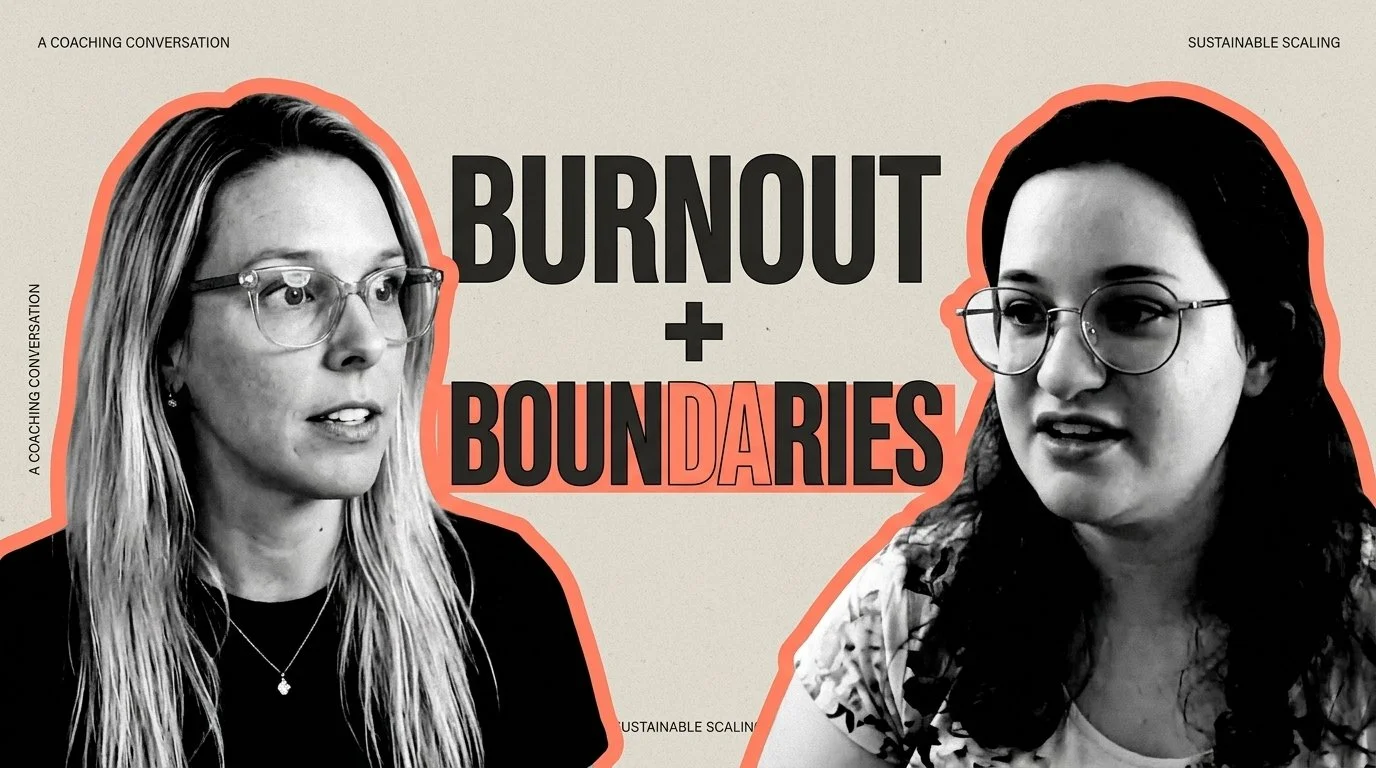
What does the therapy side of business coaching look like?
In this episode, I sit down with Stephanie Haber of Ahava Nutrition for a business coaching conversation that starts with questions about delegating, waitlists, and growing a private practice... but it quickly gets into something much deeper and personal.
Stephanie works with medically complex clients and brings her own experiences with chronic health challenges into the way she relates to the people she serves. After recovering from a stroke last year and experiencing significant seizures just weeks before we recorded this episode, she also knows firsthand what happens when personal life and professional responsibilities collide.
So we start with a question almost every solo practice owner eventually asks, “What do you do when you’re wearing all the hats?”
How do you know when it's time to delegate?
When should you start a waitlist?
When are you actually ready to expand?
And how do you balance your personal life with a business that constantly needs something from you?
But then we get into the questions that don't get talked about nearly enough in business: How do you navigate the emotional side of starting and scaling a business?
When you work with complex clients and genuinely care about them, where does empathy end and overextending yourself begin?
We talk about how a lack of boundaries—with clients and with yourself—can contribute to compassion fatigue, caregiver burnout, and ultimately business owner burnout.
Stephanie puts it perfectlyyy during our conversation: “Where does somebody else end and where do you begin?”
We also tackle another big question: “How do you navigate complex cases?”
We talk about care coordination, boundaries, professional supervision, therapy, and recognizing when your clients' struggles are starting to follow you home. We even discuss creating a ritual at the end of your clinical day to mentally “download” what you've heard and experienced before transitioning back into your personal life.
And then there's money.
What do you do when you feel bad charging people?
How do you reconcile being an empathetic healthcare provider with being a business owner who needs to charge copays, enforce cancellation policies, and actually get paid for your time? Sometimes delegation isn't just about getting time back—it can help you hand off the business tasks that take the greatest emotional toll.
Finally, we talk about the practical side of growth: how dietitians can learn business when we weren't taught it in school, where to find trustworthy resources, and how passive income can help diversify your revenue so your income isn't entirely dependent on seeing another client.
In this episode, we answer questions like:
What do you do when you’re wearing all the hats?
How do you navigate the emotional side of starting and scaling a business?
When is it time to delegate?
When should you start a waitlist?
When and how should you expand your practice?
How can poor boundaries contribute to compassion fatigue and burnout?
How do you navigate complex cases?
What do you do when you feel bad charging clients?
Where do dietitians actually learn how to run a business?
How can passive income create more flexibility and sustainability?
If you're great at taking care of your clients but aren't always as good at taking care of the person running the business, this one's for you.

Listen to “The Therapy Side of Business Coaching: Burnout, Boundaries & Growing a Practice | Coaching”


Episode Transcript
Maggy Doherty: Welcome to the Dietician Business Podcast. I'm Maggie Doherty, your host, dietitian, and business coach. In today's episode, we meet with fellow business coach Jennifer McGurk of Pursuing Private Practice. If you're a dietitian who owns a private practice, you should absolutely know her name. In this episode, we talk about how the state of dietitian private practice has changed over the past couple of years and what the biggest challenges are that dietitians are facing today.
Jennifer McGurk: We're going
Maggy Doherty: So we talk about the big telehealth companies and how that's disrupted and change what we're currently facing, as well as GLP1s, insurance, AI, how private practices have to pivot with their own personal life changes and how we escape and how we fall into burnout. If you're a dietitian who's thinking of going to private practice, if you're in private practice, if you're a solo private practice owner or a group practice owner, you've got to tune into this episode to figure out. What's changing today? Listen up, I think you're really gonna like this.
Jennifer McGurk: Yeah.
Maggy Doherty: Hey Jennifer, welcome.
Jennifer McGurk: Thank you, Maggie. I'm so happy to be on your podcast. I your show on my podcast was so popular. So thank you for having me on your show. I feel like everyone loved you on my show. So I'm excited for this conversation.
Maggy Doherty: You know. Yeah, I'm excited to kind of flip flip sides a little bit.
Jennifer McGurk: Yes. Well.
Maggy Doherty: I feel like you need no introduction. but you know, you are the owner of Pursuing Private Practice, fellow dietitian business coach, fellow podcaster of pursuing private practice, and creator of business school where you've helped thousands of dietitians figure out how to figure out private practice. And I I'm just so excited for you know if you are in private practice, you people have likely heard of you. And if not, like congrats on making it this far in your private practice journey without it.
Jennifer McGurk: But thank you so much. You you and I have very similar careers. So I feel honored to be talking to you because I know you do very similar things. Yeah. As I do. So we're like a great match, Maggie. I love it.
Maggy Doherty: Yes, it's being cool to kind of put our heads together and talk about what's going on in private practice with, you know, the the type of perspective we get from talking to people who are in it and sharing their problems and their barriers and what's holding them back and what's going well and just being able to bird's eye view like this is what's going on in private practice right now.
Jennifer McGurk: Yes, yes. And it's very different now than what it was a few years ago. But I will argue it's always going to be hard. Like people say, it's harder now than what it was a couple of years ago. And like, yes, I do believe that it's different hard, but owning a business, it's not easy. And I feel like, sorry for starting off so negative, but that's the truth. And I feel like people need to hear it because there's so much BS out there that's just you can do it. It's so easy. I did it. You can do it too. And I will always be the business coach that will be authentic. And I know you are too. Like private practice, it's very hard. Now I believe it's completely worth it, but it's not ever easy getting started, growing a business, figuring out how to be a legit business owner. And yet I believe that that journey is so worth it. And it's just like anything in life, like hard work is the shortcut.
Maggy Doherty: Yeah. Yeah. And things changed so much. I mean, I just think about my own journey where I've started two private practices, one in twenty nineteen, one in twenty twenty four. Twenty nineteen, I was twenty six, seven, eight, just had a bundle of energy, was excited, didn't have a kid. There was no big telehealth companies. There weren't eating disorder dietitians accepting insurance in my area. And it just like took off. And then fast forward, you know, what is that six years later and like whole nother landscape and starting a private mom. It's harder.
Jennifer McGurk: This is a mom. It's yes. Yes, mom. Yes. You have as a parent, and I totally get it because I have three children of my own. It your time is much more limited. I think back to when I didn't have kids, I would get up, I would work on my business, I would take a break for lunch and yoga. And then I would get back to work and I would see a couple of clients and then I would work on a project until maybe. six or seven o'clock when I would come home. And I just think back to that schedule now. Like there's no way I would ever be able to do that unless I was literally on a business trip, like a business mastermind with my friends. Because I have three humans and a whole entire household yeah to care for now, which is a full time plus job. So I totally get that. Yeah.
Maggy Doherty: Before we get into how dietician private practice is evolving right now and like what that looks like, I want to kind of hear a little bit of your journey from when you first started your private practice to where it turned into business coaching, to where it turned into business school and kind of how it's evolved with your life and with the changes that have happened over the years with private practice and what people are wanting your help for.
Jennifer McGurk: Yes, no, I love that. So I started way back in 2011. So crazy. So I opened up my business. I was a solopreneur, wasn't married. I was so excited to just get out of my community and start. I didn't know anybody. So I really did build a business from the ground up. Like my fiance at the time, now my husband had just moved up here. We live in Rockland County, New York. And I didn't know anybody. So started my business. Built my connections, networked, found people that I really loved working with. And again, at the time, there were no telehealth companies. There was not a lot of quote unquote competition. But it was so great at that time because not only did I expand my business, I expanded my own personal network. Like I made friends up here, like I was new to the area. So I didn't really know a whole lot of people. And now looking back, I'm like, that's so crazy. Cause now, especially with three kids, I feel like I know. So many people in my area. Yeah. But I grow, I grew very slowly. I ended up hiring an associate when I got married and got pregnant to go on maternity leave. I did that all wrong. I know you talk about the mistakes of hiring too. Yeah. But I learned my lessons the hard way. but but what happened was I just naturally came back from maternity leave to a lower caseload. And I was feeling the urge to do something a little bit more. Creative. I still love the counseling aspect and I still do to this day with nutrition, but I really love the business side of private practice. So I decided I'm gonna write a short guide booklet on private practice for other dietitians because I had people at the time asking me questions, wanting my advice. It wasn't any type of official business coaching at that time, but ended up writing a short booklet. Which turned in like long story short, turned into a course. That was back in 2017, 18 when courses were like all the rage. That it turned into an accidental like group coaching program because I started to add some calls, turned into a membership. And now I have pivoted business school into my own private practice. It's small, it's a combination between like a mastermind with a group.
Maggy Doherty: Yeah.
Jennifer McGurk: And one to one coaching, which is what I love too. So it really is a whole program on how to build your private practice. So as I was growing that, and again, I'm giving you the very short version, but as I was growing that part of the business, I was also hiring from my private practice, having babies. It just got to be way too much that probably about 2022, I decided once my associates leave and go off on their own, because That happens in group practice. Like it's not a question of if, it's a question of when. So when my associates leave, go off on their own. I'm not gonna hire anybody else. I'm gonna shut down that part of my business. So that happened in 2022, happened in 2023. So at the time that PPP was growing, my nutrition counseling practice was kind of shrinking. Uh-huh. And I did want to sell it. And I will be very honest with that. It didn't happen. So like one of my goals is to help one of my own clients eventually sell their business. I think that would be really cool because I always wanted to do it. But it was a natural progression of just having one business kind of get too big almost that I couldn't continue on doing both, especially as a mom of three.
Maggy Doherty: Mm-hmm. Mm-hmm. Yeah. And so now that your kind of whole focus is on the business coaching and pursuing private practice, how has how has your business school evolved over the past even just like year or two?
Jennifer McGurk: Yeah. So it used to be a couple of years ago, it used to be a membership model. Again, I've kind of always made business school what has been popular and trending and like what dieticians want. So at the time when I first started, people really wanted a course. It kind of turned into an accidental group program. And remember when group programs were all the rage in 2018, 2019, 2020. Then it became a membership because memberships were really popular. And now I feel like people really want one to one. I don't know if you've noticed that too, but people want
Maggy Doherty: that a ton over the past year.
Jennifer McGurk: Yes, yes. So people want that individual attention. They want the coaching. They want that aspect of learning about private practice. So I tried to kind of figure that out along the way over the past year. And I'm just like, this is what I'm doing now. I don't know if eventually it's gonna change, but I just have my calendar open, yeah, usually one to two days every single week. And it's a couple hours, and people just book their time. So it's part of business school where you join business school, you get the curriculum, you get the group coaching aspect. And then people just get on my calendar, either 15 minutes or 30 minutes. If someone needs more, it's fine. You can book. Yeah. It's just that aspect of me saying, Hey, this is project review for anyone that really needs that one-on-one time. And it's been going so well. So people have been getting really great results. Like I love coaching, but it's also And I say this because it's really important for dietitians to hear this. It's also within my boundaries. I'm not seeing people late at night when I need to be with my kids. I'm not overbooking myself seven calls a day. Like I have boundaries around that. So it's like a give and take of you're gonna get the best version of me when I'm taking care of myself. So that's how I run the one on one part of my practice.
Maggy Doherty: Yeah. Yeah, you gotta practice what you preach. But that's so interesting. You've noticed that one on one thing. Cause even I mean, the business coaching side of my business really, you know, I guess kind of took off in twenty twenty-four. And like even over the past, I guess that's only a year and a half, it's like was doing like a group coaching curriculum based thing with a lot of group practice optional to do one on ones. And over the last year and a half, like that's kind of like
Jennifer McGurk: Mm-hmm. Yes.
Maggy Doherty: phased out and like more and more people like I just want and I do one hour one on one since I kinda but it's interesting where a lot of people evolved and it's been harder to get groups up and running 'cause more people are just wanting one on one attention. Yeah.
Jennifer McGurk: Bottom line. No, definitely. But I do think that the one-on-one for me, it's best when I have seen a project or I've reviewed something and people can come and ask questions and process. And I also know their businesses so intimately because like part of the program is emailing me back and like, what are you working on? And showing me kind of like quote unquote homework in a way, like business school homework. and then knowing them too, every single Monday we have office hours. So, like knowing them in the group too. So it it's been a journey. I I don't know, and I'm just honest with everybody, like I don't know what six months from now it's gonna look like. But I don't have any plans to change anything anytime soon. It's just I always try to follow what the market wants, what works for my boundaries, and like how to get people the best results.
Maggy Doherty: Mm-hmm. Yeah. So taking, you know, let's kind of take that and run with it. So you have inside perspective into a variety of different businesses, whether it's solo practitioners, group practice owners, and I do as well. So we're really kind of seeing at the front lines what challenges people are facing. So as you think back to these conversations that you've been having recently with your dietitian business owners. What's the current landscape of private practice look like right now? What are the biggest challenges and pain points that you're seeing business owners face? And, you know, what's what's next for private practice? What are you seeing?
Jennifer McGurk: Yeah. So my answer today is very different than what it was even two years ago with these telehealth companies. We will see if the telehealth companies like take over the private practice industry. So I like to follow different industries that have been here before. I always kind of say the physician industry, the therapist industry, like the telehealth. Companies have been in their industries, like not our specific dietitian telehealth companies, but like their version of telehealth companies have been in their industry for a very long time. And you've kind of seen it take over a lot of their industries. So we will see if the same thing happens with dietetics or not. And with that comes pros and cons, right? Like who would have thought in the 90s, shopping malls. Would have been a thing of the past. Right? Think about it. It's like, it's and who would have thought in the 90s that we would all be carrying an iPhone someday? So you kind of have to figure out, okay, the times are changing, the market is changing. How do I adapt as a business owner, knowing that the market is different now than what it was a couple of years ago? So I think the biggest. hurdle of the telehealth companies is not necessarily in the solo world, it's more in the group practice world. It is very, it's harder for for group practice owners to hire really great clinicians, telehealth, when those clinicians have the option to either go work for themselves or to go work for one of the telehealth companies. I think you have to have a really strong brand, really strong leadership, provide a ton of great supervision to attract really amazing clinicians for your practice. I also think though in the solo world, the telehealth companies, like if you want to start just seeing clients, and we know, Maggie, being a business owner is a much more than just being a really great counselor. But a lot of dietitians just want to be a really great counselor and want to like see clients, right? They don't necessarily want to be a business owner, but they're in private practice because they want to do the job that they want to do. I know you've coached a lot of people like that, as have I, right? Like I don't want to be a business owner, but I want to be a private practice owner because I want to do the work that I want to do with these clients. Yeah. It's very easy to get a high paying hourly job at one of the telehealth companies. So that also affects how easy it is to just start doing work that you love. You don't necessarily have to have a private practice to do that with the telehealth company option. Yeah. And they do pay really well. Like we can't argue against that. They pay a lot. higher of an hourly rate than some of the other jobs out there for clinicians too.
Maggy Doherty: Yeah. Yeah. I've noticed that same thing with group practice owners where it's in the past year so much harder to secure talent and compete with it. And, you know, I've I've had a lot of group practice owners where they are interviewing dietitians and it's down to their small group practice or Faye Nourish Berry Street telehealth company and they're having to up their rate to meet it and kind of match. ATO and kind of come up with this competitive thing that they may not financially be able to support because their reimbursement rates aren't as high as the telehealth companies and they're losing people to the telehealth companies 'cause they're able to fill their schedules faster and better and more.
Jennifer McGurk: Yeah. So it is it's a pain point, I think, for providers. I also think that the other pain point is dietitians needing to understand marketing. Like a client hearing, this dietitian can help me with food, does not understand the value that you provide as a dietitian. I think dietitians sometimes, I don't think everybody, but like some of us expect that just Clients should know that they would want to work with a dietitian on their nutrition and health. Like we know that as dieticians, we know that we're the experts in food and nutrition and body image and eating disorders and diabetes and all the things that we do. But we need to make sure that we are promoting our services. Like we need to make sure that we're talking about the value that we provide. We need to make sure that we're getting out there and we are quote unquote competing with. The health coaches, the programs, the GLP one companies, like all the other things that are out there. That is, I think, a pain point for a lot of people. Like we have to do a lot of work in marketing in order to show off our skills. And again, most of us didn't go to school for business. Most of us didn't go to business school. So we know what we are doing with clients, but we need to be able to actively talk about that in marketing.
Maggy Doherty: Yeah. And you bring up another good point and pain point and competitor that's happening right now is GLP ones.
Jennifer McGurk: Yes. Yes. Yes. I think it's very different sometimes though for the dietitians that see disordered eating. I mean, I think these medications are definitely helpful in a lot of different scenarios. And I'm like so thankful that they're on the market. But at the same time, and again, it's like this nuanced thing, it is creating even more disordered eating among people.
Maggy Doherty: Than competing with us.
Jennifer McGurk: Not on the medications because they're seeing it all over the place and on the medications as well, like having a lot of side effects. Yeah. So it is, I mean, every like I don't understand why everybody that is on a GLP one medication, like every single client that is on a GLP one medication should automatically be seeing a dietitian. Like it's a medication that affects every part of your digestive health. And so many different things are happening in your body when you take the medication. Like you need a dietitian. So I do think hopefully we can change that message. Out there instead of us competing with the GLP one medications, I would like to see us say, Hey, if you're on a GLP one medication, come to me for an appointment. Like, I would love to see you. Like, let's talk about the side effects. Let's talk about how you're eating. Let's talk about what's going on, like how your body is changing. Like, and again, I am a weight inclusive dietitian. So I hate the marketing of these GLP one medications. Like it's this magic, whatever that can change your life. And it's like, well, we all know. That's not true. Yeah. But I really do think that if it does change your body, people are going to have thoughts and feelings around it and it's worth seeing a dietitian to explore that.
Maggy Doherty: So what's a marketing tip that you may have recently given for a dietitian who maybe they're weight inclusive, maybe they're not, but they're trying to support someone on a GLP one or make it known that a dietitian is part of that product? How would you recommend that dietitian to market with or alongside?
Jennifer McGurk: Yeah. And before I say that, I just want to say if you don't want to see clients on GLP1 medications, like you also too have a right to that because some dietitians are very much like I don't even want to see anyone on it, which I can understand. Like that's autonomy. Yeah. But I would write I if you're doing any marketing, and again, I love repurposing. So if you're doing any marketing, like write a blog, use it as a social media post, talk about it on some sort of interview, whether it's a podcast or just a video that you put on your website or Instagram or whatever it might be, talk about like what do you think about GLP1 medications? What are your thoughts and feelings? Like what are five things that you want your clients to know? write an email, you know, things to really get your view out there. And then the right clients for you will hopefully find that. They'll be in your network and they'll be in your reach. And maybe you get one or two appointments from that. Yeah. So there you go.
Maggy Doherty: I love repurposing like five birds, one stone. It's like social media newsletter podcast and
Jennifer McGurk: Well. Yes, repurposing is the best way to save time and energy, obviously. Cause w a lot of times we think, my gosh, how am I going to do these five things? When in reality it doesn't take that long, especially with some of the tools that we have today. It you just need to have the idea and work with the content that's in your brain. And then the tools can help you repurpose too. Yeah. For sure.
Maggy Doherty: So we've talked about telehealth, we talked about GLP one. What are some of the other biggest changes and challenges happening right now?
Jennifer McGurk: what do you think about insurance? We could have a whole we could have a whole podcast episode on insurance, the pros and the cons. Yeah. I think I mean the way that I see it, and I wrote about this in the blog, State of Private Practice, like taking insurance is becoming much more the norm for a lot of dietitians. So knowing The pros and the cons of insurance is something that I feel like you have to just be aware of in private practice. You don't have to take insurance. And I actually have some thoughts around that too, but you have to understand the pros and the cons, and you have to know that there are other people out there taking insurance. So it does crowd the market. Not to say that you have to take insurance, but just know that it does crowd the market. And on the flip side of that, insurance is getting harder. Like I know that there are a lot of people out there talking about how taking insurance is a skill and you have to learn it. And I completely agree. Like that is so true. And the problems that we're having with insurance companies dictating telehealth stuff and changing policies and doing this clawback thing that they do. And there it's actually becoming really invasive, I think. There's one state right now that everybody on a state health plan is getting clawbacks for the year. And I'm just like How is this legal? Like, how can they just go into someone's bank account and take twenty thousand dollars? Like, I don't understand. So it is becoming very hard to take insurance at the same time that it's becoming needed if you want to compete with like the typical market for dietitians. And that is a very hard thing to even like grasp how like two opposite things are true at the same time. Yeah. But That's counseling. That's counseling. That's and the work that we do as dietitians too.
Maggy Doherty: Yeah. Yeah. It's even when I so my group practice I started back in twenty nineteen was was insurance based off the bat. Anytime someone walked in the door and I didn't accept their insurance, I would apply, get a network, and just was every insurance plan possible and really grew that practice through that. And then when I started my new private prox in 2024, I was like, Let me, you know, screw insurance. I'm gonna do self pay. And it was So easy, had everyone's credit cards on auto pay, didn't have to verify benefits, got paid when I did my service. I was like, this is great. But it was very hard to grow and very hard to compete. And clients would do less sessions, or if they ever found a diet who accepted insurance, would kind of switch over. And so I made the change myself to go back to insurance last year.
Jennifer McGurk: And yeah.
Maggy Doherty: instant flood of way more clients, but my admin work instantly instantly up. You know, had forgotten to get a referral on this client. This plan had this one thing I didn't know about and then it's like great I'm not getting
Jennifer McGurk: Paid paid, I'm on the phone, I'm annoyed. The reps, I put those poor insurance reps, like they I I feel so bad for them because probably every single person that calls is complaining of some sort. Like, no one calls an insurance company, is like, hi, I'm so excited to talk to you. Like those the poor reps that have to deal with all of the complaints from people and providers. I I do feel bad for them. but yes, it's hard so. The market for one-to-one pay by the session is very similar to the market for I want to find a dietitian who accepts my insurance because I'm wanting to kind of go by the session. So I think where some private practice providers can really differentiate their services is if they have some sort of program or process or Roadmap for a client to go through. So maybe a client is signing up for a three-month program or a six month program or something that also has something different than just the one-to-one time with a provider. So I've seen people do groups that just it's an add-on. Like basically, like you sign up for a three-month program. We're gonna go through these different steps, but every single Tuesday you have a group that's just optional for all my clients to meet. And we talk about this. So I've seen that work really well. I've seen people work in like meal planning software and different messaging back and forth for ideas. I've seen that work really well. I've seen people work through curriculums really well. So basically, like I'm gonna give you something every single week and you're gonna go through this and then we're gonna talk about it at our sessions. And I've seen that work really well. It's you have to be a little bit different, I think, because that market is so saturated. So it's not to say you can't do one-to-one. $250 a session, traditional private practice. Like that does work for a lot of people. But like you said, you have to be really great at marketing. You have to be marketing a lot. And you have to be really great at what you do in terms of keeping clients coming back because there's always going to be the decision to go switch to an insurance dietitian because they do the same thing. They're not the same person, but they do a similar model.
Maggy Doherty: Yeah. Yeah. And it reminds me a lot of when we look at other industries and looking at therapists, because we compare ourselves kind of very easily to this private practice with therapist. And like I've personally have seen a lot of therapists switch over to private pay and a lot of them starting to like drop more and more insurance panels. It's almost looking at their field and they're moving more pay and not really that many programs, just like by the
Jennifer McGurk: I see like Towards private.
Maggy Doherty: sessions. So it's interesting. I feel like there's it's almost private pays working better for therapists than dietitians right now.
Jennifer McGurk: Yeah. I I think I mean, I don't know how you feel. I think therapists are like five years ahead of us. They've been through the whole telehealth drama. Like it started for them five years before it started for us. Like they've been through the whole telehealth drama. They've been through all this stuff and they've seen those telehealth companies. So not to say this is gonna happen to dietitians. I'm not trying to like fear anybody. But once the telehealth companies kind of got a hold of the market, they started to cut rates because they could. So I'm not saying that that's gonna happen at dietitians, but it's I've seen that happen with therapists and you saw the whole thing with Alma now and like Aetna or something. I don't follow it a hundred percent, but like they just cut rates. It's for therapists, not for dietitians. But it's almost like I think therapists have rebelled a little bit in the sense of I'm not taking insurance anymore. Yeah. So we'll s we'll see if again, who knows what the future is gonna predict, but we'll see. What
Maggy Doherty: Yeah. What what advice would you give to a dietitian who maybe is just starting their private practice, thinking of starting their private practice, comes to you for advice? Should I accept insurance or not? Or I think I'm gonna start with private pay and see how it goes. What would you tell them?
Jennifer McGurk: Yeah. So I I have different advice for all stages of business because I do believe that there are different seasons of business. There's different stages. What I tell someone hiring is going to be very different than what I tell someone starting off. So I just want to say that before I go into any advice. But I think the insurance question holds people back so much from starting. They're like, I don't know what I'm gonna do. And then six months go by and they haven't started yet. So I would say my biggest advice for that is to just start. Like you can always get on an insurance panel. Like, unless you're in a certain state that it might be closed. But there's always the option to get on an insurance panel. If you decide six months into this, I'm not reaching my goals, get on an insurance panel. If you want to try that off, try that out and experiment a little bit. Like I think that's totally fine. So I would say just start because it takes time anyway to get on an insurance panel. And when you start and you get your business set up and you announce that you're open, that first presentation of your practice and that first like launch is going to be the scariest thing that you do, hands down. It's scarier than getting on an insurance panel. So if you can get over that, you know that you can do any of the other hard stuff that's kind of coming your way in that stage of business.
Maggy Doherty: Yeah. Love that. so moving along to the other thing that is so new over the past couple of years for the whole whole world is AI. And let's talk about how AI is changing things in private practice. What have you seen there?
Jennifer McGurk: Love that. Mm. Yes. I I love that we're having this conversation. So I'm hosting an AI retreat in business school in July, and I've not done any of the work on it yet. So my answer might be a little different once I actually like do all my research and make my slides and all that stuff. But I think it's I I think AI is absolutely changing every single business industry that there is. Some obviously more than others, but it will be so interesting in a year. what AI is doing in private practice. Cause right now we have AI has the ability. Not every business is doing it, but AI has the ability to listen in on your entire session with your client, write your note, has the ability to like give people meal plans according to different parameters that you set. AI has the ability to like pull research. I've used open evidence before. Have you heard of that AI tool?
Maggy Doherty: Went to the Texas Academy of Nutrition and Dietetics conference earlier this year, and they had a presenter talking about AI and how to use all the platforms. And it was really fascinating. Where she would teach us, like, if you have this question, use Claude, this question, ChatGP, this question, use open AI. But yeah, a lot of diet are using open AI for that research-based.
Jennifer McGurk: Yes. So open evidence like scans through all the journal articles for different medical conditions. And I'm like, my gosh. So it is absolutely changing the landscape. So whether or not you like AI, because there are so many cons to AI, like I know the data centers and the energy that it uses, and is it gonna take over the whole world? Is it gonna replace humans? Like those are very big cons. Like I'm not bypassing them at all. But whether or not you believe in AI or like AI or Want to get to know more about AI, like it's here. So it has changed the market a lot. I think, and again, I'm not trying to accuse any specific telehealth company, but I think that some of these telehealth companies having access to all this client data are probably in the works of creating an AI dietitian. Or like I've seen some AI health coaches kind of coming out, like, hey, if you want to. get this macro goal, like send in your pictures of your food and I'll tell you what you're doing wrong, what you're not doing wrong. Like, will it replace the role of a dietitian? Hopefully not, but it might try. So how can we differentiate ourselves and how can we use the counseling experience? Because that's the thing, like and I should have said that first. Yeah. AI can replace a human connection. Yeah. Like it can try, it can try to be a person. But it is not going to ever replace the connection that humans have between one another. So how can we really pull that into our private practice and use AI for the things that we can admin-wise, but have the human connection there for our clients that AI cannot replace? I think AI is definitely on the road to like insurance billing things too. So, like speaking of insurance, like pro and con, it's really hard now for admin stuff, but I do wonder. if AI will, and again, I'm not the dietitian to do this, but I do wonder if AI could verify benefits, bill, do all the things that, you know, figure out the headaches of insurance. And we'll see if that helps dietitians too. So I think that there are a lot of pros. I think that there are a lot of cons, but I think it's here to stay. So we have to kind of figure out how to use it in our day-to-day life.
Maggy Doherty: Yeah. And on like the inside of like the inner workings of private practice, how are you seeing your business owners use AI right now?
Jennifer McGurk: Yes. So so in session with clients, the note taking, putting in like say a client goes on your podcast and talks about how they work with clients with type two diabetes. They could put that audio into AI and get social media posts, email newsletters, all the marketing content that they would want to like help promote that podcast episode. Okay. AI can go into your email and literally s have drafts waiting for you. with like templates of responses back to clients or even the CRM capability of figuring out like, okay, the process of getting your initial prospect into your business, booking a discovery call, having them complete their initial paperwork, schedule on the calendar. AI can do all of that. So it really does better, I think, with replacing admin work and not counseling. Yeah. But at the same time, I think we have to be careful because I think it wants to replace counseling. I don't think it ever will, but it wants to. I shouldn't say that.
Maggy Doherty: Yeah. Yeah. That the replacing counseling reminds me of when I personally have used AI as like, pretend you're my therapist. Here's what's going on in my life. What do you think? And you kind of go back and forth and it's great. But then I take that to my actual therapist. I'm like, this is what I did on AI. Let's cut act.
Jennifer McGurk: I love that. Yeah. Yeah. So so I think we I think ignoring it is not gonna work for dietitians. I think we have to get familiar with it and then again, just like anything, decide what we wanna do that makes sense for our business.
Maggy Doherty: Yeah. Yeah. Absolutely. Well, between AI, teleph companies, and interns, like three huge things right now would be so interesting if we could just like hit fast forward in like two, three years and be like, where are we at now with with
Jennifer McGurk: this shit. I know. I know. But I th but I think about how COVID changed our businesses so much with the telehealth. I don't like who knows if we're gonna have another event like knock on wood we don't have a COVID, but it's like who knows what is who knows what the future holds. So we always, all of us, have to learn how to adapt with the market and what's going on. But I mean, all to say, there's so many different creative ways to deliver services and private practice. There's not and that's what being a business owner is all about. Like you will pivot your offer. You will change. You will decide this works for me better. This works for my clients better. Like you'll take in all that information. So it's a really awesome thing to just think about. Like you have autonomy, you're in control, you have the answer that works for you. And that is the thing that I think I want everybody to. Take away from this episode that we all get to pick what works for us as business owners. And that's not necessarily true when we have jobs. Yeah. So one of the benefits.
Maggy Doherty: So speaking of that and pivoting, one thing I loved about the article that you wrote of the state of dietitian private practice was how you have to pivot your offering with life changes. Yes. So I want to go into that and how you know the the your world of private practice can change so much based on what what you need or where you're at in life and how you've seen people pivot and change what they offer.
Jennifer McGurk: You gave the perfect example, Maggie, like becoming a parent. It absolutely changes your schedule, right? Like it changes your energy levels. So I think anytime you have a life change. So whether or not you're in your 20s and you're moving to a different location, whether or not you're getting married, whether or not you want to have a baby, whether or not you're having your third baby or your fourth baby or your fifth baby, whether or not you're maybe older and taking care of your own parents or taking care of a loved one or whatever it might be. Or Let's just celebrate too. Like maybe you have a spouse or maybe you're partnered where they have a big promotion and now your family is fine and you don't have to work anymore. Like I've seen that happen and that's okay. Like that's okay to celebrate that. So whatever you're going through will affect your private practice and will affect your offer and will affect your boundaries. whether or not you lose and let's go through some of the negatives, like whether or not you lose your job. And now it's like your business is the only thing that is supporting you. Like whether or not your spouse loses their job and now your business needs to bring in more money, whether or not you get divorced, whether or not you're now on your own, like or or maybe you purchase a bigger house and now you need more finances every single month, or maybe you decide to downsize and now you need less finances every month. So it really just depends on you. All of the things that happen in your life directly affect the boundaries. That you need to have in your business. And it doesn't, it never works out perfectly, but you can try your very best to have your life boundaries match your business boundaries. So whether that means raising your prices or starting a new offer or figuring out new times that you're going to see people or getting off insurance or getting on insurance panels, there are so many different things that you will constantly be pivoting based on what's going on in your life.
Maggy Doherty: Yeah. Yeah. It reminds me, I think on your website website you have a shirt that you're wearing. It says like pivot, pivot, pivot.
Jennifer McGurk: Yes, from friends. Yeah. But I love. Yes. And that actually was the episode that you did, Maggie, on my podcast, like from solo to group back to solo. Like that's another example too that I should have said at the very beginning of that. Hiring people, firing people, deciding you want a team, deciding you want a different type of team member. Or, you know, what I what I like to do when I hire contractors now is say, like, this is probably, you know, a one year.
Maggy Doherty: It's
Jennifer McGurk: ish type of contract. And I write that very, you know, legally in the contract. But basically it's like I don't ever want anyone to expect that something lasts forever in business. Cause it's just not true. You know? So it really is something that is so important to realize that like the only constant is change.
Maggy Doherty: Yeah. Yeah. Yeah. I I I love that. And it's it's also neat when I when when you look back at a lot of people who went from solo to group practice, it happened because they got pregnant and needed to hire someone to go out on maternity leave or they needed to they really wanted to work less. They need to hire people. And so it's just really neat seeing that like it's these life changes that lead to changes within your business and what Work then doesn't work now, and works now isn't gonna work, you know, in the future.
Jennifer McGurk: yeah, definitely. Definitely. And I do think a big, I don't wanna say overarching pillar, but that's kind of like what comes to mind. Like every business owner will need support. So I'm not saying that you should never hire anybody, but the type of w support that you need and the hire that you make is going to be different probably year to year. Like you there's might be one year where you need more admin support. There might be another year where you decide, my gosh, I'm gonna Go to marketing. There might be another year that you're like, okay, I think I'm tired, I think I'm ready for another clinician. So the type of support you hire depends on your budget. Number one, either from extra money that your business is bringing in or money that you're paying yourself that you decide, okay, I'm parting with this amount of money to pay for support in my business, whatever that means. So it just so the return on investment can be very different depending on what you need in your business and depending on like who you hire and what they're responsible for. So that is something that I think is also so varied and depends for a lot of people. Like people say, What's the best way to eat? And I'm like, Well, I have 50 questions. So when people say like who should I hire for my business, I also have 50 questions. Yeah. Are you? Yeah. Before I give you any advice. Uh-huh. Uh-huh. Uh-huh.
Maggy Doherty: Yeah, and just like pivoting, kind of same thing. Like it the type of help you need is gonna evolve as well. And so Yes. Really if you are in private practice, you wanna be in private practice, you have to embrace change. You have to be able to pivot and know that like you said earlier, the only constant is change.
Jennifer McGurk: Yes, absolutely. And I I mean, personally, I think that's a health journey. Like that's certainly an eating disorder recovery journey. Like the only constant is change. Like you will run into barriers, like you will go through challenges, like things are gonna come up in your life that you have to learn how to get through. So I also think it's the skill of building resiliency that is so important in business ownership. Just like with our clients, right? Like we want to teach them the skill of building resiliency.
Maggy Doherty: Uh-huh.
Jennifer McGurk: Because that's what you use to get through all the challenges. So again, someone could tell you exactly what to do step by step and that's great, but someone could also go through it with you and teach you how to make those decisions and how to get through those challenges and using those CEO skills. And that's different. And that's like what I like to do in business coaching, just like with nutrition counseling. You know, people don't people follow meal plans for seven days and give up because they didn't learn the skill of how to eat.
Maggy Doherty: Yeah. Yeah. Yeah. Absolutely. So besides what we've talked about so far, are there any other like really big or not really big, but any other recent changes or challenges that you're you're seeing or you say like those are kind of the the main ones right now?
Jennifer McGurk: So it's the same thing. Yeah, I think those are the main ones. I think another one that we didn't touch on that could be a whole entire another podcast episode is just like the burnout. Part two. The burnout that a a lot of dietitians face. It's it is business decisions and it is really important to protect boundaries and burnout. But I also think it's more of a counseling supervision skill that a lot of dietitians need to learn. I know I certainly like I will totally admit this. Like I have burned out in my career before because I just didn't know what was my responsibility and what was the client's responsibility. And I learned that in supervision and I learned that through like going through really challenging clinical situations with my clients and counseling them, not just again telling them what to eat, but like counseling them and getting support for my counseling skills. So again, I think it's a whole entire nother podcast episode, but I just wanted to touch on that because I think a lot of dietitians are burned out because they don't know effective counseling skills. So sometimes you leave a job or not leave a job, but like you start a private practice thinking, my gosh, this is my answer to burnout. When in reality it's not. It's really more the inner work you have to do as a dietitian and the counseling skills that you learn and how you handle sticky situations and the transference and the counter transference that happens in the the sessions and the trauma responses and all that stuff that I think is so important and definitely related to business. so I wanna throw that out there too. Yeah.
Maggy Doherty: Yeah, and even you know, those are some of the burnouts that your solo practitioners face. But then as we look at our group practice owners who aren't doing one-on-one care but are getting burnt out from continuing to wear all these hats or managing a team. And it goes from, you know, managing clients to managing other dietitians.
Jennifer McGurk: It's the same thing. Sorry to sorry to spoil it for you. Yeah. But it's the same, it's the same skill. It's the same skill. And I think it's so funny because I've worked with these practice owners, and I know you have too, where they hire people because they're just like, okay, I just don't want to see any more clients. And then like now they're managing team members, and like, my gosh, it's the same exact burnout that I feel from managing team members. So it one of my
Maggy Doherty: Yeah.
Jennifer McGurk: Best friends. She's a therapist. She says, wherever you go, there you are. Her name's Christine. So I love that quote. Like wherever you go, there you are. Like you have to learn all about you. Yeah. And you have to learn how to manage your stuff as a business owner. But again, being a business owner, it's a fast track in personal development.
Maggy Doherty: Reminds me another quote of like, the bigger your business, the bigger your problems.
Jennifer McGurk: Yeah. Mm-hmm. A hundred percent. Yes. Yes. Like little kids, little problems, bigger kids, bigger problems. I feel that now as my son is almost twelve. And I'm like, Yeah, I people used to say that to me and I'm like, I just can't see outside of the temperatant, but it's different. Like as your kids get older, they have bigger problems. So
Maggy Doherty: Well, as we wrap up, kind of taking everything we've talked about right now, if you had a dietitian sitting in front of you, or if you could give one piece of advice to the dietitian listening right now, what would it be?
Jennifer McGurk: I would go for it. Like, so that that applies to anyone that's starting. Like, just start and go for it. Like that applies to anyone wanting to hire their first team member. Just do it. Like it's it, we hold ourselves back so much. And I hate to see dietitians doing that because we have so much potential to be amazing business owners. Wow. So whatever the next step is for you, go for it, get support. Don't do it on your own. You know, figure out who you need to help you get that support. But just don't don't you're you're allowed to stay stuck, but don't stay stuck for long. Maybe is my best advice.
Maggy Doherty: Yeah. Beautiful. I love that. And if people want more advice from you, want to follow you, want to find you, where can they learn more about you and find all the cool things that you're doing in private practice right now?
Jennifer McGurk: Pursuing Privatepractice dot com, that's my website. I have some free like trainings on there if you want to watch it for different stages of business, of course. pursuing privatepractice dot com slash business school is where you can find out information on business school. But yeah, and my podcast. Come listen. And maybe Maggie, link your link your podcast episode in the show notes so they can listen to that one too. I love that. So my podcast this season, I'm really excited because I'm doing
Maggy Doherty: I will, I will.
Jennifer McGurk: a series like a whole entire season on different specializations in private practice because I'm trying to feature as many dietitians that have been in business school as I possibly can. And a lot of people that I've worked with have had different specializations. So I'm trying to go through different people and like kind of touch on different things that dietitians do. So I can celebrate our value even more. So that's awesome to see.
Maggy Doherty: Well, I'm so glad we got to hang out and talk about all things private practice, what's been happening, where we're going, if we hit a crystal ball, what we think is gonna happen. So I think our private practice business owners are really gonna love this. And we will have to do this again next.
Jennifer McGurk: Part two. Part two. I love it. See how much things have things
Maggy Doherty: Things have changed, so this was a cool conversation. I appreciate you coming to hang out.
Jennifer McGurk: Thank you, Maggie, so much for having me.
Other Episodes You Will Love!
How a dietitian built a values based private practice | Coaching
Why isn’t my private practice growing? | Coaching
What's Stopping You From Starting Your Private Practice? | Coaching
Heyya!
Want private practice tips, tools, and discounts?
Join my monthly newsletter today