

Why Your Dietitian Group Practice Feels Stuck at $1 Million | Coaching
Running a successful group private practice sounds like the dream…until you're wearing every hat in the business.
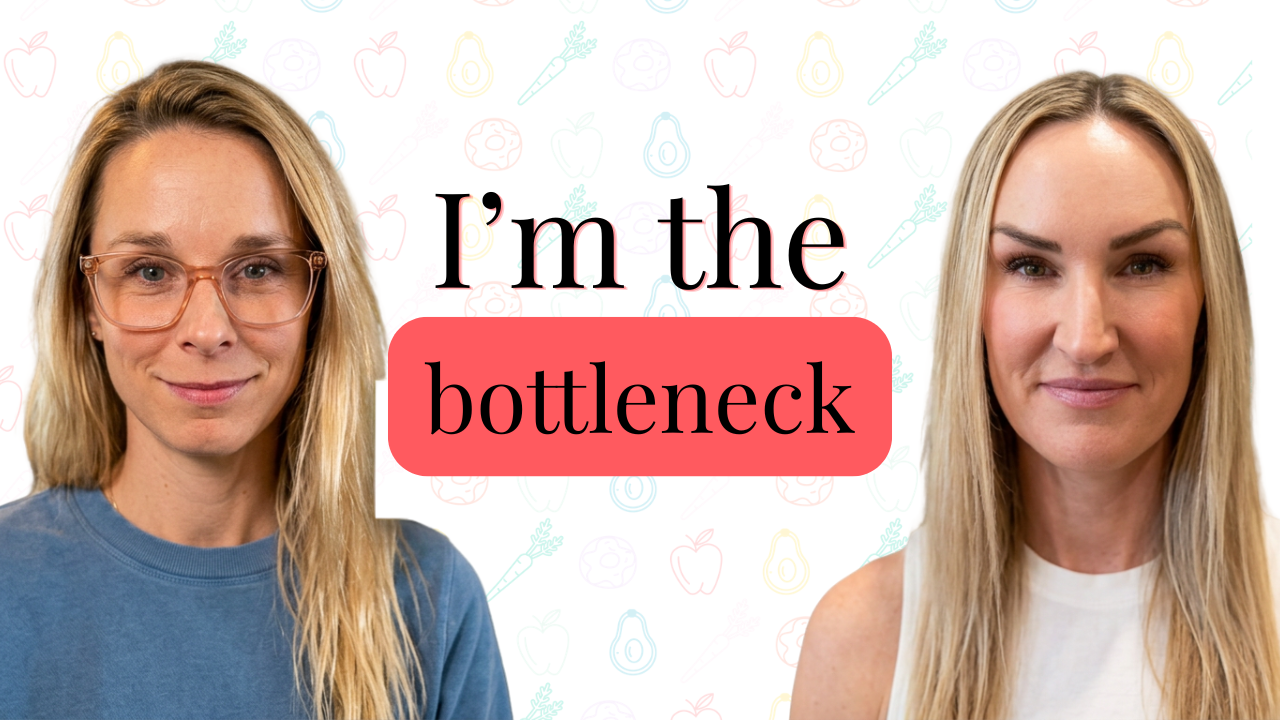
In this episode of The Dietitian Business Podcast, Maggy Doherty sits down with eating disorder dietitian and group practice owner Tianna Noelle for a real, behind-the-scenes business coaching session about what happens after you've built a successful practice- but before you've built the leadership team to support it.
Tianna has grown her insurance-based group practice to more than $1 million in annual revenue, yet she finds herself working 60+ hour weeks, managing hiring, marketing, supervision, insurance issues, finances, and every fire that pops up throughout the day.
Together, Maggy and Tianna unpack one of the most challenging phases of business ownership: the stage where your practice is too large to operate like a small business, but not yet large enough to easily afford leadership positions.
If you're a dietitian who dreams of growing beyond solo practice or you're already managing a team, this episode offers an honest look at the systems, mindset shifts, and leadership decisions required to continue scaling.
🔥 What You'll Learn in This Episode
1. Why So Many Group Practices Get "Stuck"
Maggy explains why practices between roughly $1–3 million in annual revenue often hit a plateau where owners become the biggest bottleneck inside their business.
2. How to Stop Wearing Every Hat
Learn practical strategies for identifying which responsibilities should stay on your plate- and which should be delegated, automated, or eliminated.
3. When It's Actually Time to Hire Another Dietitian
Instead of relying on intuition, Maggy shares capacity metrics that help determine when your team is truly ready for another clinician.
4. Why Recruiting Dietitians Has Become So Much Harder
From venture-backed telehealth companies to changing workforce expectations, Maggy and Tianna discuss today's hiring landscape and creative ways to recruit local dietitians.
5. Marketing Strategies Beyond Physician Referrals
Discover simple ideas for expanding referral sources, involving your clinicians in outreach, and creating sustainable marketing systems that don't depend entirely on the owner.
6. Building Leadership Before You're Ready
Maggy shares why waiting until you can "afford" leadership often keeps practices stuck- and how investing in systems and people creates long-term growth.
🧠 Practical Takeaways
Track clinician capacity before posting new positions.
Build redundancy so your business doesn't depend on one person.
Cross-train administrative staff whenever possible.
Recruit locally through alumni networks, Facebook communities, and professional relationships.
Give clinicians protected time for provider outreach and networking.
Delegate responsibilities gradually to build trust and reduce owner overwhelm.
Create leadership opportunities before burnout forces change.
💡 Episode Insight
Growing your practice isn't just about hiring more dietitians.
Eventually, the biggest obstacle isn't finding more clients- it's building systems that allow your business to grow without depending on you for every decision.
The practices that scale successfully aren't the ones with the hardest-working owners… they're the ones with the strongest systems.
👥 About the Guest
Tianna Noelle is an eating disorder dietitian and founder of Temecula Dietitians and Realistic Roots Nutrition Counseling. She leads a growing, insurance-based group practice serving clients across California, Oregon, and Pennsylvania, with a focus on eating disorders and nutrition counseling. Throughout this coaching conversation, Tianna shares the real challenges of scaling a thriving group practice while maintaining a strong workplace culture and exceptional client care.
Connect with Tianna:
Website: https://www.temeculadietitians.com
Instagram: @temeculadietitians
📣 Join the Conversation
What's been your biggest challenge as you've grown your private practice?
Have you struggled with hiring, delegation, leadership, or marketing? Let us know in the comments.
👍 If this episode helped you think differently about scaling your practice, be sure to like the video.
🔔 Subscribe for more business coaching, private practice strategies, and honest conversations about growing a successful nutrition business.
📤 Share this episode with another dietitian who's building or dreaming of building a group practice.

Listen to
“Why Your Dietitian Group Practice Feels Stuck at $1 Million | Coaching”


Episode Transcript
Maggy Doherty: Hi Tiana.
Tianna: Hi Maggie, good to see you.
Maggy Doherty: You too. I am so excited to dive into some business stuff today because I know you and I have connected on a personal level once before. And most of the dietitians I've had on the podcast have been solo practice owners. It's just gonna kinda just been them. And I've had one other group practice owner on here and I'm really excited to talk to someone else who has a larger group practice because there's so many dietitians who want to be where you are and They don't always know what barriers and challenges a group practice comes with. So I'm excited to hang out today.
Tianna: Absolutely. Yes. Yep. I know all about the exciting aspects of having a group practice and then also the days where I'm hating being a group practice owner. You kind of experience a mix of emotions when you're in a position that I'm in. So yeah.
Maggy Doherty: Yeah, it can be a a double edged sword.
Tianna: Pros and cons for sure.
Maggy Doherty: So tell me a little bit about your journey from getting from point A to point B when you started your practice and h if you always knew you wanted to be a group practice or what the story was of getting to where you are today.
Tianna: Yeah, absolutely. So I am an eating disorder dietitian. I actually worked in eating disorder facilities for seven years before branching out and starting private practice. when I started private practice, I was currently living and still do live in Temecula, California. And Temecula, Cal Temecula, California really was like untouched territory, especially for an eating disorder dietitian. So I really saw A major need in the local community. So I was excited to be able to start out as a sole proprietor. and it also didn't sit right with me though, knowing that I wasn't able to offer accessible care because in the beginning I was only accepting cash pay. like most dietitians, the thought of being an insurance based practice really terrified me. it felt very daunting. However, just this feeling that I had in wanting to make my services personally accessible really got me out of my comfort zone. And, you know, I took that leap and started accepting most major insurance plans. however, with that, although I was glad to be able to offer my services through insurance at that time, this was Back in 2019 and 2020, I was getting so many calls because again, this was a really untouched area in Temecula. So I was getting so many calls. I was turning away so many clients, some of which didn't even have eating disorders, but you know, were looking for coverage through their insurance for a dietitian. so that's when I decided, you know, I am going to work with a friend who actually had started a group practice a year prior to me at that time and have her sort of coach me on how to hire, how to know what I can pay, how to make sure I'm doing things illegally in the state of California. so she really, really was a huge help and support to me at that time. so yeah, I never thought that I would be a group practice owner.
Tianna: It was one of those things where again, I just really needed help because I'm only one person and can only see so many clients in a week. So I started out where I hired somebody just part-time to see basically the non-ED clients that were coming to me. And once that dietitian got pretty full, I hired actually my first full-time eating disorder dietitian. And it just sort of snowballed from there. I will say I was very fortunate at that time because I started my S corporation in 2021, which was before all these massive telehealth venture capitalist companies popped up. and so we were tripling business for those first couple years. I could barely keep up with. the number of referrals that we were getting and and with my hiring. but yeah, so it's been very unexpected. and yeah, kind of kinda scary. I've had moments where I'm like, what is going on? What do I do? But but it's been exciting that, you know, we've been able to be as successful as we are at this point.
Maggy Doherty: And so it sounds like some of that success has bottlenecked you to facing some kind of three major problems. So you'd mentioned there was a couple areas that you wanted to focus on today. So where what's your biggest pain point right now, your biggest challenge?
Tianna: You know, it's hard to rank them, to be honest. I feel like all three are pretty important at this point. but I know one of the first topics that I brought to you is I'm in what a lot of business coaches like to refer to as the quote unquote swamp, which means
Maggy Doherty: I wonder what this what is the swamp tell us?
Tianna: So they say that the swamp is for practices that are in a revenue point between 1 million and 3 million. Again, that's not my net profit at the end of the day, but that's, you know, what we're kind of in that range when it comes to overall revenue. The issue with running a group dietetic private practice is we do have very high payroll. There's a lot of
Maggy Doherty: Uh-huh, for sure.
Tianna: insurance that we have to carry. In the state of California, our taxes are very, very high. And so with that being said, it's difficult to have a net profit that then allows me to hire people in leadership roles that allows me to take a step back. So I'm at a place in my business where I'm still wearing a lot of hats. I do all the hiring, all the supervision, all the marketing. I do a lot when it comes to the financial aspects of the business. so you know, I'm the CEO, CFO, dietitian, you name it. So I think what's really challenging is I guess maybe trusting like the process and and how can I hire. People to take some of these tasks off my plate when you know my profit is currently at about 10 to 15%. So it doesn't leave a lot of wiggle room for hiring non-clinicians that, you know, aren't bringing in revenue. So I'm curious what kind of your thoughts are, if that's something you experienced, and just sort of what you think about that.
Maggy Doherty: You know, I think the one of the hardest phases to be in is when you have between like four and six dietitians. I feel like it's because you're not a solo practice or a small private group anymore. but you're also not a large group practice. And so when you're at that that mid-sized, you have the same overhead as a larger practice, but you don't have the income being generated by a larger team. And so it's like you're kind of in this like you're straddling these two fences. And I think it's one of the the hardest areas to be in because really to get profitable, you you need it's kind of that double-edged sword. In order to get profitable, you need to have more dietitians seeing clients. But in order to get that, you need to have leadership people so you can scale. But then you don't have the money to get the leadership people, so you don't have the leadership to get to where you need to be.
Tianna: Right.
Tianna: Yeah, exactly.
Maggy Doherty: kind of stuck. It's like, it's almost like a, I don't want to call it a fork in a road, but it's like a a one-way street where it's like, well, where do I, where do I go from here? and I see a lot of my group practice owners who are about your size feeling that exact same pain. And it really comes down to feeling like you don't have the money to get leadership. But because you don't have the money to get leadership, you don't scale. And so you get you get stuck.
Tianna: Yeah. Yeah.
Tianna: Yeah, absolutely.
Maggy Doherty: How long have you been in this phase, like of kind of feeling stuck?
Tianna: a few years. Yeah. Yeah. I I it's funny because I always joke that like if you look at my schedule, it looks like I probably do nothing all day. But I'm dealing with putting out fires left and right and I'm probably working easily 60 plus hours a week. and I just again, I don't know how to get unstuck.
Maggy Doherty: What have you tried so far? What are some things that have made you feel unstuck?
Tianna: So one of the things is I have added more tasks to my biller's plate. however, my biller recently is is pregnant and is really, really sick. So I have been taking a lot of tasks back from her that she was doing. Fortunately, she is an hourly employee, so I'm not, you know, needing to pay her for work that she's not doing. but that's been a challenge. A huge one is I did hire an in office assistant full time.
Tianna: She has been amazing at doing so many things and supporting the dietitians with a lot of admin tasks that I used to do. so I'd say those are like the the two big things that I've done over the last few years. But, you know, again, also in the last few years though, we've taken on more insurance plans and with that comes more work and Yeah, so just the last the last few years I've I've been in this place.
Maggy Doherty: Yeah. What has your staff looked like? Have you had much turnover? Have you kept the same dietitians? Or has it kind of been like once you get one person, one person leaves and it's kind of this one step forward, one step back?
Tianna: You know, do have really amazing employee retention, which I'm very grateful for. One thing that I'm really, really big on as the boss is keeping a very healthy work culture. most of my dietitians have been with me for years. my second hire ever is still with me five years later. I did lose a couple last year to dietitians that moved on to the venture capitalist telehealth companies, which was a bummer. But since then though, I have found, you know, ways to increase everyone's pay. So I think that, you know, that's been really great for retention. But yeah, our retention is is really solid, I would say.
Maggy Doherty: What's prevented you from getting to six, seven, eight, nine dietitians? Well I guess you have you have five full time and two part time, correct? So a total seven altogether?
Tianna: Yeah. So it's a combination of Figuring out what the next steps are for my marketing, because I've always been one to focus mostly on outreach and also working with insurance plans. Again, though, I don't have an outreach coordinator. I do all the marketing myself, or it's word of mouth with my dietitians. So that's been something that's been weighing on me is what other marketing strategies. Can I try to increase number of clients into the practice? And then also a huge barrier is finding dietitians that will work a hybrid role. I've I'm actually currently hiring for an eating disorder dietitian who can do two days a week in the office and three days from home. And it's been basically impossible to find somebody who's willing to do in-office work. however that is a major need in the local community. We get a lot of clients that want that in-office experience. So that's been another big, big challenge.
Maggy Doherty: That's I'm seeing that across the board with a lot of group practices that are having a really hard time competing with the rates of the VC companies, and competing with fully virtual, and just not having as large of a candidate pool to choose from because we there was all these dietitians, but now so many are working for Nourish, Faye, Barry Street, Food Smart, you kind of name it, that there's not as many dietitians to to pull from. But I I also found that there are some dietitians who really, really want to work somewhere that is in person. And there's certain things that we can offer as group practice owner that those companies can't where I think the biggest one is like the career progression, to be able to come in as a dietitian, but then become like a lead dietitian, a manager and like really be able to influence the the company as a whole where when you work for nourish your your voice isn't going to be that loud you're a you're a small fish in a big big big pond but when you work for someone like you you're a big fish in a small pond where you can become get into leadership sooner and you can have a voice within the company like just have more of like a tight knit community. So it's it's really trying to focus on recruiting that
Tianna: Yeah.
Maggy Doherty: type of person. They're they're out there. They're just it can be harder to to find.
Tianna: For sure. Yeah. Yeah. I mean, I don't mean to sound like a downer, but when I started my business, I would place an add-on indeed. Within two days, I'd have like 30 applicants. It's definitely not like that today. And like I I've had an ad up for two weeks and I've gotten one applicant, and the dietitian does not specialize in eating disorders, which is what I need. So Yeah, I mean it's it's rough. It I don't wanna again sound negative, but it's it's never been harder to be a dietitian owned group practice owner.
Maggy Doherty: And I think that's good for people to know and hear and see. It's you it's not all rainbows and butterflies and it's there there's there's current I mean the landscape has really changed so much the past two to three years with with these bigger companies coming in and there's there's really never been competition besides who's across the street from you. And now they're like this these these national players. how so I I don't feel like in
Tianna: Right. Yeah.
Maggy Doherty: I think indeed used to be the best way to recruit dietitians. now I think that's one avenue, but again, Nourish Faye and Barry Street, that's their main one. So we need to be on something different. I feel like there can be a lot of success when you post in local Facebook groups. I'm like a huge fan. I'm in one called North Texas Mental Health Professionals. So it's therapists and dietitians and
Tianna: Yeah.
Tianna: Yeah.
Maggy Doherty: Whatever you name it, in the North Texas area. So like posting there, there's more likely going to be someone in this area. And then we have another one that's Dallas Fort Worth eating disordered professionals. So then it's all people within the city. So I don't know if you're any Facebook groups in your area, but those can be a great place to get the word out where I feel like more of those people are living in that city and maybe more likely to want an in-person job.
Tianna: Yeah, yeah, no, that's a really good point and and something I haven't considered because I definitely am in a good number of Facebook groups and usually I use it more for, you know, therapists looking for an eating disorder dietitian and that sort of thing, but that is something I certainly can try when it comes to recruiting another dietitian.
Maggy Doherty: tried that. The other one I really like is reaching out to local colleges that have dietitian programs and asking them to share the job posting with their alumni network. And that one can be that we've gotten a lot of I've seen a lot of success from from that. And then tip is make sure you have a landing page on your website for the job because if you share the indeed then you're paying for each click that you're promoting.
Tianna: Okay.
Tianna: Okay.
Tianna: Mm-hmm.
Tianna: Right, right, yeah.
Maggy Doherty: that's a good one. And then another one that's worked in the past is we've done a hiring incentive. So you've if you tell your team, hey, there's a $500 bonus if you refer someone to this job and they stay for six months. You can do $500, you can do a thousand. I think about as high at that as a thousand. And we've had one or two people hired at my past group practice through that.
Tianna: Okay.
Tianna: Yeah, I know.
Maggy Doherty: And it ends up being, you know, friends from their grad school, friends from their program, dietitians they know.
Tianna: Yeah. The last few dietitians actually that I have hired were referred by other dietitians on my team. because everybody obviously wants to continue to work with people that they enjoy being around and all of that. So so yeah, I do really love personal referrals. Yeah.
Maggy Doherty: Yes, that can be a great one. I haven't had the best success, but it's another kind of road that you can take is you can go on LinkedIn and find a local treatment center and see the dietitians who work there and like headhunt them. Because if they're working at a if someone's working at a treatment center, they're probably there four to five days a week. And so it can be enticing for them to work for a private practice where they
Tianna: Mm, okay.
Tianna: Yeah.
Maggy Doherty: Get more freedom, more flexibility. Could just search a bunch of eating disorder treatment programs near you and headhunt those people because then again that your job's gonna be more appealing than a larger center where they're having to go in person more often.
Tianna: Right, right.
Tianna: Right, absolutely. Okay. Yeah, these are all great ideas.
Maggy Doherty: I think for the higher, it's just trying to shift to recruit people who like want a small practice, a couple days in person, that are that are local to your area. It almost reminds me if you were to post this job in the dietitians and private practice Facebook group, that's such a wide net, most of those people are virtual that if you if they they wouldn't apply to your job because they probably don't live around your your area.
Tianna: Exactly. Yeah. Yeah. Definitely.
Maggy Doherty: And the the other thing could be like even though you need an eating disorder dietitian, it could be easier to find a general wellness dietitian and then segue the E D clients to your current clients and take off the MNT clients from them.
Tianna: Yeah. So we my last hire actually does just that. She is my dietitian out of Oregon. the issue is I I always want to feel confident that I can fill their schedules. And I guess this actually perfectly probably goes into our next topic of marketing. because yeah, I I just find that due to like the outreach that I do. our eating disorder clients definitely are the ones that are retained the best, that you know, we're able to ultimately, yeah, just see the longest and and all that. So I do focus most of my marketing with other eating disorder professionals. because of that, though, you know, if I hire another general wellness dietitian, I'm concerned that. I won't be able to fill their schedule like they need, you know.
Maggy Doherty: Because it'd be mostly eating disorder appliance coming in.
Tianna: Yeah, yes. So, but again, like I said, this is like the perfect thing to lead into marketing because I'm sure there's a lot that could be helpful from a marketing standpoint that I'm not currently doing that could help me get more non-ED clients and fill up, you know, some of my general MNT RD schedules.
Maggy Doherty: Mm-hmm.
Maggy Doherty: So before we get to marketing, I'm curious what your current availability looks like with your team. Are you is your team fully booked out? Is there a wait list? Are there open spots or how booked out is your current team?
Tianna: Yeah, so all of my dietitians, so my last hire before the most recent one that I hired, she was hired in January. Her schedule is about 90 to 95% full. everybody's pretty full. there is definitely some wiggle room there for when they do get new clients, but for the most part, I I would say they're full. My dietitian that I just hired in Oregon, she is not quite there yet. she just started about a month ago, so not very long. she's probably about 50% full right now. so that's sort of where we're at. Where I'm not in desperate need to hire another dietitian right now, but I know if a few more months goes by, I will be.
Maggy Doherty: Think the most important thing with hiring is having metrics to determine when to hire. I think the worst thing we can do is wait. If we wait till we need to hire, then we should have hired three months ago. Especially if you accept insurance and depending on your state, it's gonna be 30 to 90, 30 to 120 days before someone gets credentialed. So like we wanna be able to forecast when to hire because if someone's if your whole practice is full.
Tianna: Yeah.
Maggy Doherty: And we realize we need somebody hired a day, they're not gonna start for several months from now. And then we're have an even bigger problem. And that's where we're we're missing out on revenue. what I find really helpful is to be tracking availability. Depends on your EMR, how you can do it. I think you're using practice vital, is that right?
Tianna: Yeah.
Tianna: yeah, so practice vinyl does connect with my simple practice.
Maggy Doherty: I just had a client who started using that, and it seems like a really cool new metric platform.
Tianna: Yeah, yeah, definitely.
Maggy Doherty: Do they give you availability on there, like how booked up someone is?
Tianna: You know, I'd have to look into that more. They might. I mainly use it for tracking retention, cancellations, churn rate, average reimbursement, and then also like notes that are unsigned, things like that. honestly, I think there probably is more in there though that I'm not aware of. So it's possible that that's in there.
Maggy Doherty: Yeah. Uh-huh. Perfect.
Maggy Doherty: See if there's an availability. I manually did a two-week availability. So you look at someone's schedule the next two weeks, and how many spots do they have? How many spots are booked? I found that when someone is booked out between 110 and 125%, that they'll hit their goal at 100.
Tianna: Mm-hmm.
Maggy Doherty: Because there's gonna be cancellations, reschedules, no shows, things like that. So if someone's the next two weeks booked at 110 to 125, they should hit their goal at 100. and then if the previous four weeks they hit their goal at 95% or more, then at that point you have enough pent-up demand to hire someone. So when your team's been hitting their goal past four weeks, the next two weeks they're full, you are right.
Tianna: Yeah.
Tianna: Yeah.
Maggy Doherty: problem with that is you're ready now. And so you didn't forecast too much, but it at least gives you those is like you need to have that'll there's enough pent up demand to to fill someone's schedule.
Tianna: Yeah, definitely. And that and that's where I think just really I needed to hire someone two weeks ago when I posted the listing on Indeed. because you're right, we have to wait for insurance credentialing to go through and all of that. fortunately, I will say with our plans in California, they tend to be a little quicker. So I've been like, there's something good about California as a business owner. But
Maggy Doherty: That's right.
Maggy Doherty: Okay.
Tianna: Yeah, come in in a few months we're we're gonna be struggling if I don't have somebody starting.
Maggy Doherty: And then that's where it'd be better to have a general dietitian than no dietitian at all. The other areas, if we go back to how to optimize your revenue, you're paying your dietitians really well. for being, you know, I think you said between forty-five and fifty an hour.
Tianna: So
Tianna: Yeah, the the average is forty five to fifty five. So
Maggy Doherty: Yeah. And it's W two. And you have a whole plethora of benefits. So I mean, really, it's probably sixty to seventy ish that you're paying per hour as you account for all those taxes, and all the benefits you're you're giving. and then you want to see like what your average reimbursement is, like what what percent are you paying people?
Tianna: Yeah.
Tianna: Right.
Tianna: Yeah. My my goal is always about forty percent given the high taxes in California, given 401k match, all of that. right now we're landing at about 45% on average across all dietitians. and it was really just a few months ago, I gave pretty significant pay increases because
Maggy Doherty: Yeah. Yeah, that'd be Phil.
Maggy Doherty: Which doesn't help your profitability. Yeah.
Tianna: I know I had to, but also we we did acquire contracts in other states because we opened offices in other states, which ultimately raised our average reimbursement. So that made that possible. If it wasn't for that, it would it would have been impossible.
Maggy Doherty: that's great. So then it's kind of like a you got a raise so you can give your people a raise, kind of that downstream. So so that's great. again looking at how do we increase your profitability. The other thing I would recommend is you could recruit a newer dietitian. Someone who's newer, maybe it's their first job, their set first or second year, maybe they haven't done eating disorder before.
Tianna: Yeah. Yeah.
Tianna: Mm-hmm.
Maggy Doherty: training someone is you're investing in them and you can pay them lower because they have been in the field for less years, they have less experience, but it can help your profitability a ton. And if you can't, what I also found is when we couldn't find someone who had eating disorder experience, we could find someone who is a generalist who wanted to get into E D. And so then we could pay them lower, train them up, and then obviously give raises they
Tianna: Mm.
Maggy Doherty: As they get more experience. But but I feel like that could be a good area for you to focus in is like trying to get a newer, a newer dietitian. But then where your problem's gonna come is this bottleneck problem you have in your business right now, where if you hire someone who's newer, you have no leadership, so it's gonna fall on you. So I think that the biggest thing for you is how do we break out of this bottleneck structure so you can grow because
Tianna: Right. Yeah.
Tianna: Yeah.
Tianna: Yeah. Yeah.
Maggy Doherty: What's gotten you to grow from 250,000 to 1 million in revenue isn't gonna work for 1 million plus.
Tianna: Right. Yeah. Definitely. Yeah. And the thing that I have hired a few like brand new dietitians. just my experience has been, yes, they they do require a lot more training. but also I find that they they don't stay as long. and I don't know, there is a part of me that thinks maybe they haven't worked for other big corporations and They don't have a a good understanding of what it's like to work for a company that genuinely cares about you and you're not just a number and that sort of thing. it's hard to say, but yeah, I I I struggle with that idea of hiring brand new again just because it's been challenging in the past.
Maggy Doherty: Have you ever had an internship program where you've had dietetic interns?
Tianna: We have had a few, yeah, and we do have one joining in just a few months. Mm-hmm.
Maggy Doherty: If s you know, if an intern ever works out, it's almost like a sneak peek peek into what it's like to work with your practice and the whole interview process. I've found success with having a dietetic internship program when you like the dietitian and when they like you to be able to hire them, and then they're likely gonna stay a little bit longer. And in a perfect world, I love a dietitian who's got a couple years of experience and they
Tianna: Yes, yeah.
Maggy Doherty: know they want to do private practice versus when you have someone who their resumes may be inpatient or treatment centers and they don't like know that's what they want to do and then that's where you see that that turnover.
Tianna: Yeah.
Tianna: Yeah, yeah, definitely.
Maggy Doherty: So as we go back to kind of this, the main problem, which like the the bottleneck where you're doing all the things. I mean, really what's gonna take you out of that is being able to automate and delegate your systems. be able to, you know, delegate more to your biller or your admin or to create a dietitian who's in a leadership role. It's going to be that investment. And if you're at 15%, you know, profit, you you have about a 5%, you know, percentage that you can invest in that. and that's where we'd really want to plan out, okay, if we're gonna reduce this dietitian's hours by this much, then we'll lose this much in profitability. But they're gonna have these hours to do these these things, whether it's provider outreach or training the new dietitian.
Tianna: Mm-hmm.
Maggy Doherty: And once that's off your plate, you know, you're able to no one else can focusing on things like no one else can do but but you.
Tianna: Mm-hmm. Yeah. And I think that's where it, I'm sure you hear this a lot, but I've heard other business coaches say how people often say, I wish I could just clone myself. And I have such amazing clinicians and I have full trust in them. When it comes to the business side of things, though, I get anxious and I'm like, I have to do it because then I know it's gonna be done. And so it's like giving up that that control, I guess, and like putting that trust in someone else. because I just know like when things don't get done properly, it creates a lot more stress on me. You know. So it's hard sort of giving that up.
Maggy Doherty: Yeah. Yeah. And it's starting with like those smaller things to where you that person builds trust within you where you give them this one task, then you can give them a bigger task and a bus bigger task. But I'd almost write down like everything that you do or you need to do or kind of your to-do list and have it like high, medium, and low priority. And high meaning things that gotta get done in the next twenty-four, forty-eight hours, or there's some sort of actual consequence.
Tianna: Okay.
Tianna: Yeah.
Maggy Doherty: Medium, it's like kind of by the end of the week or the next five to seven days you want to get it done. In low, meaning there's not a deadline or there's not a consequence. And for me, I find myself putting like I have a ton of things in the low where it's things that are fun, things that I want to do. and little and you know, as you we want as little as possible on that high, but really that that high is going to be that thing that
Tianna: Yeah.
Maggy Doherty: you would do or it highlights like this number one thing that needs to be delegated. And if you don't have to do it, then we think delegating's gonna be your your biggest thing.
Tianna: Yeah.
Tianna: Yeah, definitely. Yeah. Yeah. I mean, it took me a very long time even to hire my office assistant because I was so worried that I wouldn't hire the right fit. That, you know, that's the first impression that people have. But it's been great. So yeah.
Maggy Doherty: What takes up, I mean I'd love to see your calendar, but like what what takes up the most of your time throughout the week?
Tianna: I think right now dealing with insurance, because it it's been difficult in that my my bill are so fantastic, but she's in a very unique time right now with her pregnancy. but there is a lot that I would love to be able to delegate for her to take over when she's feeling better and is able to. but insurance, yeah, is probably the number one time consumer for me right now.
Maggy Doherty: Can you cross train your current admin on that? Does the admin have bandwidth to take on more?
Tianna: I don't think so. it's certainly something I could ask, but she does work in the office. So she not only greets our in office clients, but handles the phone calls, handles all the referrals, does all the faxing of notes and she's got quite a few on her quite a few tasks on her plate. but I feel like it's probably an appropriate amount of tasks. so she's never said that it's too much, but I just Also don't know that I could add more and have her feel comfortable doing the things that are already required.
Maggy Doherty: When's the last time you had a conversation with her about like her bandwidth, her stress and you know, how much she feels like she can get through in a day?
Tianna: You know, I I talk to her every day, but I've never specifically asked her how she's doing currently at this time with that. So I guess that's where, yeah, I guess I've sort of made an assumption that she's managing everything okay. But that probably would be a good conversation to to have.
Maggy Doherty: I would ask her like how she feels like things are going, how her stress level is, as it relates to all the tasks that she has administratively. And if she feels like there's too much or too little on her plate, what her bandwidth is. And also not taking at face value if she says, like, I'm I'm so busy and I'm so stressed. Let's just say she says that. I wouldn't assume that means she has too much on her plate. I would assume that means she's maybe not prioritizing.
Tianna: I feel like for her, and I experienced this too when I was mainly in charge of scheduling, which again I probably should not have done as long as I did, but she often will say like things come in waves where all of a sudden she'll be hit with a ton of new clients wanting to schedule and doctors wanting notes and audits and things of that sort. and then there'll be other days that are slower where She's kind of more chillin'. so, but that's something that she told me probably a couple months ago. So I'm not sure if things have shifted kind of since then.
Maggy Doherty: Yeah. Yeah. Yeah. And then I would let her know, hey, the billers reduce some of their hours. Do you feel like you have the bandwidth to take on some of these tasks if I help you and I train you in it? One of the best, one of the most important thing that you need as you grow is redundancy in your business. Right now there's really the only redundancy you have is on the clinician facing side. If you lose one dietitian, there's another who can see those clients.
Tianna: Yeah.
Maggy Doherty: If you lose the biller, there's no one else who can do that, it lands on you. If the admin is out sick, you're the one who's doing it. So you're you're the redundancy for everything, which makes it impossible to to grow. You can't, you can only scale as far as you've scaled right now. Where really what you need is that redundancy of like what the biller can do, the admin could also do. So if biller's out, admin can step.
Tianna: Yeah.
Maggy Doherty: If admin's out, biller could step in. Or if you had a part-time person who could cross-do both, but I think it's all those administrative and billing tasks that should be off your plate and onto theirs. If your biller's going to be out. So you you have to find a replacement. So it it could be great right now to start finding someone to fill in who can take those tasks off your plate and that who can step in once she's out.
Tianna: Yeah. Yeah, because I hate to admit it, but I'm already thinking, well, when she goes on maternity leave, I guess I'll be our biller. You know, 'cause nobody else knows how to do it.
Maggy Doherty: Yeah, then you don't have time to do provider marketing or recruiting or you may have ten dietitians who applied for your job but you can't interview them because you're locked in billing and you can't interview them 'cause you also haven't cross trained your dietitian and leadership skills to be able to interview and choose those dietitians for
Tianna: Right. Yeah.
Tianna: It's overwhelming.
Maggy Doherty: You're you're just at that place where I you've you've grown as far as you can grow with your current systems. So it's really you need a new system of redundancy and some some the things that you can do other people being know how to do or or hiring out for that. I think once you once you free up time on your plate, and if the billing's going somewhere else, the admins going somewhere else, the management of dietitians is on someone else, then you can do more of that. Provider outreach to bring in more referrals to get to your clients to where you can hire more dietitians. And then you take that provider outreach and you assign it to a dietitian so you're not having to
Tianna: Yeah. Yeah. And that is one thing that I I've thought about is, you know, because I do a lot of what I do is either Zoom calls with therapists or other providers or going to networking luncheons, those types of things. and I've thought about, well, yeah, what if even I had each one of my dietitians do one or two appointments a month and then these providers in the community are getting that. one-on-one time with each of them, and then I'm getting a break from it, you know? So that was something that I also was thinking about from like a marketing standpoint that could alleviate some of that responsibility. Yeah.
Maggy Doherty: could give like two to four hours a month of them to do marketing, and pay them at a administrative rate, which would be less than the clinical rate. And could kind of see what dietitian rises to the occasion. And if one person's really, really good at it, then that could be your provider outreach dietitian. And that's completely off your plate.
Tianna: Yeah.
Tianna: Yeah, yeah. Yeah, I like that idea.
Maggy Doherty: Well, I feel like we're just getting to like the thick and the good stuff of it, but I but I'd say as we kind of reflect on our conversation, the the biggest things for you is when you are recruiting for a dietitian, cast a little bit of a wider net, see if you can go more general wellness, see if you can kind of get your fingers into some more local areas to recruit, whether it's the eating disorder treatment centers, head hunting on LinkedIn, or those Facebook groups.
Tianna: Ha ha ha ha.
Maggy Doherty: And then that next part is like, how do we get rid of the bottleneck and create redundancy within the admin side, the billing side, and the management things that that you have going on? but yeah, do you you just got this like one step? It's kind of up here. You just gotta like get get through it. But you're you're close. And you know, there's a there's a quote, I think it's you you only change when the Pain of staying in the same spot is greater than the pain of change.
Tianna: Mm-hmm. Yeah.
Maggy Doherty: So it's like once there's enough pain of like being where you're at right now is when we make change. And it sounds like you're in that thick of the the pain right now. So it's the only I mean your only option is to is to change or else we stay in the same spot.
Tianna: Yeah.
Tianna: Yeah. And I do think I have kind of stayed in the same spot the last couple of years because like you said. In order for me to like scale, systems would need to change. And I kind of feel like I have decision-making paralysis at this point because I am wearing so many hats and I am so busy and overwhelmed with making every single big decision that's required to run this business. So yeah, this is a good little push that I think I needed.
Maggy Doherty: Well you made me think of do you have someone when you like this decision paralysis, like do you have someone to talk through these things with? Like a a business coach or a friend?
Tianna: My therapist. Well, so my therapist is actually a group practice owner. so oftentimes in my therapy it's it's talking about work, but then also I am in a really fantastic mastermind group with other dietitians and group practice in the state of California. So we lean on each other a lot for support. and I feel like we all are pretty similar where we're at in our businesses. So we can
Maggy Doherty: Yeah. Amazing.
Tianna: relate to one another very well.
Maggy Doherty: Yeah, keep keep leveraging those resources.
Tianna: Yeah.
Maggy Doherty: Okay, Tiana. Well, it was great chit chatting about all the all the ins and out of group practice stuff and I'm excited to see where things end up for you just in the next like in like two or three months you can be in a totally different spot than you are right now.
Tianna: Yeah, yeah. Yeah, I need to need to make some decisions and make some changes to, you know, make things feel a little more manageable.
Maggy Doherty: I'll be I'll be cheering you along from from over here.
Tianna: Thank you, I appreciate that.
Maggy Doherty: Well, thanks for coming on and hanging out today. if anyone wants to follow your group practice or find you, where can where can they find you?
Tianna: Yeah, so our California office is Temecula Dieticians. so we're at Temecula Dieticians on Instagram or Temeculadieticians.com is our website. And then for our Oregon and Pennsylvania offices, we do business as Realistic Roots Nutrition Counseling. So our website is realisticrootsnutrition.com.
Maggy Doherty: Thank you. All right. Well everyone go give her a follow. and we will hang out and talk to you later.
Tianna: All right, sounds good. Thanks so much, Maggie.
Other Episodes You Will Love!

What I Wish I Knew Before Hiring A Dietitian | Coaching

She Grew From Solo Dietitian to Group Practice Owner | Coaching
How to Grow Your Dietitian Practice with Confidence | Guest Interview
Heyya!
Want private practice tips, tools, and discounts?
Join my monthly newsletter today