

Beyond 1:1 Counseling: Building a Community Nutrition Business
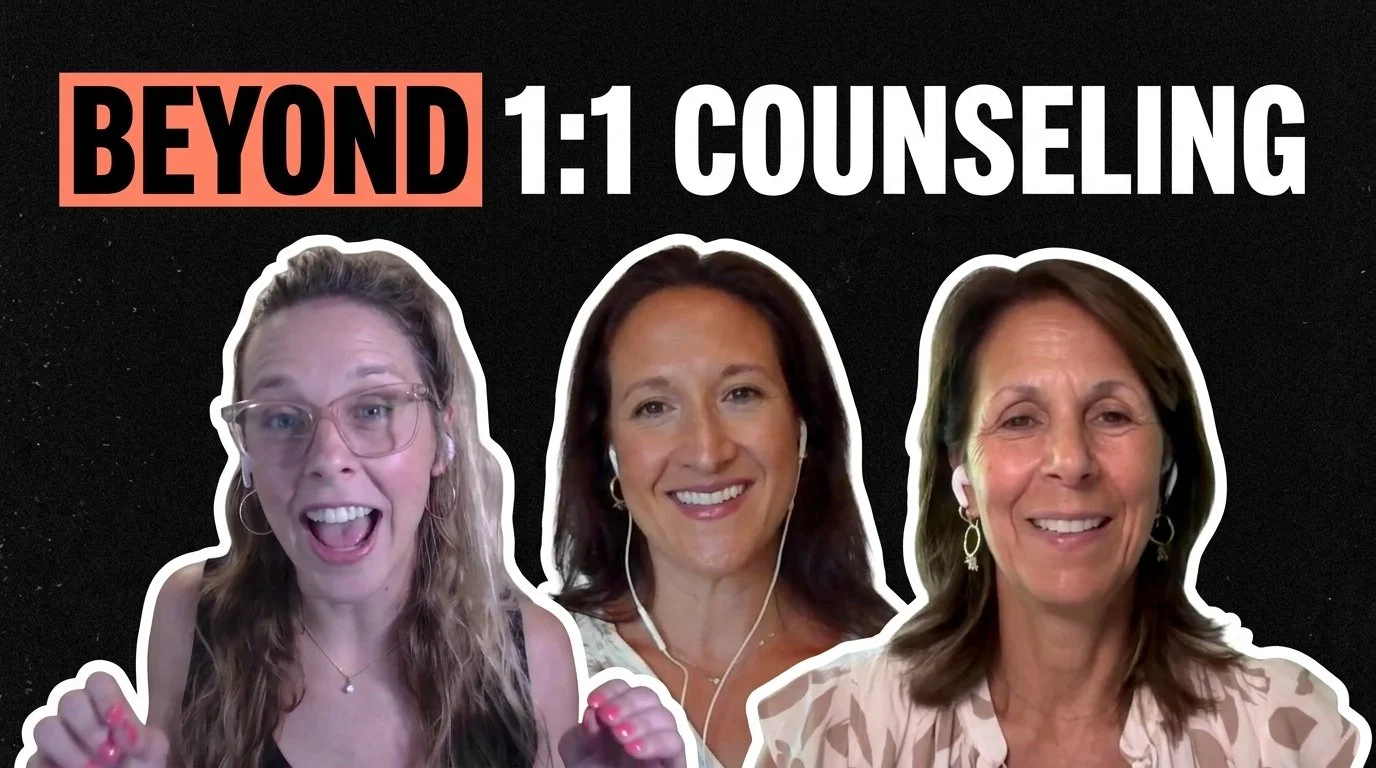
What if your next revenue stream is sitting right in your own community?
In this episode of The Dietitian Business Podcast, I sit down with Elisa England and Ellen Petrosino, co-founders of Nourish and Thrive Nutrition Centers. Both started with their own 1:1 nutrition counseling private practices before coming together to build a community nutrition and culinary education business.
As their community partnerships grew, other dietitians started asking the same question: How are you doing this?
That led Elisa and Ellen to pivot into B2B education and create the Community Dietitian Framework- a program designed to help dietitians become the go-to nutrition experts in their communities while creating revenue beyond traditional 1:1 counseling.
We talk about finding opportunities in an untapped space, building community partnerships, diversifying revenue streams, and why you don't need to have everything perfect before you start.
Then we switch gears for some business coaching!! With Elisa preparing for maternity leave, we talk about how stepping away from your business can expose where the business depends too heavily on you— and create an opportunity to delegate, hire, document systems, and build something that can continue running without you.
In this episode, we cover:
How two solo private-practice dietitians came together to build a community nutrition business
Turning community nutrition into a legitimate revenue stream
The shift from B2C services to a B2B business model
Creating the Community Dietitian Framework
Finding organizations with budgets, grants, and programming needs
Why dietitians should think outside the box when looking for opportunities
Why you shouldn't wait until your program is perfect to launch
The importance of surrounding yourself with people who challenge and support your growth
Preparing your business for maternity leave
Delegating, hiring, and documenting your systems
Creating revenue that doesn't require you to physically be there
Building a business that can operate without the owner
Opportunities to scale through additional dietitians, markets, and passive or leveraged offers
One of my favorite takeaways from the conversation: don't wait for perfect. Find the need, start building relationships, take action, learn from what doesn't work, and improve as you go.

Listen to “Beyond 1:1 Counseling: Building a Community Nutrition Business”


Episode Transcript
Maggy Doherty: Welcome to the Dietitian Business Podcast. I'm Maggie Doherty, your host, dietitian, and business coach. If you've ever wondered what the therapeutic side of business coaching looks like, this episode's for you. I meet with Stephanie Haber of Ahava Nutrition, and she works with really complex clients. And that complexity of clients has led her to feeling burnout. So we talk about compassion fatigue. caregiver burnout and just being burnt out as a business owner. And in this episode, we talk about what to do when you're wearing all the hats, how you can delegate, how you can set boundaries with yourself and clients. And if you want to grow your practice, how you can scale it in a sustainable way. I think you're really going to like this episode if you run your practice yourself and you're starting to feel burnout or maybe you are totally burnt out. So tune up, listen in, and I think this is going to be a great one. Hey stuff.
Stephanie Haber: Hi, Maggie, it's so wonderful to meet you. Thank you for having me.
Maggy Doherty: I'm so glad you're here. I know we've been kinda going back and forth for a couple weeks to finally meet. tell me a little bit about s what's been going on the past couple of weeks.
Stephanie Haber: I would say the past couple of weeks has definitely been a whirlwind. you know, a lot of my clients know and I'm I'm pretty open about my my own health, given that I work with clients with chronic health conditions, as I recovered from a stroke last year. And then very abruptly two weeks ago, I had pretty significant seizures. So I've been trying to just navigate all of the medical treatment changes that come with, you know, your body going through something. So shocking and traumatizing and so it's definitely affected things. I'm definitely, you know, just trying to get through it and just be open along the way.
Maggy Doherty: Yeah. Well, thanks for being open. I'm so sorry that you went through that and you're going through that and how much that affects everything from your personal life to your professional life.
Stephanie Haber: it it definitely does. It was a very big, you know, halt in working for a couple of weeks and then just kind of your brain getting back online and trying to reorganize everything and reschedule appointments. And luckily I have the most, you know, wonderful understanding clients. So they made this process so much easier as it can be, you know, very easy to be hard on yourself when you can't perform to the way that you want to. So I think they definitely help with that.
Maggy Doherty: Yeah. How did you go about navigating, you know, as you unexpectedly had this seizure, you have this private practice running, you have clients scheduled. How did you handle and navigate that? Did you do it all yourself? Do you have anyone to help you?
Stephanie Haber: I am a party of one. I, you know, joke that the you know, the children's book caps are like the man with all the caps on his head, he's jealous of me because I have more hats on my head than he does. So I do everything myself. So once I was, you know, medically stable back home, I was able to communicate with my clients. I kind of chunked it out based on the day of who I was gonna see, appointments I had to reschedule and just let them know that I would that something had happened, that I'm gonna reach out to reschedule, and that I just appreciate their understanding and flexibility. is really how I took a that was my approach.
Maggy Doherty: That's a lot to take that all on your yourself.
Stephanie Haber: It is definitely a lot, I think, especially doing it by myself. And this is also I have another job that I do in tangent. Wait, well, unfortunately, I have take a pause while I recover. But having both, I think just to really maximize everything that I do and what comes in, I just took that on myself. So it's it's definitely a challenge, but I I'm also proud of myself for being able to learn. Especially doing Medicare paperwork. I think that it like being a network of Medicare is my biggest accomplishment, truly.
Maggy Doherty: Yeah, it's a a whole f feat getting a network with with Medicare, that's for sure.
Stephanie Haber: yes. I I really like to broaden my access. you know, we have insurance. So gotta use it.
Maggy Doherty: Yeah. So with everything that's kind of transpired just the past couple weeks, where like where do you want to start today? What do you want to work on? What would be the most helpful thing for you with business coaching for your practice?
Stephanie Haber: I think I would love to learn how you balance a personal and professional responsibilities, especially taking on so much of the other responsibilities, like on yourself. And I guess how do you when is the time where you maybe start to allocate and hire out and have somebody do your scheduling, someone do your billing, you know, where is that? Where is that line? I know it's not black and white, but maybe what are some things that I should look out for? And then also when there is something that I I've actively struggled with is when there is such an influx of clients, especially complex clients, how do you balance when do you schedule a wait list? You know, how do you even go about navigating that while still, you know, I I never want to discourage anybody from reaching out or getting help or support. So navigating that piece as well would be really helpful. And then my last other topic would be when and how to to expand the practice to take somebody on when you've built something that's so close and personal to your heart. And you know, I'm very protective of my clients and I I know that I can increase access to care by hiring, but also that hesitancy. to kind of let somebody into something that is again, I'm so protective of.
Maggy Doherty: Yeah. Yeah, it almost sounds like you've reached that max or that like glass ceiling as a solo private practice when it's just us running the show as the dietitian, the scheduler, the biller, the marketing person, kind of wearing all these hats. It it's a really challenging role because you're doing So much. And not all of those things are going to fill your cup up. Some of those are going to drain you and make you not show up as great for your clients because you're sick of dealing with, you know, insurance denials or waiting on payment for Medicare or whatever it may be. So I think we can only manage all these things for so long before something has to give. And it's either burnout in your own personal. well-being that gives. your quality of you showing up as a clinician can be what's gives. When things get done can give. So maybe you're backed up and you're not able to submit insurance claims, or you're so busy in client appointments that you're missing phone calls. So you're missing these other clients. So it's kind of like our our plate gets so full that things just like overpour and we are going to miss things. So it comes down to okay, how do we prioritize what needs to be done? I'm a huge fan of making a prioritized to-do list as well as with time blocking. I think as a any sort of business owner, being able to make a to-do list, being able to prioritize it and being able to time block like the best ways to manage your time. but that's not going to solve the problem of you doing all these things. And when we look at how much we bill for a nutrition session, let's just call it $100 an hour. You you know, you can make $100 an hour. And then if you are answering phone calls, emailing, scheduling, submitting claims, those are all like $15 an hour task. so you could gain hours back in your week and outsource those lower administrative tasks. And free you up to not do anything, or free you up to feel less stress, free you up to be able to have more client sessions. And so I think it can be really hard when you're in the spot that you're in because it feels like you're spending money that you're not spending right now, but you don't realize what you gain from it in terms of like your own personal well-being, or from you know, being able to bill actually more and raise your income by seeing more clients.
Stephanie Haber: Yes, I definitely don't know what I don't know and like I said, I I get so used to I think just being in that hectic schedule of this, this, this that I until I actually do it, won't know the benefit of what it might feel like to outsource and allocate that responsibility elsewhere.
Maggy Doherty: Yeah. Yeah. And there's there's tons of different ways to get help. I mean, there's some really great VA companies out there. there's also a lot of like virtual assistants in the Philippines that are very low cost that a lot of people will start out using. and then there's a lot of like on the billing side, there's like a a biller who will take on multiple dietitian practices. So it really comes down to like out of all these things you're doing, you know, what's taking the most time? What do you like the least? And like if you had a Magic One, like what would you want to delegate? And then us kind of looking at that and seeing, what can we delegate? How much can we delegate? Who can we delegate it to?
Stephanie Haber: Yes. I I just I loved your crush thought of like what do you like the least? And I think I get so lost in the email sauce. because emails just accumulate and pile up. So I would say if there was something that I would benefit from allocating, I would say it would be scheduling. Because yes, my clients can schedule through my website, but I a lot of them, which is completely understandable want to reach out first and kind of have a bit of a back and forth through email. And I think just kind of keeping up with those and then everything else that influxes in through an email. And also having someone schedule meetings with maybe other clinicians to coordinate care. That would also be like I that's something I really struggle with is how do I fit that into my schedule? Cause then you're going back and forth, you're like, what day works for you? What time works for you? And Lots of sauce.
Maggy Doherty: Yeah. Yeah. Well, with you know, with I think it's a couple of things. It almost sounds like boundaries with clients and really trying to keep that communication with clients in the session. And so as you are a solo practice owner, you know, there's no rules that you can follow. You can do whatever you want. but when you when you go back and forth with anyone on an email, it's wasting both people's. times and it's just not the most efficient use of time with emailing back and forth. so it it can when you get that email, great question. Let's schedule a visit and talk about it then. If you're not sure if we're gonna be the right fit, like let's do the first session and that's kind of the the assessment if we're the right fit or not. So d without looking at your emails, I I would guess you're almost telling people things in an email that could have just been told in a in a first session.
Stephanie Haber: Yes, I would definitely say I could like especially in between sessions, I definitely see where these things would be so great to just have more detail to talk about, have more time. And so I think I see that more with in between sessions of clients I've established care with, where they definitely use a lot of that communication for things that also I would like to be compensated for it too. as as well. So it it's finding that balance where I want to, you know, I want them to feel like they can come to me and be open, especially because so many of my clients have a lot of medical trauma just from being invalidated and gaslit, I I want to create that openness, but also I feel like I might spread myself too thin where then I can't keep up or respond as quickly as I'd like to because there's so many things I'm trying to juggle.
Maggy Doherty: It reminds me when I was running my group practice, I had multiple dietitians seeing clients and a lot of them were saying, like, I'm spending so much time emailing my clients or talking on the phone with clients. And like, You're not getting paid or compensated to talk to your clients. Like we only are really paid, you know, insurance only pays us with face-to-face time. And although I think it is nice and respectful to communicate back and forth with the client. It's also us having boundaries and saying, Steph, that sounds so hard. Do you want to set up a meeting this week to talk? Hey, our next meeting's scheduled for two weeks. Do you want to push it up? Hey, you know, this sounds like it'd be a better conversation. Do you want to pop on like a quick 30-minute call today, tomorrow, this week? And try, I think it almost sounds like you're trying to give so much to your clients. So there's like not this boundary between in session versus not session. And we train our clients what our boundaries are. And so if a client emails you for nutrition advice outside a session and you answer it, you've now taught them they can a ask you questions outside of session.
Stephanie Haber: I guess I'd love to know what and I I I really hope that not that I hope other people struggle, but that they can understand is how do you balance I think that part where you I guess I think a lot of us are in this field, especially working with more complex clients, because we've been through things, we know what it's like to struggle. And and finding that balance of wanting to give and you know, be for other people what you know they deserve to have.
Maggy Doherty: Yeah.
Stephanie Haber: But then where do you basically where do somebody else end and where do you begin? That's how I always defined a boundary. Where does somebody else end and where do you begin? And how do you do that without I guess to be so blunt, without feeling guilty? That and balancing that emotional brain and the business brain to me is so hard.
Maggy Doherty: Yeah. You know, for for every positive attribute we have, there is a corresponding negative one. Your positive attribute sounds like you are a very empathetic person. The negative side of that is not only do you empathize and see someone's problems, but you take it and you own it. And when we do that, you know, I've been in a similar spot. I used to work with Very, very high acuity intense eating disorder, outpatient cases that needed to go to a higher level of care, but either couldn't get there, was trying to see if they could heal in the outpatient setting. And I'd have clients who were so, so sick. And when I'd see them in between sessions and they got worse, I would view it as like, this is my fault. This is my failure as a clinician. and like if they hurt, I hurt. And I got So burnt out. I was not only a shell of a clinician to my clients, but also my personal life. And I'd be so exhausted from everything I said and everything I heard throughout a day, with also working with a lot of trauma-based clients. If when you totally own that, I mean, it's gonna seep into your personal life. really easy to fall into compassion fatigue and not only burnout as a clinician, but burnout as a business owner. And once we're burnt out, we took on all of this pain and suffering from our clients. And now we're not able to help them with their pain and suffering because we took it all on and now we have pain and suffering.
Stephanie Haber: You know, and it's it's it's like you said, it's you wanna give so much, you wanna feel so much, and you want you want you want them to feel better. You know, it's hard to sit with somebody suffering sometimes. You know, I had this old clinician tell me to not pass the tissues and I never understood what that meant. But it you know, f what she meant eventually I I understood is when somebody's crying, we're very quick to give them the tissue box to make them feel better because sometimes it can be so uncomfortable for us to see someone else suffering and in pain and we want to make it better. But that the ability to let them ask for the tissues or to reach for it themselves teaches us to sit in our own discomfort and give somebody the and almost teach them that how to advocate and take care of their needs too while respecting yourself. And that's something that I know in my head. And so I think that's what I struggle with is is sitting with seeing somebody else in discomfort and and suffer and wanting to fix it so quickly, fix it in an hour, fix it in an email. Just when you understand struggling or suffering or feeling alone, I just and I never want anybody to feel an eighth of that.
Maggy Doherty: Yeah. I'm gonna send you a resource after this call. but I did a master class last year on basically like how to scale your practice without burning out and talks a lot about like burnout and compassion fatigue. I'm gonna send you that. I also think it'd be helpful for you to watch that to do some research on compassion fatigue or caregiver burnout. because those are the two things that you're you're likely feeling and kind of going through or at risk of going through. and once we it once we get into burnout, it takes a really long time to get out of it. I also don't
Stephanie Haber: If I fully recognize until talking with you that I'm in it. Because I've heard so much about compassion. Like I've I've heard it throughout all the Facebook groups. And I don't think until I sat because I've done supervision before where I talk about cases, and I think I just didn't realize the importance of actually reflecting on myself, especially when we're trained to focus on the other person in a conversation, then we forget to. look inwards about what we're actually experiencing and feeling. And that's something that I just realized talking with you that I actually likely am in the thick of burnout and compassion fatigue and I didn't know how to recognize it because I'm so wired to focus everywhere else.
Maggy Doherty: Yeah. Yeah. The two other things that so I've gone through compassion, fatigue, burnout, all the all the things multiple multiple times. and when I was going through it and kind of had that aha moment, it was with my own personal therapist. So if you I have most of the time I'm in business coaching with cl with dietitians, one of my main wrecks is like you should have a therapist.
Stephanie Haber: don't worry. I got a great I just started with a great new therapist actually. Yeah. I think I forget to talk about this stuff though. I think there's I think I focus on like, right, therapy has to be about personal stuff, but I realize that so much of our professional life actually weaves into our personal life.
Maggy Doherty: Yeah. And my favorite thing about talking to a therapist about this is they get it because they're also a clinician managing people's feelings.
Stephanie Haber: I agree. I think I wish there was more training for dietitians, especially about and I remember taking one counseling class in college, but just how to navigate I think the emotional toll, because we're not trained like therapists, but we get so many things, especially working with eating disorders, trauma. just how to like hold that space while hold you know, I feel like we we hold so many different things and we're not fully taught. How to take care of the person holding everything. Yeah.
Maggy Doherty: So one tip my therapist gave me when I was going through compassion fatigue is we did something called download and dump, something like that.
Stephanie Haber: Who's that? That's a great name.
Maggy Doherty: It was something like that. But essentially at the end of each day that I had seen all my nutrient counseling clients, I would think about everything I saw and I heard, whether you just think about it or you journal it and kind of download what you heard and you saw and then put it away. And so, like, whether you put it away in your journal, or you like, okay, this is what I saw, and now it's over. That was one thing I did that was helpful. It's just like kind of processing, like, okay, these are the things that I heard. This is what I saw. This is kind of what happened. and kind of putting it in a physical or emotional box. And the other part that was helpful is having a a divider between when you see your last client and when you're personal life begins again. And I think this was during COVID, where it was like working from home, eating disorders were skyrocketing. And so I'd see client eating disorder clients all day long and then would finish that last call and then would open up my door and go into my address to my house. And so I ended up getting a sticky note and putting a sticky note on my door that was like, all right, remember like download your day. dump it and now do something before you enter your personal life. So it could be going on a walk by myself, working out, playing a game on your phone, but having like a a a boundary of something that you do to like end your workday and like go and do the personal part of your day.
Stephanie Haber: I wonder if something that I could do. So actually, this is a great thing that you brought up. So I used to work from my couch in a separate part of my apartment. And ideally the couch is where I watch my shows and, you know, scream when I watch Jeopardy. And I'm like, no, the answer's wrong. but I actually got myself a desk rec like a for the first time my whole life. It's a great I was very proud of myself. Yeah. and I wonder if there's something visually that I could maybe put on my desk and and do as a last task at the desk. And then when I leave it, like that's it. I actually j you know just discovered this thing that you can get either at the paper store or on Amazon. They're called this little art pads. And I I'm not an artist, but you you dot, it gives you markers and it tells you what coordinate to like color is each letter. So you don't have to do any thinking. And it's like a dot you you use, you make a picture by dots by just making dots and I feel like I have like the little ones and it might be nice to just do like a little five minute dot activity and then that closes and it goes to the desk and then I move away from that. So I like things that have very minimal effort and decision making when I'm trying to unwind.
Maggy Doherty: Absolutely. It reminds me I used to make these little like coasters with like little diamond bead things and like diamond art. Yeah, diamond art.
Stephanie Haber: The best. I think that's one thing I've learned just working in the mental health part of nutrition is all the different wonderful fidgens and grounding skills and I even have like a little trinket of of fidgets near me. Uhhuh. And my cat. So no, that's a really helpful thing, I think, is to have that situation separation and also when I I think in a way it's about sets setting boundaries with myself. I I think so much I I have to focus on boundaries with other people and other things in my life, but I actually think the place I need to start is with myself. Which I never thought about. I think we focus so much on the other and everything extrinsically, but looking at the you know what I can pass my own boundaries and I need to set them with myself. And I have pretty solid autonomy since it is myself. So that is something to to look at. And I I like how much you know you're able to relate with working with clients that have complex needs and something that you know we didn't then maybe we can talk a little bit about is yes, I see eating disorder clients, but I also specialize in chronic illness. So like Ellers Danlow syndrome, dysautonomia or POFs, a specific type and mast cell. And I guess how to navigate clients that are very medically complex, that have a lot of outside communication with providers. And how do you navigate that time management?
Maggy Doherty: Yeah, can get difficult when you have clients that are complex and you're having to coordinate care. Because then if again, if we kind of go back to the business side, if you're insurance based, you're only paid for face to face time. So you're not paid for that care coordination. But it can, you know, if you did solve six six clients in a day and you did 10 minutes of care coordination with each client, that's a whole nother hour that's unpaid. I think there's a couple different ways to think about it where one, you know, insurance, the amount they pay us, it accounts for outside time. So I always kind of operate on the philosophy is like doing some care coordination for every client. I think is kind of it's just it's part of the it's part of the job. But when your whole caseload is complex people that's requiring more care coordination, how do you make that work? I've seen a lot of different practices do different things. I've seen people simply in the session seven minutes early. so then it's still counting as, you know, with insurance, 53 minutes is 60 minutes is 67 minutes. And so like ending the session seven minutes early and then immediately going into that care coordination, whether it's sending that email, sending a fax, doing the phone call, or wrapping up your stuff so you kind of have that time for later. So you can end the session a little bit early. you can just do it on your own time and not in the session early. Or three, I've seen a lot of group practices move towards charging for care coordination. you are able to charge a client for care coordination because it's not a billable thing to insurance. She can kind of pick a rate and charge that. I've seen practices give every client, I don't know, 10 minutes a month. of care coordination. And once you go over that, it's billed at X rate per minute, just like a lawyer. So it's another kind of boundary you can enforce is hey, all my clients get 10 minutes, but if you require more than that, you'll be charged this amount at the end of the month. And then you have that in your paperwork. They sign it. You also reiterate it with the client for you would be, hey, I rolled out a new policy. I'm starting to charge for care coordination to Make sure our time's accounted for, you'll get 10 minutes. Anything over that will be X per minute, X per 15 minutes. And that'll just be chart card charged your card on file. but I have seen more practices moving towards that, especially with insurance rates either going down or not getting increased. so this option is charging for it.
Stephanie Haber: How many if the I don't know if this is something you ever struggled with, but do you ever I guess I don't know, and again, these are all wonderful things that I will talk about in therapy too, but charging a copay. Like did it ever I guess maybe when you were starting out, like ever was it ever hard for you to do? Like to bill somebody, to charge so to charge somebody money?
Maggy Doherty: yes and no. again, it's something I've heard from a lot of clients or a lot of dietitians feeling bad for charging their clients. And it's really knowing like we are worth our time and value, and we don't give away, you know, free services because we feel bad. Again, that's kind of that that empathetic side of you is you want to help that person so much. You are willing to give up your financial compensation in order to help this person, which is fine sometimes. But I think for you it's coming from this place of like feeling bad that you shouldn't charge it where technically we are required by our contracts to charge a copay.
Stephanie Haber: Yeah, absolutely. I definitely I just I hate the feel I hate the feeling. I was just curious if that was something that that's good to know that other people go through that too. I think sometimes it's easy to feel like you're alone in what you're feeling and balancing just again, I think it's something that you said earlier, which I think actually might be more helpful than I I realized is allocating the tasks that actually do take a little bit more emotional toll out of me. Mm-hmm. And that also might be a way to kind of reduce burnout and that fatigue is you know, you said it was the tasks that I like doing the least, but maybe it's the ones where I have more personal boundaries to set and work with myself on until those boundaries become more fortified that I distribute somewhere else.
Maggy Doherty: When I hired an office manager and she began charging for late cancellations and no shows and co-pays, I felt so much better. Because I wasn't the one charging my own clients, as well as my clients knew it wasn't me charging them either. It was someone else. So I think that's a great, you know, as you think about who you may want to hire and what you may want them to do, taking over the billing aspect. Is I think back, I never felt bad for charging a copay because that's what the person was owed. But if I misquoted their benefits and then I had to charge a copay and I told them it was covered and now there's a $30 copay, yeah, I'd feel I'd feel bad. and maybe I would waive it the first time because it was my mistake and misquoting their benefits. But going forward, hey, you have a copay. I also knows when you are an insurance-based practice and you have private pay clients, there can also be this feeling when someone's paying more money or paying out of pocket to see you, you can unintentionally treat them different or better because they are paying a higher rate for your services. And that's something else I've seen dietitians struggle with is getting better quality care to a private pay client than an insurance-based client or an insurance that pays more.
Stephanie Haber: My God, I never heard of that before. Most of my clients fortunately are insurance based, but that is something I can imagine must be so like maybe feeling more obligated to because they're paying out of pocket. I could definitely understand how that can affect how we show up and maybe what we feel more compelled to do. And I agree, it's you know, we're actually working here in Massachusetts. I went to a meeting with a few other dietitians and one of the representatives about looking at legislature that might impact our reimbursement, which is actually something that you know, I'm so grateful for the amazing dietitians that we have here that are doing that, but it's not standard across insurances. And it does make it hard to accept insurance when especially, you know, living in Massachusetts or Tassachusetts, cost of living is very high. Yeah. Yeah. Makes it hard. Yeah. Again, I think it's back to that question of when does the it's between the business brain and the emo like the human brain, the emotional brain. It's hard to hold both, especially because at least in my dietitian training, I never took any business classes. Yeah. I wonder how people learn. Like I had a couple of meetings, but like where I guess if you have any ideas of like resources of
Maggy Doherty: Mm-hmm.
Stephanie Haber: You know, what when you want to start to hire? I know there are a couple of podcasts and I know you have some you have an episode in particular about that. but I guess just like is there a way I guess how to organize the resources of when you wanna start or allocating tasks? Like I guess do you have any organization suggestions that you have found really helpful?
Maggy Doherty: Thing is, we think about like as you're looking to enhance your business knowledge as a dietitian, private practice owner, like where do you start? Where do you look? Yeah. The most common areas that I have used or I've seen other people use is one, a lot of times, people's family, mom, dad, brother, sister, their husband, wife, spouse, boyfriend, girlfriend, friend is on the business side. They know. SEO, they know leadership, they know how to manage. So a lot of times I see people getting some firsthand knowledge through their immediate network. Not everyone has that. I don't know if I want to call it a luxury because it can be a double-edged sword, but not everyone's gonna have that connection. But I do see a lot of people leveraging their own personal or family network for information. Two, you can learn through Through the masses, through like Facebook groups. I think there's some really great Facebook groups that you can comment you know, certain questions and you can get answers from a lot of people. It doesn't mean those are the right answers because they're not regulated. Anyone could say whatever. so you have to take it with a grain of salt, but there can be a really great places to crowdsource. for example, there's the dietitians in private. practice Facebook group that has thousands and thousands of members. There's also one that's dietitians who are group practice owners. And so there's there's there's some great resources out there where you can get free knowledge from the masses. But again, when when something is free and you're not paying for and it's coming from social media, there's going to be some pros and cons. But I learned a lot on the insurance side through the insurance Credentialing for dietitians Facebook group. then three, there's handy dandy Google where you can search and you can go down rabbit holes. again, when I was creating a masterclass for hey, should you hire what type of person should you hire? 1099 or W-2? I did a ton of research finding credible. articles and blogs and re legal resources to kind of figure out the differences. So I think Google can be really helpful. Again, it's keeping in mind anyone can publish a website and create a blog and they can write nonsense. So just because you found it on Google and it's in the top three search results, it doesn't mean it's true. so I really like to look at like what the website is, who the person is. And again, just like if you're researching for a client, you know, taking that same research based approach. and then I think podcast can be great, you know, searching, you know, leadership and how to, you know, certain topics on podcast. I also learned a lot on Masterclass, which is a if you've heard of masterclass before, it's really, really great online resource where they bring the most renowned people to talk about. thing. So for example, don't quote me on this, but like they would bring in like Wolfgang Puck to talk about, you know, how to create a recipe or like Martha Stewart on how to throw a party. I listened to one really great one that I'll link in the show notes. it was a Navy SEAL who talked about leadership. And it and it changed my whole approach to leadership. I also listened to Robin, I forget her last name, but she's on Good Morning America. And she had one on on public speaking. And so I listened to that one. And that also helped my public speaking skill. So there's that. And then the next part is business coaching, you know, hiring someone who knows what they're doing, what they're talking about, who is steps ahead of you or done what you've wanted to do or has the knowledge that you're looking for, and hiring someone to help you there. And sometimes there's a financial barrier to doing that because there's some business coaching programs that are thousands and thousands of dollars. and one thing is I've made my business coaching resources, I've made it for like every single price point because I remember when I was a dietitian who needed help, I couldn't drop one, two, three, four, five thousand dollars to get coaching. But could I drop, you know, one, two, three, four hundred dollars to talk with someone one, two, three, four times or to get a webinar or resource. Yeah. So I I try to make things really tangible. So whatever your budget is, you can get that help. But those are kind of all the different ways that you can get help. And then also like you could take a course at a local school on business. I don't think that'd be the best option, but There's a lot of different ways out there to learn and to enhance your skills.
Stephanie Haber: How did you learn, I guess, branching off of that, you know, you kind of made this business to increase, not like increase dietitians' knowledge of a skill that you really have. And something that I am so fortunate to have is the knowledge of the of the specialties of chronic illness. So do you have any guidance for someone who might want to create like some kind of educational information to kind of have that passive income or sell to other dietitians in a way that's accessible, of course. But when you have more of that niche specialty, how to how like steps to take to maybe make a webinar, handouts or what have you.
Maggy Doherty: Yeah. I actually was just talking to some of my dietitians earlier about this today. It's like, how do you like two birds, one stone? If you did this research for these clients, let's just say for your POTS clients, and you did all this research and you created handouts, you kind of took the time to learn about this condition and created kind of a protocol or a style of nutrition counseling for working with this client. There's a lot of different things you can do with it. One, you can do a group class. So you can kind of host group nutrition counseling classes. That's not gonna be passive income, but it's another way to repurpose this knowledge you have. you could do a live group. you could do like a a course for it that clients could work through. You can take those. worksheets and there's a website called Well Resourced and you can put up a handout you made about pots or EDS or complex PTSD for nutrition and you can put it on this website and it's dietitians to dietitians. So then dietitians would buy your handout to use it their practice.
Stephanie Haber: That's so awesome.
Maggy Doherty: So that's a great one. I'll send you that that website. I have a couple things on there. And so it's great to have it on there. And then what I have on there, I also have for sale on my own personal shop. On my own.
Stephanie Haber: Personal shop? Like you can have a personal shop?
Maggy Doherty: Like a w like a website shop. Like a brick and mortar shop. Like on my website you can buy downloadable handouts and resources.
Stephanie Haber: No, like that, that I didn't know that was a thing you could do on a website.
Maggy Doherty: Absolutely. Yeah. Absolutely. You can Yeah, you can sell anything you want online. but you know, and then you can create, you know, a membership program. So your clients could pay 20, 30, 40, $50 a month and get access to all of your resources or recipes or X, Y, or Z. So
Stephanie Haber: So these are all wonderful resources.
Maggy Doherty: I'll do an activity with my dietitians where you basically set a timer for two minutes and you write down like every single passive income idea you have, or you write down every single offering that you could give, and just like for two minutes, just like brain dump all of those things. And then you stop, you look at it, and cross off the ones that you're like, that idea is kind of garbage. And then star or highlight the ones that you're like, that's a really good idea. And then you kind of have this like list that you came up with of like bad ideas, meh ideas, and really good ideas. And then you can kind of see where that goes. And that's where a mentor or a business coach or a friend who's a private practice dietitian really can step in and help you bring that idea to light.
Stephanie Haber: It's just a lot of wonderful things to I always say marinate on. is that I think that's those are so wonderful. And I think what's also nice about it is it gives me other areas to kind of use my knowledge and my skills. That's not all about, you know, client facing care. So I think that's what's nice too, is it gives me a variety of different ways to kind of maximize my efficiency, ways to grow my practice. Yeah. In in other ways that kind of Are nice like a little you know, like more mindful, creative, like making a worksheet, making a handout, kind of giving me more autonomy and increasing my skills. So I actually really like that. It's also sometimes a bit it's a nice to have another option that can be just more to myself, quiet, not as much back and forth to kind of take a pause in between all of the patient interaction. I really do like
Maggy Doherty: Yeah. Passive income can be really great because it doesn't require your face to face time to do. A lot of times passive income can be like one resource you made that's sold multiple times. So like once you put the work in, you know, you reap the benefits later. And if passive income picks up and that could replace the spot of a client in a day, now you get an hour back in your day that you're not seeing a client because you made that money through this resource that you Created. And then you also can diversify your revenue streams where if something crazy happens in your state with insurance and they cut your rates, you have other resources in your other revenue streams in your business to depend on. And so if you take this hit here, it's not as bad, or you have other things that you can look at to do.
Stephanie Haber: Or you have a health event where you have to work a little less. So you never know when life is gonna happen. So I really do like just having more options. Cause again, I don't think we're always taught as dietitians. I think at least for me it was always like client facing care, you know, clinical, you know, very cut and dry. But knowing that there are other ways to make a living, to be able to provide support and also something that just working with such niche population, I've love to increase access to care. So to give other clinicians that confidence to be able to take on more complex clients. I'd love to be a part of that. Yeah while also making sure I stay afloat too.
Maggy Doherty: Absolutely. Well, Steph, I've loved talking to you. This hour has flown by. And if if I were to kind of leave you with one thing, I think the most important thing for you is taking some time to think about what boundaries you need to set with yourself and clients and implementing those to to protect your sanity, to start to get you out of burnout.
Stephanie Haber: I don't.
Maggy Doherty: Also realizing like if nothing changes, nothing changes. And so knowing you probably need to change some things with your current business structure to get you out of burnout so you don't stay there and get back there, whether it's delegating, outsourcing, maybe just setting those those boundaries. And then when you need some help with stuff, like look at different resources to see what resource can give you. not only the information, the knowledge, but either the validation or kind of help help peel out how you're feeling or kind of what route you really want to go where it's kind of like that that flashlight handed to you where like, gosh, I didn't realize I was in burnout. I didn't realize this thing. And that's what's so helpful that like professional supervision or therapy or business coaching or something like that can be helpful is like you're like, I didn't realize there's like dirt all on the floor right there.
Stephanie Haber: I I definitely agree. I th I think the boundaries is is so important to really look on. And I think the biggest thing I can take from this is it's not like as cheesy as practice what I preach, but to really take that that it's not selfish to to look inward to, to ask for help, to outsource, to spend that money on something that can be beneficial for you long term. And that so I I think that's the biggest thing the
Maggy Doherty: Yeah.
Stephanie Haber: it is it is also okay to make myself a priority. Absolutely. So I think that that's just so wonderful. I'm so grateful to just have had this opportunity to engage with you, learn from you and just reflect. I think what you offer is so unique and needs you you talk about things that I I think need to be talked about more to help protect the well being of dietitians because we're so you know beneficial in so many areas. But We don't always have the resources to take care of ourselves too. Especially in a field that's so focused on taking care of others. So yeah, you know, what you do just to reflect back is it's just a privilege to have this opportunity. So thank you.
Maggy Doherty: But thank you so much. Well, if people want to follow your practice or find you, where can people find you? Where can they look up your practice?
Stephanie Haber: They could find me next to my cat. No, sorry, it was right there. the opportunity. so I have my website that I can I can share and you can it has all my conduct information. You can schedule a session from there, it has my email, so just any way to reach out, whether it's a provider looking for guidance, a client, just my biggest thing is I'm here to support whoever needs it while being in mindful of boundaries.
Maggy Doherty: Yeah, yeah. Main takeaway. Awesome stuff. Well, thank you so much for coming on and hanging out and I can't wait to follow your journey and see what's next. So thank you for coming on.
Stephanie Haber: Thank you again for having me.
Resources
Resources for listeners and ways to get in touch with Elisa & Ellen:
FREE Revenue Reimagined Workshop: https://nourish-thrive.com/revenue
FREE 30 Day Program Runway: https://nourish-thrive.com/runway
Community Dietitian Framework (*Eligible for 5 CPEUs): http://nourish-thrive.com/framework
Get in Touch:
Email: hello@nourishthrive.info
Instagram: nourishandthrive_rdn
Facebook: Community Dietitian Framework Collective https://www.facebook.com/groups/communitydietitianframeworkcolelective
Other Episodes You Will Love!
The State of Private Practice with Jennifer McGurk: What’s Working, Changing, and Coming Next?
From Clinician to CEO: How This Dietitian Grew Her Group Practice from 1 to 6 Dietitians | Guest Interview
Why Your Dietitian Group Practice Feels Stuck at $1 Million | Coaching
Heyya!
Want private practice tips, tools, and discounts?
Join my monthly newsletter today