

From Clinician to CEO: How This Dietitian Grew Her Group Practice from 1 to 6 Dietitians | Guest Interview
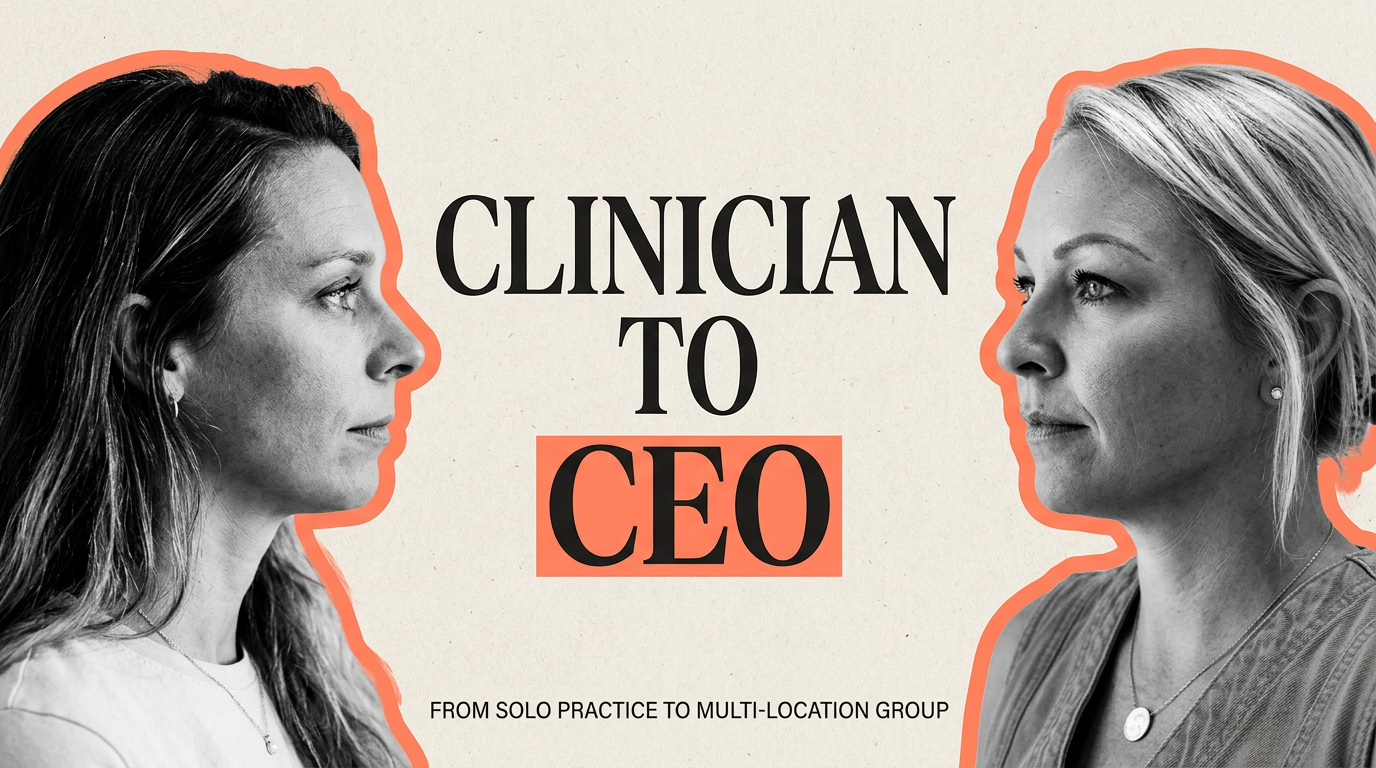
Most dietitians don't intentionally set out to build a group practice…
They simply want more freedom.
That's exactly why Erica Branz started her private practice. She wanted flexibility, autonomy, and the ability to build a career on her own terms. But over time, something unexpected happened…. And, as life changed, so did her business.
In this episode of The Dietitian Business Podcast, Erica shares the behind-the-scenes story of how she naturally grew from a solo clinician into the CEO of a thriving group practice with two office locations and six dietitians.
Over the past two years, Erica has also been one of my dearest business coaching clients, and it's been incredible watching her navigate every stage of growth- from hiring more dietitians, moving people into leadership roles, building a company culture, and learning how to step back to enjoy the fruits of her hard work over the years! So, I was so excited to bring her on as a guest to the podcast!
One of the biggest takeaways from this conversation is that growth didn't happen because Erica had the perfect plan. It happened because she continued making the next best decision.
Whether it was stepping away for maternity leave, launching another business venture and wanting fewer client hours, or increasing access to care by accepting insurance, each season required her to evolve as both a clinician and a business owner.
If you've ever wondered whether you're ready to grow your practice, hire your first dietitian, or become more of a CEO than a clinician, this episode is for you.
One of my favorite quotes from Erica perfectly sums up entrepreneurship: "Want to grow? Don't wait for the perfect time. Growth is not linear- it's full of twists and turns."
What You'll Learn in This Episode
1. Why Erica Started a Private Practice in the First Place
Freedom, not building a large company, was the original goal.
Erica shares why she left traditional employment and how that decision eventually opened doors she never expected.
2. How Her Practice Naturally Grew into a Group
Instead of aggressively chasing growth, Erica's business expanded alongside her life.
We discuss how maternity leave, shifting priorities, and launching another business created opportunities to hire, delegate, and build a team.
3. Why She Switched from Private Pay to Insurance
Erica originally built a private-pay practice but later chose to credential with insurance to increase access to nutrition care.
She shares what influenced that decision, what changed, and lessons for dietitians considering insurance.
4. The Hardest Part of Scaling: Becoming a Leader
Hiring isn't the hardest part.
Leadership is.
Erica candidly shares why learning to transition from clinician to leader became the most challenging…. and most rewarding part of growing her practice.
5. Transitioning from 1099 Contractors to W-2 Employees
Many practice owners struggle with deciding when to make this change.
We discuss:
Why Erica transitioned her team
What she learned along the way
The benefits and challenges of both models
Advice for other growing practice owners
6. Building a Company Culture Across Multiple Offices
As your team grows, culture becomes intentional.
Erica shares how she's worked to build connection, support her clinicians, and maintain a positive workplace- even while managing multiple office locations.
7. Why Growth Is Never Linear
One of the most powerful lessons from this episode is that successful businesses rarely grow in a straight line.
Growth comes through seasons of uncertainty, pivots, setbacks, and opportunities.
The goal isn't perfection.
The goal is continuing to move forward.
Practical Takeaways You Can Apply Today
Stop waiting until you feel completely ready to grow.
Build your business around the life you want… not the other way around.
Think strategically about whether insurance fits your mission and long-term goals.
Invest in leadership skills as much as clinical skills.
Be intentional about your company culture from day one.
Understand when transitioning from 1099 contractors to W-2 employees makes sense.
Remember that every successful group practice starts with one brave decision.
Episode Insight
Building a successful group practice isn't about following the perfect roadmap.
It's about staying flexible, making thoughtful decisions, and growing alongside your business.
The clinicians who become great CEOs aren't the ones who never make mistakes.
They're the ones willing to keep learning through every twist and turn.
About the Guest
Erica Branz, RD, is the founder and owner of Branz Nutrition Counseling, an insurance-based group private practice with two office locations and a team of six dietitians. In this episode, Erica shares the honest story behind her growth- from starting a private practice for more freedom to building a thriving team while navigating leadership, insurance, hiring, and company culture.
Join the Conversation
What stage of business growth are you in right now?
Thinking about leaving your job?
Hiring your first dietitian?
Growing into a group practice?
Learning how to become a better leader?
Leave a comment below… I read every one.
👍 Like this episode if it encouraged you.
🔔 Subscribe for more conversations on private practice growth, leadership, hiring, insurance, and building a profitable dietitian business.
📤 Share this episode with another dietitian who's ready to stop waiting for the "perfect time" and start growing their practice.

Listen to “From Clinician to CEO: How This Dietitian Grew Her Group Practice from 1 to 6 Dietitians | Guest Interview”


Episode Transcript
Maggy Doherty: Welcome to the Dietitian Business Podcast. I'm Maggie Doherty, your host, dietitian, and business coach. In today's episode, it's so much fun. I did a guest interview with Erica Brands of Brands Nutrition Counseling. Usually we do one-time business coaching sessions, but this one was my actual business coaching client that I've had the past two years. And she tells her own story of how she went from clinician to CEO and how she grew her practice from.
Maggy Doherty: One office to two office and one dietitian to six. I love this one quote she said where she said, want to grow, don't wait for the perfect time. Growth is not linear, it's full of twists and turns. So stay tuned in this episode. If you are a solo practice owner and you wanna become a group, or you're a small group wanting to become a mid-sized group, this episode is gonna walk you backstage through what it looks like to grow your practice.
Erica: And so we hear Erica's story of how she naturally grew her practice with starting maternity leave, how she went from a private pay practice to insurance-based, how she went from 1099 to W-2, how she added benefits. So it's a great episode. So tune in for the next hour and you're gonna love hearing this group practice owner story.
Maggy Doherty: Welcome to the Dietitian Business Podcast. And I'm so excited to have my business coaching client, Erica, here today. Erica, hi, long time no see.
Maggy Doherty: Hi Maggie, good to see you again.
Erica: I'm so excited to talk to you just in a different environment where we're not in a coaching session, but really focusing more on you and you getting to share your story of growth over over the past couple of years.
Maggy Doherty: Yeah, I'm excited to share it.
Erica: Yeah, so I was looking back at our business coaching notes and next month is our two year anniversary of working together.
Erica: Yeah, that's crazy. I had a feeling it was coming up on that.
Erica: Yeah, it gave me a flashback to you had done a free consult call with me and I remember I was in my new office in Dallas that I had just started renting. and I remember talking to you on the phone and just kind of be like, my gosh, like one of my first business coaching clients.
Maggy Doherty: That yeah, that is exciting. I remember being so excited to work with you and sounds like the feelings are mutual, maybe.
Erica: Yeah, I think so. well, for those of you guys who don't know Erica, so Erica is a registered dietitian and founder of Brands Nutrition Counseling, which is a multi-location group practice specializing in eating disorders, nutrition counseling, and wellness services throughout Illinois and Missouri. Over the past decade, she has grown her practice from a solo venture into a thriving team of dietitians while becoming a passionate advocate for leadership development.
Maggy Doherty: Sustainable business growth and expanding access to quality nutrition care. Love that introduction and love just kind of reading it and being able to see your path over the past two years. So, what I want to talk about today is just kind of hearing the beginning, the middle, and where brands nutrition counseling is at right now, especially for those listeners who are currently their own practice and they want to grow to a team of three.
Maggy Doherty: Or maybe it's a team of three who wants to grow to team of six and getting to hear what it's been like to scale from one to six. So when you first started brands nutrition counseling, what did it look like?
Maggy Doherty: Yeah, it was just me. I started the practice as a way for me to see outpatients when I was working alongside an inpatient eating disorder treatment center.
Erica: And we had patients that would follow you through the cycles of their treatment and then be like, hey, I need an outpatient dietitian when they were ready to leave treatment. And so I was like, sure, I'll see you. and at that time I was pregnant with my oldest and was like, I really want to move into this full time with doing outpatient work.
Maggy Doherty: With the eating disorder population, in order for me to have more flexibility with having a child on the way. And so I ended up leaving my full-time job with just one outpatient on my caseload.
Erica: Some people scared scared. Yeah.
Maggy Doherty: Yeah. It's definitely an example of like betting on yourself.
Maggy Doherty: For sure.
Erica: And you left while you were pregnant, so you knew you're about to be taking maternity leave. and now with being on your own practice, you don't have maternity leave benefits.
Maggy Doherty: Correct. Yes. And so that was something that actually led me to kind of grow a little bit as well. but it was definitely a scary time. I was able to have more flexibility to stay home with my my child, but at the same time I was working to try to build the business as well. And I was wearing all of the hats while also being a mom. So not only was I the clinician, I was the person that was answering the phones, I was scheduling the clients, I was billing for the clients, I was marketing for myself. and I was doing that while I was home, watching a child at the same time. so it was it could chaotic at times.
Maggy Doherty: Yeah. it reminds me a lot when I first started my practice back in twenty nineteen and picking up the phone and answering me like, Hi, this is this is Maggie. Thanks for calling. And the clients be like, wait, this is the clinician on the phone? This is the dietitian? It's like, Yep, I'm a I'm a one stop shop.
Maggy Doherty: Yes, yes, for sure. I I'm actually covering for our intake coordinator next week. she's going on vacation and it just made sense for me to kind of jump in and and do that. And I was thinking about that today, getting ready for the podcast. I was like, this is gonna be so weird answering calls again because I haven't done that. But I I also am looking forward to it to having that initial communication with the Clients, just and it's also a way for me to maybe see if there's any loopholes that we have within our intake process as well.
Erica: Absolutely. So when you started brands, it sounds like your goal was just to get flexibility. Did you know you wanted to grow into a group practice, or did you just know you wanted to go into private practice to have flexibility?
Maggy Doherty: I wanted to go into private practice to have flexibility. I knew when I was going through my undergrad and my internship that I always wanted to do outpatient and I wanted to work with eating disorder clients. I never imagined doing anything along the lines of having a group practice. And that goes into it led me there with
Erica: becoming a mom. So I ha went on to have my second child and was only doing brands nutrition at that point and had a decent caseload that I was like, well, I can either refer all of these clients out to another practice, or I can have someone come in and see if they'd be willing to cover some of my client sessions so that when I returned, I would be coming back to somewhat of a caseload versus
Erica: Starting from scratch again.
Maggy Doherty: So it sounds like it happened very naturally of like, hey, instead of referring out, I want someone in-house to refer to. So then that was your first hire.
Erica: Mm-hmm. Yeah, yeah. And it was 1099. so we've developed over time from being private pay to insurance from 1099 to W two. so yeah, that was also just kind of like great, join my team and this is what we do and this is what I need from you, and that's it. And it was pretty simple.
Maggy Doherty: Yep. Yep. Same. I my my first hire was 1099. I was actually just talking to a business coaching client right before this who's trying to make her first hire. And I was just saying how 1099 can just be like the easy first step where there's just not as much you have to do. You don't need an HR platform and all the things that come with with W2. So it can be an easy first hire. Is that hire still with you?
Erica: ironically, she is not. She actually left because she had her own babies. And so she is the stay-at-home mom. Yeah, so it it's not that she left our practice because of anything that we were doing. It was more so where she was at within her life. but we actually did yoga teacher training together, and that's how I met her. and she actually knows my mom and sisters, and so we still very much stay connected to each other.
Erica: Yeah, that's awesome. That's awesome. So that first hire happened pretty naturally. what about the second, third, fourth? What kind of led to how did those hires happen? yeah, so I'd say the another hire happened because my sisters and I decided to open up a yoga studio. And so I was doing three days of outpatient work and wanted to go down to two days so I could spend time in the running and managing the yoga studio that we were building. And so I had brought on another 1099. to again take over the clients that I couldn't see, so I could go down to two days over three. And we grew with having additional 1099s when we were all private pay. And there wasn't really any expectations in terms of how many clients they needed to see, anything along those lines.
Erica: we weren't monitoring KPIs. it, you know, we saw the session, we we saw the client for the session and we built right away. And then things really shifted at end of 2022, beginning of 2023, when we decided to take insurance. And that's where we shift our model from going from 1099 to W2. And
Erica: Moving to the expectation that they had to be in at least part-time to stay on our team.
Maggy Doherty: What made you change from private pay to insurance?
Erica: So access to care was a big thing. Insurance companies were starting to cover sessions for eating disorder clients, which is huge because that really limited them from being able to consistently get the help that they needed from an outpatient dietitian. And if their therapist wasn't taking insurance, that was another financial burden for them. And so when we got word that
Maggy Doherty: Eating disorder sessions would be covered by insurance. We hopped on that train and it's been so helpful because it really alleviates that financial burden for a lot of our clients.
Maggy Doherty: I know a lot of dietitians that are in private practice either are scared to accept accept insurance or they've started accepting insurance or going from insurance to private prayer private payer, private pay to insurance. when you decided to accept insurance, did you do the credentialing yourself? Did you figure out how to bill? Did you have a bill or like how did you figure out that piece?
Maggy Doherty: Yeah, so I did not feel like I had the capacity to learn how to credential. And at that point, it was just myself and a n the three other dietitians. and so I hired someone to do the credentialing process. and and I take that bad thing. She credentialed myself and one other dietitian because the other two
Erica: We're still 1099, just seeing a minimal number of patients. and so I was like, let's focus on just myself and this other dietitian getting credentialed and go from there, especially given the cost to have someone credential us. It was a nightmare. it was a nightmare in that she struggled with communication. It probably took us nine months to get credentialed.
Maggy Doherty: It was a long time and she was expensive for what I felt was a lack of her job being done. And so for the two other dietitians that were very part-time, 1099, I did them myself. And I was shocked at how easy it was. I did a little bit of research, you know, just went through the process and I was like, that's it. I was like, okay.
Erica: So we do all of our credentialing in-house now. We do not hire that out. the person that got us credentialed did not do billing. And so I again knew I didn't have the capacity to do billing myself at this point. I had three kids. and I believe was pregnant with my fourth. And so I considered a third-party billing.
Erica: Company. And it's a hard transition going from private pay to insurance because you're used to seeing the client and then billing them and getting paid right away. With insurance, you see them, you bill insurance, and it's a waiting game in terms of like when you're gonna get compensated. And so I think that added to some of my stress.
Erica: When we were using a third-party biller because I felt like I was doing a lot of the tracking on client sessions, were we getting paid, following up on what's going on with this claim, et cetera? And so I ended up going with another company and experienced the same thing. I was feeling very optimistic. It was a referral from another dietitian and had so many outstanding claims.
Maggy Doherty: Then I was like, I have to figure this out myself. I have to understand how to bill insurance. the the process of you know, ERAs coming in, checking them with EOBs, following up with our EMR. and so for a while it was myself, and then I actually had my mom helping me, who had recently retired. And so she was like, I would love to to do that. And
Erica: We were really able to streamline our system that we were able to bring on an in-house biller. And that's been great in that we were able to train her because she wasn't familiar with nutrition billing. I feel like that in itself is a niche. and she was a coming, she was a biller. She was working in a surgery center. And so she was familiar with insurance billing.
Maggy Doherty: But she's like, nutrition billing is a whole different game. I'm like, I've heard that. and so between my mom and I cleaning things up, her joining our team, we've really streamlined our billing process. But it took two outside billing parties before I realized again that like I really need to know how to do this part in the practice before trusting someone else with it.
Maggy Doherty: Yeah. Yeah. It it's interesting because your story's almost the opposite of mine when I grew my group practice, where I figured out how to credential myself and bill insurance. and then I hired a bill a very new biller from a local like billing school. And I was like, this is gonna be so great. I'm hiring a new grad from a billing school. They're gonna know what they're doing, but like I'll be able to help and and teach them.
Maggy Doherty: And so I kind of went through out of like I learned and then I taught this first person didn't work out. So then we had to hire another admin and then I taught them and then they didn't work out. So then we had to hire a third who finally figured it out and stayed with us for for years. but it's I always love hearing different group practice stories where like there's many roads that can lead people to having a group practice and just seeing how different people do it. So you've talked about this experience of having some turnover going from
Erica: Yeah.
Maggy Doherty: Private pay to insurance. as you look back, what was the hardest season of growth for brands nutrition or for becoming a group practice?
Maggy Doherty: I think some of the hardest growth was going from a clinician to a leader. I felt very confident being an eating disorder clinician. I had gotten years of experience doing it, working in an inpatient center. And as I took insurance, we moved to W-2.
Erica: I realized that things were different than the way that we started or needed to be different than the way that we had started the practice. we needed to monitor like KPIs and have expectations of how many clients needed to be seen and utilizing office space. there was a lot more that that went into it that I didn't go to business school. And so I
Maggy Doherty: Had to learn a lot of that myself. But I think the hardest part for me was being able to implement it. I think it's one thing to learn it, but then being able to implement it within your practice. And I think a lot of dietitians, myself included anyway, are people pleasers. And that can sometimes make leadership be very challenging when we are people pleasing. people on our team versus holding certain accountability boundaries that are needed to successfully run the business.
Maggy Doherty: So yeah, you know, the the hardest thing for dietitians and private practices, we're there's not accounting classes or leadership classes or management classes and we don't learn the business side. And so we end up having to learn as we go, figure it out on our feet. How did you learn? What like did you was there someone that you learned from? Did you have a mentor? Did you look online? Were you in Facebook groups? Like how did you learn how to do it?
Maggy Doherty: Yeah. So I would listen to podcast webinars, which honestly is how I met you, Maggie, was through one of your webinars that you hosted in regards to insurance billing and just reached out and was like, I think I'm gonna see if she'd offer business coaching. just to be able to learn from some of the mistakes that she made.
Erica: Because at that point was making a ton of mistakes and I knew that things needed to run smoother and cleaner and people needed to be accounted for. and if someone is already doing it, it just helped kind of accelerate that process by being able to share the things that worked and didn't work for them.
Maggy Doherty: Had you hired a business coach before me or was that your first
Erica: I yeah, I did have a business coach before you, Maggie, and she was also wonderful and I think it was the season of where I was at in my practice that we kind of hit a plateau of where I was like, I think I have need to settle with the information that I've worked on with her, get to that point, and then I was at a different point.
Erica: and scaling and the business where I realized that I needed to get back to coaching, but to try something in someone else.
Erica: Yeah. Yeah. Cool. So it sounds like you learned a lot through some free resources like podcasts and books and literature. And then you also paid a little bit for advice to help you along the way.
Maggy Doherty: Mm-hmm. Mm-hmm.
Erica: If you were to go back and do it again, what are some changes you'd make with your learning? Like what would you what would you do again? What would you spend your money on? What would you not spend your money on?
Maggy Doherty: Yeah. in the beginning when it was just me, it was just figuring things out as you went and and that worked because it was just me. And then as I brought on the first clinician, ten ninety-nine, I wish I would have gotten some business coaching sooner than later. I think that would have helped solve a lot of my struggles.
Erica: where I felt like I was often, you know, just spinning on a hamster wheel. so I think that's probably one of my biggest regrets is not starting sooner.
Erica: Yeah. Yeah. It's always s so interesting when you're able to look back and see what you coulda, shoulda, would have done differently. But we obviously can't go back and change the past, but we can start where we are and move forward with that that knowledge that we have. you you brought up previously of switching from 1099 to W two and you didn't have a business coach at the time. How did you figure out? which one to do and why that was the right choice. And how did you navigate that? Cause that's a question I see a lot in Facebook groups and a lot with the newer dietitians that I coach. It's should I do 1099 or W two or how do I do it? So how did how did you figure out that piece?
Maggy Doherty: Yeah, so that's actually when I did hire my first business coach was when I was going through that transition because that felt like a a big transition. And I wanted some help and guidance in terms of like what are other like practices doing. and so I did have a business coach during that time and that was one of her her biggest suggestions was going from 1099 to W2 and That felt really scary. but being an insurance-based practice, it made the most sense to move to a W-2 platform, especially when I was going to have expectations in regards to how many clients they were gonna be needing to see certain KPIs to meet, that W-2 felt like the best route.
Erica: for us in our practice.
Erica: And what was you mentioned that it felt really scary when you had to make that transition. What was what was scary about it? What were some of your fears?
Maggy Doherty: Yeah, so think the some of the fears that I had was that paying for employer taxes. So we're paying for ha fifty percent of their their taxes. and then with ten ninety nine, the dietitians were not getting paid unless we got paid from insurance. Where with W two, they were gonna get paid regardless if the practice got paid. And so luckily I was building reserves and not really paying myself much. in order to have a cushion to make that jump from 1099 to W two and have the funds to pay the dietitians for the work that they did, cover employer taxes. another thing that we were offering was benefits, because that was important for the 1099s that we had on our team to eve
Erica: To go to us full-time, because a lot of them were working at other places and were just kind of working for brands as a way to make extra income, essentially. And so when we had certain perimeters that needed to be met, they realized that, you know, either I need to come on full-time with brands nutrition or continue at my other full-time job. And so in order for them to do that, we often had to start offering benefits, PTO.
Erica: medical, dental, vision, short-term disability, covering their liability insurance, paid holidays. So it was a lot on me to ensure that we had the funds to be able to provide those things.
Erica: Mm-hmm. And how did you figure out when to add benefits, what benefits to add, how to how to do it? And again, you know, there's not a there's not a playbook where step one, you add PTO. Step two, you add short-term disability. Step three, you add, you know, there's not a guide book. So how did you figure out which ones to add and why?
Maggy Doherty: Yeah. I had asked the individuals on the team what was important to them. So I got some feedback from them, but then I also consulted with an employment attorney so that I could make sure that we were compliant in the states that we were practicing that we had offices in. And so jumping back a little bit, I started the practice in Missouri. where I was living there for seven, eight years and had our first two kids. And my husband and I realized that we wanted to move over to the Illinois side. So where we live, it's about 30 minutes from downtown, St. Louis, Missouri. But we're from the Illinois side. And so I'm like, well, we've got a good referral network in Missouri. Some of our dietitians are in Missouri, but there's no resources over here on the Illinois side. And
Erica: I don't want to drive over from Illinois to the Missouri office. I was, but I decided to open up a location on the Illinois side that I could see clients out of as well. And so we just continued to keep the two locations as we moved from private pay to insurance 1099 to W2. And I realized that having
Erica: Employees in two different states meant two different employment laws. And so I consulted with an employee meet an employment attorney. And ultimately we decided to implement employment laws for both states following the state of Illinois employment laws because that was the stricter state when it came to employment.
Erica: Mm-hmm, mm-hmm. Yeah.
Maggy Doherty: So that was an additional offense in terms of needing to ensure that we were compliant.
Erica: Absolutely. Remember our first, we had a dietitian who was phenomenal on our team and she needed to relocate back to Illinois. So we were based in Texas. She needed to go to Illinois. That's where I went to grad school. And we said, hey, we'll just open an office there so we don't lose you as an employee. And I remember I was running the business with my ex at the time, and he was out, and I had to figure out all on my own like, my gosh, now that you add a Dietitian other state, like it's not copy paste the same thing. And we had to even like in Gusto, that was the HR platform we were on, when we switched her address to Illinois, we had to upgrade to another level or tier on Gusto to be able to pay those taxes, then with insurance and all the things. It's it's a whole nother ball game when you hire from out of state, but it's not.
Maggy Doherty: It's not impossible. It's just kind of another another roadblock.
Maggy Doherty: For sure. And I would say our team is small right now. I would like to continue to keep growing to be able to provide more services to clients in need. but with having two locations, cultivating culture within two different locations can be challenging as well. And so
Erica: Our team doesn't always get to see each other in person because we're split between two offices. And assuming we can continue to grow, that will obviously keep improving because our team will have more people in office to be able to, you know, have one-on-one c communication in between sessions and things like that. But yeah, you're right, it doesn't copy and paste.
Maggy Doherty: So speaking of company culture, what are things that you have done to promote that company culture when you have more than one office?
Erica: Yeah, so we do quarterly gatherings. So each quarter we do something different and we tend to rotate between Illinois or Missouri. Again, they're about 30, 45 minutes from each other. and so our upcoming one in July is we're doing a spa night on the Missouri side. And so all of our Illinois clinicians, it's not mandatory, but we have pretty good attendance.
Erica: For all of those quarterly outings where our team gets together. but yeah, we've done things from cooking classes, candle making, a tasting menu at a restaurant, papay yoga. trying to think what are some other ones. But yeah, every quarter we're getting together as a team in person. We also have RD Huddle every week, where again.
Erica: Regardless when you're in Illinois or Missouri, it's a 30-minute huddle where we get together every week and just kind of check in and see how things are going as a way to keep our team engaged. And I think as time goes on and maybe we continue to grow, we're we might be able to separate that into Illinois and Missouri, but because our team is small, it makes sense to combine those right now. but yeah, we also have employee of the quarter. we do monthly like spot gifts where we'll bring in coffee to the office. So we usually do that on the same day in the as the Illinois office and Missouri office. but culture is really important for me. even though it's challenging between two locations, I do think it's doable. given our small team. But like I said, as our team would might grow in Missouri and Illinois, it might have more of a divide between location.
Maggy Doherty: Yeah. So speaking of team, I want to pivot more into leadership and operations and kind of that the whole team structure. so we talked a little bit about leadership and management and how you learn some of that through business coaching. But as you look at how you've led your team and what works and what hasn't worked over the past couple of years, what leadership lesson took you the
Maggy Doherty: longest to learn or what leadership lesson or thing about leadership have you learned that you feel like has been the most important thing on the leadership side?
Maggy Doherty: Yeah, that's a good question. I think accountability. If people don't have clarity in regards to the expectations, then they don't know what they need to be working on or towards or what they're accountable for versus what the practice is accountable for. And so we have individuals that are in leadership positions and have really been working on again what task are they accountable for. So should something fall through the loop or something isn't going well, we're able to pinpoint who is accountable for that task and monitoring that. So for instance, clinical notes, like we want to make sure that all of those are signed. We have a certain percentage that we're wanting
Erica: To meet each month and quarter. And if we're not meeting those, we know that like our clinical manager is in charge of ensuring that those notes are signed and that we're meeting the percentage for our KPIs. And so if we're not, we know, like, hey, so and so, what's going on here? Why are these not meeting our expectations? so we know exactly who's accountable for that task. But that took a while.
Maggy Doherty: To build, and we're still very much working through some of that as it's relatively new for us. I realized that I couldn't continue to keep doing all leadership tasks that I needed to offboard to other individuals on our team. and some have expressed interest in leadership, and so that's how we've kind of continued to to grow.
Erica: And it's helped me grow as well in terms of what am I accountable for as the owner? What am I in charge of monitoring? But then I also need to make sure that I'm keeping everyone else accountable for what they're accountable for.
Erica: Yeah. Yeah. And I feel one of the you know, with accountability, you know, kind of top down, bottom up with making sure everyone knows what they're accountable for. You mentioned KPIs, key performance indicators for kind of your line level dietitians or the dietitians that are seeing clients. How did you figure out what what KPIs do you track and which ones have you found to be the the most helpful?
Maggy Doherty: Yeah. So we are tracking KPIs from the beginning of the intake process to really the end of the client's journey. We're looking at how many intakes we're getting, weekly, monthly, quarterly. We're looking at our conversion rate. We're looking at retention for the dietitians with how many sessions they're having with their clients. we, you know, like to aim for anywhere from three to s to eight based on what the client is coming in to be seen for. we're looking at monitoring cancellation rates, dietitian utilization in terms of like how much availability do they have compared to if they're meeting their caseload. a lot of it has been, you know, trial and An error. When we first started, we were aiming for 27 clients per week and have since decreased that to 25. along the way of being W-2, we have moved from hourly to salary with a bonus. and that way, if they're seeing past 20 clients, they are getting a bonus for that, and so we're we're having to track that as well.
Erica: also revenue per clinician. we're monitoring that. And our average reimbursement rate is another big one.
Erica: Mm-hmm.
Maggy Doherty: And with all those KPIs is are you pulling that in your EMR? Are you using an external system or how are you pulling all those KPIs? 'Cause it sounds like you have quite a few you're you're tracking. And who's tracking it? Who's accountable?
Erica: Uh-huh. Yeah, good, good question. So we use Practice Better for our EMR, and unfortunately, they do not connect with Practice Vital, which is a way for those KPIs to be easily displayed and monitored. So we're currently working with someone that is building out a system for Practice Better to monitor those KPIs so we don't have to do them all by hand.
Maggy Doherty: So a lot of them have been by hand through a spreadsheet, Google Sheets, using our EMR reports to the best of our ability, and then implementing those into Google Sheets, where we're part of this pilot program right now for Practice Better to pull those that information from Practice Better and put it into a nice little system, very comparable to Practice Vital.
Erica: That unfortunately does not connect with practice better REMR.
Erica: You know, you just gave me a flashback. I remember we were first working together. you were paying someone a like a thousand dollars a month or something and that higher end to create like a KPI dashboard.
Maggy Doherty: Yes, forgot about that.
Erica: I just got I could like vision it remember it was a beautiful dashboard but when I heard how much you were paying for it I was like are you are you getting an ROI or return on investment on on that act of paying for KPIs? So if you kind of look back to that, would you, you know, people who are trying to figure out how to track their own KPIs, would you recommend, you know, that they hire someone to do it, that they, you know, try to use a platform like practice vital or just manually pull it, delegate someone on the team or How would you recommend another individual private practice person who's growing the team to track their metrics?
Erica: Yeah, I'm I I I think that if there's a tool out there that is relatively priced, that's always my go-to instead of recreating the wheel. However, I realize that people might not be in that position to have an extra fee added to their monthly expenses, especially if they're building and growing a practice, whether it's solo or moving into a group practice, that some of it might have to be done manually.
Erica: And in that regard, when we were starting out manually, we actually had some dietetic interns that were helping create some of our dashboards for us in terms of the way that I wanted to see them, that all we had to do was implement the data. And so I think if you have the opportunity to use a platform that's already established and connect to your EHR.
Maggy Doherty: Like why reinvent the wheel? If not, then working maybe with a student or an intern that's willing to get some volunteer hours or considering someone on upwork to help develop what you're looking for if you personally don't have the time to create it.
Erica: Yeah, great advice. So as we kind of get to the end of this, want to look more towards the future. So as you look back on your growth of going from one clinician to six in all of the hardships and the celebratory moments that came from that growth, where do you envision or where do you want your company to be in five years? as you look back on what it's been like to go from one to six.
Erica: Yeah, that's a great question. my goal is to continue to grow our practice, not only for more access to care, but it's really awesome that this practice that I developed and created is able to provide jobs and income.
Erica: And flexibility and passion for working within a certain field to other dietitians. That my goal is if we continue to grow, it allows people that are currently on our team to also continue to grow more into leadership. With more growth, we need more leaders. And so I think that's really cool outside of continuing to provide access to care for clients. It also internally gives us as dietitians ways to continue to grow outside of clinical, if that's in interest for people on our team.
Maggy Doherty: Yeah. You know, I think that's the my favorite thing about when I had my group practice was not only, you know, as you grow, you help more clients and you help more people in their lives, but you also help more dietitians. And when the company grows, someone's a dietitian's career trajectory can grow as well. And you can provide these great opportunities. So it's a it's a really beautiful part about growth is like you just you help more people and your reach goes further.
Erica: Mm-hmm. One hundred percent.
Maggy Doherty: So for that that person who's listening right now and they're thinking of growing, they want to grow, they're scared to grow, they're excited to grow, what advice would you give the private practice dietition owner who wants to grow?
Maggy Doherty: I don't think there's ever, don't wait for the perfect time. There's never a perfect time. something I told myself when I started the practice is and left with one outpatient, is that I was like, I can always go back to a full-time physician working for someone else if this doesn't work out. And
Erica: Growth is not a linear line. As you and I both know, there's a lot of ups and downs and twists and turns. And I've definitely felt that numerous times. one of I think of our biggest issues at times is retaining clinicians, that we've had to really revamp our benefits, offering salary, et cetera, in order to retain clients for us to continue to grow.
Maggy Doherty: And so there was even a time this week that I was just like, I just wanna, I'm just tired of this. I just wanna quit. And I'm like, that's not an option. The just because it's hard doesn't mean that you're gonna need to throw in the towel and give up. It's just I gotta pivot in the way that I'm currently doing things.
Erica: Yeah. Yeah. I love that. Yeah, those feelings of when you wanna give up but knowing it's not an option and that pivoting's the best thing we can do. And just as you grow a practice, it's pivot, pivot, pivot. And what what works at one person doesn't work at two and what works at three doesn't work at six. And your systems that work at six, if you get to ten may not work at ten. So you gotta you gotta pivot.
Erica: Give you.
Erica: Well, I love hearing your story and everything that you've gone through through the hardships and the twists and the turns from going from one to six. So thank you for hanging out and sharing that. If if anyone listening wants to follow brands nutrition, see your content, see your journey, check you out, where can people find you?
Maggy Doherty: Brands Nutrition Counseling dot com is our website. And from there you'll be able to find our social media platforms, which is also Brands Nutrition.
Erica: Yeah, love it. Easy. Okay, Erica, well thanks for sharing your story and I will see you around.
Maggy Doherty: Sounds good. Thanks, Maggie.
Maggy Doherty: Bye.
Resources
If you're planning to grow from a solo practice into a group practice, these resources can help:
Other Episodes You Will Love!
Why Your Dietitian Group Practice Feels Stuck at $1 Million | Coaching

What I Wish I Knew Before Hiring A Dietitian | Coaching

She Grew From Solo Dietitian to Group Practice Owner | Coaching
Heyya!
Want private practice tips, tools, and discounts?
Join my monthly newsletter today