

How to Build Multiple Revenue Streams as a Dietitian with Katie Dodd
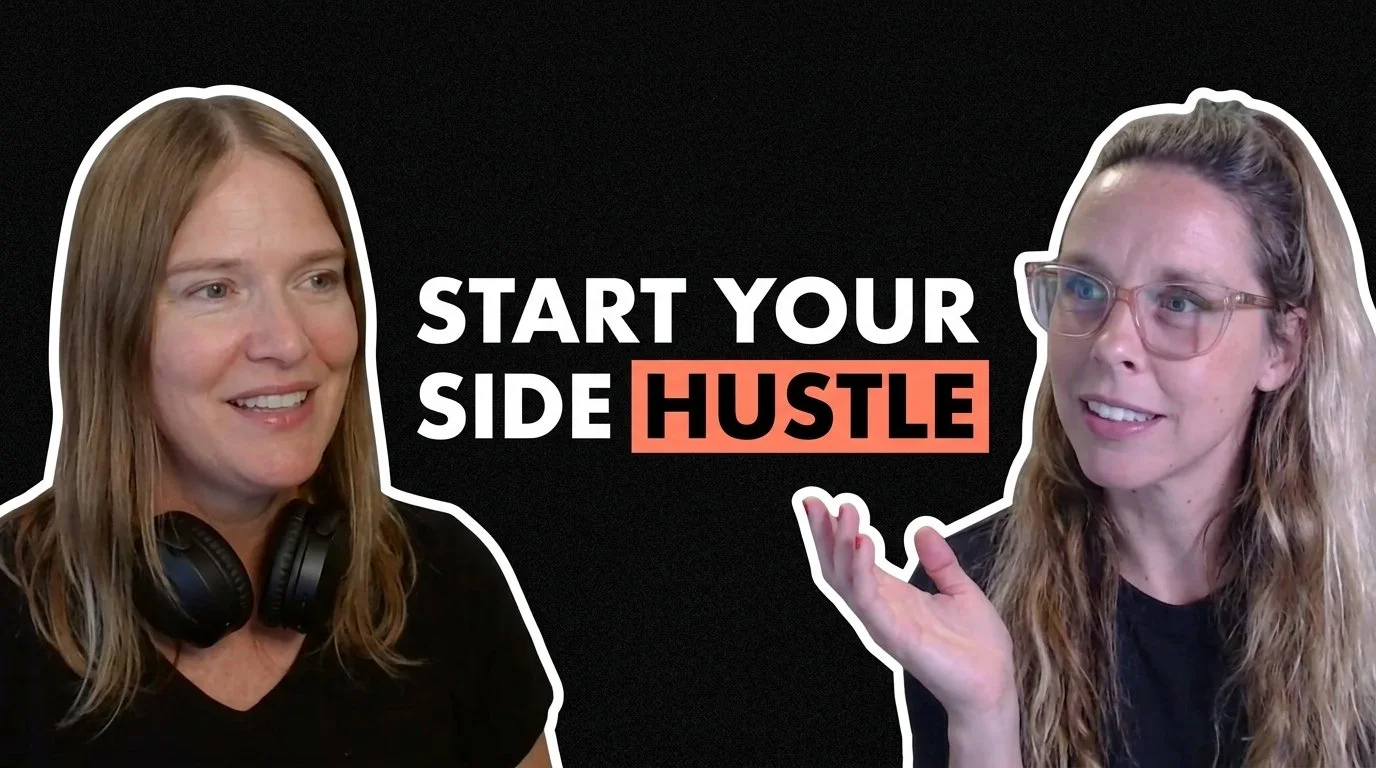
What if your side hustle could become more than just a little extra income?
In this episode of The Dietitian Business Podcast, Maggy sits down with Katie Dodd, dietitian, entrepreneur, business coach, speaker, blogger, podcaster, and founder of The Dietitian Side Hustle, to talk about how she went from a traditional dietitian career to building multiple brands and revenue streams.
Katie shares how her entrepreneurial journey started with a freelance writing opportunity and eventually grew into The Geriatric Dietitian, High Calorie Recipes, and The Dietitian Side Hustle.
Today, her revenue streams include blogging and ad revenue, affiliate marketing, digital products, physical books, courses, brand partnerships, webinars, speaking engagements, coaching programs, and more!
But Katie didn't build all of this overnight.
Maggy and Katie talk about the importance of building a recognizable brand, listening to what your audience actually wants, repurposing ideas into multiple offers, and approaching entrepreneurship as a long-term game.
They also dive into Katie's book, The Dietitian Side Hustle, including how the book came to fruition, what she learned from writing and publishing it, and why writing a book may not make you rich—but can become an incredibly valuable entry point into your business.
Katie shares what happened after launch, why continued promotion matters, and how a book, podcast, blog, or other piece of content can help people discover your brand and eventually lead them toward your other offers.
Plus, Katie ends the episode with three pieces of advice for dietitians who want to start a side hustle or create a new revenue stream:
• Discover what's possible.
• Learn from someone who's already done it.
• Work on the mindset that could keep you from actually doing it.
If you've been thinking about starting a side hustle, adding another revenue stream, writing a book, or simply figuring out what's possible outside of a traditional dietitian career, this episode is for you.
Listen to the full episode of The Dietitian Business Podcast on Spotify, Apple Podcasts, or YouTube.

Listen to “How to Build Multiple Revenue Streams as a Dietitian with Katie Dodd”


Episode Transcript
Maggy Doherty: Welcome to the Dietitian Business Podcast. I'm Maggy Doherty, your host, dietitian, and business coach. If you are a dietitian who's an entrepreneur and you're wanting to start a side hustle, you have a side hustle, you want to grow your side hustle, or you're building your own private practice or thinking about it, this episode's for you. I meet with Katie Dodd, who is an incredible dietitian who's created multiple revenue streams. And in this episode, we talk about all the different revenue streams she's created within her businesses, from blogging to digital products to ebooks to real books. And it leads us into a conversation where we walk through her journey of releasing her first book and what that entailed. This is such a great episode if you need some inspiration and motivation to get on your side hustle, to start building one, or to really hear what it looks like to start one.
The episode ends with three pieces of advice she gives to entrepreneurs, and you're gonna wanna hear this one. Listen up, tune in, and you're gonna love this.
Katie Dodd: Yeah, yeah.
Maggy Doherty: If you're a dietitian with a side hustle or you've been dreaming about starting one, you probably already know today's guest. She's a fellow dietitian, business coach, speaker, blogger, podcaster, and one of the leading voices in our field helping dietitians, interns, and students build side hustles and entrepreneurial opportunities. Please welcome the founder of Dietitian Side Hustle, Katie Dodd. Katie, welcome.
Katie Dodd: Hello, thanks for having me.
Maggy Doherty: I'm so excited to hang out. I think the last time we did this was about maybe a year ago when I was on your podcast.
Katie Dodd: Yep, it's been a minute.
Maggy Doherty: Yeah, and you've probably filmed, you know, how many episodes in the past year on your podcast?
Katie Dodd: The 300 mark. So it's pretty wild to me how long the Dietitian Side Hustle podcast has been going.
Maggy Doherty: Amazing. Well, today I really want to hear about kind of flipping, and instead of you interviewing people on your podcast, putting you in the shoes. So for those who don't already know your story, tell us about you and your story towards entrepreneurship.
Katie Dodd: Yeah, yeah. So I became a dietitian in 2008, and I had no interest in being an entrepreneur. I always laugh about the direction my career took because that was never the plan. My first job out of school was working for the Department of Veterans Affairs, and I fully intended to work in that job until I was 68 and a half years old and retire with my pension. Like, I had a very clear plan. And when I was in the VA, I was working my way up the ladder. I was increasing pay, creating new jobs, all these opportunities.
And what I realized later is I was what we call an intrapreneur. I was an entrepreneur within my job. But when you're an entrepreneur within your job, sometimes you burn yourself out because you keep going above and beyond, and you kind of change a standard where it's like, wow, you're above and beyond versus this is the expectation. And so I feel like within the VA, and I loved working for the VA, wonderful job, but I felt like I hit a ceiling. I hit a ceiling in terms of pay. I hit a ceiling in terms of opportunity, and I just felt like I wanted something more. This creative outlet I had, I just feel like I wasn't meeting it.
So then on the side, I randomly sat next to a dietitian on a plane coming back from FNCE, the last time it was in Texas. Right before we hit record, we were talking FNCE. It's gonna be in San Antonio this year, but it was in Houston a little while ago. And I met an entrepreneur dietitian. I just happened to sit next to her on a plane, had a conversation, got my first side hustle opportunity doing freelance writing.
And it sounds so ridiculous, but when I met this dietitian, I just asked, "Can I job shadow you? I'd love to learn more about what you do. I want to improve my own writing skills." And when she sent me a contract to do a gig, this sounds ridiculous, but I was so shocked that she was gonna pay me money. I am a chronic volunteer. I still volunteer, but I was volunteering so much that I didn't even think, man, I can use my skills and my talent outside of my job and make money and help people.
So I was so in the traditional box that this whole idea of entrepreneurship was like, whoa, I didn't even know you could make money on the side. So then once I started making money through this gig, I was like, who else will pay me money? So then I ended up finding opportunities for doing webinars, started dabbling in a little bit of brand work, and was honestly just loving being a side hustler. Then fast forward, I discovered the world of blogging.
So up until this point, I just didn't identify as an entrepreneur. I was one, but I didn't think I was one because I thought entrepreneurs only worked with patients one-on-one. And I had zero interest in working with patients outside of my one-on-one gig. I know lots of people love it, but that just did not sound like fun to me. So I didn't identify as an entrepreneur. But then when I learned I could create my own brand, a blog, an online business, and build up this whole thing and not have to work with humans, like, yes, let's do this.
In 2019, I started a blog called The Geriatric Dietitian. And this is when I shifted from doing work for other people to doing work for my own brand. Now I continued to build up that brand. At the end of the year, I started a podcast called Dietitian Side Hustle because I was just so excited. I describe it as like I drank the entrepreneurial Kool-Aid. And I'm like, I gotta tell more dietitians about all this stuff we can do. And so I started that podcast. Later on, I started a food blog called High Calorie Recipes.
And I guess, long story short, I ended up joining a business mastermind, started surrounding myself with amazing entrepreneurs who believed in me more than I believed in myself. Pretty much they carried my belief until I caught up with them. And then I ended up leaving my full-time job, which again, my plan, 68 and a half years old. That's when I was gonna retire. And I was able to leave that job at the end of 2021. And since then I have been a full-time entrepreneur.
I am entrepreneurial through and through. I wear so many hats. When I describe to people what I do, I'm like, well, I do a lot of random things. But I love it. And the biggest gift is I get to be home with my kids. My kids are now 11 and 15. I had to think for a minute. And it's just been the biggest blessing to do what I love, be an entrepreneur, and to have time freedom. So that's my quick story.
Maggy Doherty: I love that. So what are all the different revenue streams that you have today as an entrepreneur? And then what were some of them that failed and didn't work as you look back?
Katie Dodd: Okay, let me see. So again, I am an entrepreneur, and I just want to give this caveat when I share the story. I've been building my brand since 2019. Sometimes when I share with people all the things I do, they get overwhelmed. "Well, I can't do all those things." Like, no, no one can start doing all the things. It's like you start one thing at a time, and then you just keep adding. That's one of the cool things about being an entrepreneur, is you can build up multiple streams of income.
So I wear three hats. I am a blogger with The Geriatric Dietitian. I'm a food blogger with High Calorie Recipes, and I am a business coach through Dietitian Side Hustle. So we'll start with The Geriatric Dietitian. I make money through that blog through multiple ways. I have ad revenue. So I have an ad network that I'm connected with called Mediavine. And so the website makes money just by people putting eyeballs on the website. It is glorious.
I also make money through affiliates. So specifically Amazon affiliates on my website. I might mention a protein powder, and I have a link to my Amazon affiliates with full disclosure that I'm an Amazon Associate, I earn on qualifying purchases. And so I make money through affiliate sales. I also sell digital products. So I have handouts, ebooks, all kinds of resources through The Geriatric Dietitian.
I also have physical books that I sell through Amazon, their Kindle Direct Publishing program. For The Geriatric Dietitian, it's a cookbook. I have a course that I created. It's about gaining weight made easy, really helping to support people who need weight gain nutrition. So I sell a course, and then I feel like there's one more I'm leaving out, but if it comes back to me later, I will say it. But let me summarize that: ad revenue, digital products, ebooks and books, affiliate sales, and a course. Those are the five main ones.
So also through The Geriatric Dietitian, I do some work with brands. I do speaking gigs, I do webinars. And sometimes too, I always like to share this, and this is one of the things that I love about building a brand, building a brand with a very specific niche to where you become known as the go-to expert. I often tell people I'm not the only geriatric dietitian. I'm probably not even the best geriatric dietitian. But when you search my stuff online, it pulls up my website with a picture of me as The Geriatric Dietitian. And with that comes opportunity.
So I often get opportunities that come into my inbox. One that came recently, which I was thrilled about, was getting an email from AARP. Because AARP is right up my alley as a geriatric dietitian, and they needed a medical reviewer. And so what that looks like is someone writes an article on nutrition, and because AARP is legit, they don't want to be putting out this spammy clickbait stuff. They want someone with expertise to review it and make sure it's accurate. So this is something that I've started doing with them. And it wasn't because I found them. It's because they found me because I built a brand.
So all that to say, those are the income streams through The Geriatric Dietitian. And I feel like there's always these little ones that pop up. I'm like, and this, and this, and this. With High Calorie Recipes, it's kind of like the sister website to The Geriatric Dietitian. I make money on ads through that website. It has much less traffic, but it still makes money through ads. I sell digital products. It's the same course with The Geriatric Dietitian. I lead people to the same one, and affiliates.
With Dietitian Side Hustle, I make money through affiliate sales as well. I promote different products and services by dietitians, even affiliate sales for different products I recommend and use, like for email marketing or for hosting websites. Amazon as well. I am an Amazon Influencer, so I have a storefront where I'll be talking about, "Hey, this is a really cool microphone I use. Here's my store if you want to go check it out yourself."
I have multiple programs that I run focused on blogging, but then also starting side hustles. I have my book, Dietitian Side Hustle, that I just wrote at the end of last year. And also speaking gigs related to entrepreneurship. So I know that's kind of a lot, but those are some of the things that I do. But I just love it. It's like I never get bored, and there's just all these fun things that I get to do.
Maggy Doherty: I think the coolest part is it sounds like everything's been very natural and organic. So you start this thing, you see what works, you keep doing more of that, you replicate it to these other brands. And then once you realize people are buying this product, you take this product and it becomes a book. And then the book becomes a course, and the course becomes a speaking gig. And I think as you start to build something, it's that two birds, one stone mentality that we can find. You can take one product or idea and turn it into multiple things.
Katie Dodd: Yeah, and one thing I'll say too is one of the best things we could do is listen to our audience. We have our ideas of what we think people need. But when you listen to what people are saying, "Here's what I want," they'll tell you what they're willing to buy. When I first started with The Geriatric Dietitian, I had so many people reach out to me saying, "Hey, Grandma's losing weight. I don't want to go buy Ensure. Do you have any recipes for high-calorie shakes?" And I was getting multiple emails from people about this. I'm like, no, I don't, but I can.
So that's what created my first ebook, because my audience was asking for it. It's called High Calorie Shakes. I created it. It actually launched, if you guys remember when the world shut down in 2020, that is when this product actually launched and went live, when we were in our 14 days to stop the spread or whatever it was. And so we can laugh now. But anyways, this book I made over six years ago.
And it is still making sales. It is still helping people. It's a piece of passive income, meaning I created it once. I do have systems in place to drive traffic to it. But once I created that, I was like, wow, this is cool. People told me they wanted this. I made it. They're buying it. So then within the next couple of months, I made two more ebooks. So I'm like, yes, here's some more high-calorie recipes. And I made a book on gaining weight.
Maggy Doherty: That's so cool. So speaking of books, I have been following you on Instagram and Facebook and all your pages and saw that you'd published your—is this your first book? Because it sounds like you've had a couple books.
Katie Dodd: Okay. So I'm reaching up here. I have some ebooks that I created, and then I did put them on Amazon. And so this is my High Calorie Shakes I was talking about, the one that I created in 2020. It started off as an ebook, but then I learned how to put it—like, not everyone's ebook-friendly, especially a lot of the older adult population. They want a physical, in-your-hands book. So I had created lower-content books.
So low-content books aren't like a manuscript. A manuscript is chapters and lots of content. So my High Calorie Shakes book, it doesn't have a ton of recipes. It's got very good, specific recipes, but it's not a huge, massive book. I also have, randomly, a coloring book for dietitians. I have journals. So I've created a lot of products that are books, but not like a real, real book, if that makes sense. It's like they're real books, but it's not like a manuscript.
Maggy Doherty: So then this is your first manuscript, chapters, all that? All right. I want to know everything. Starting from the beginning, how did you realize you wanted to create a book? How did the book come to fruition?
Katie Dodd: I feel like so many dietitians, and honestly people in general, we always have this dream of someday I'm gonna write a book. I'm gonna write a book about this, I'm gonna write a book about this. So I've always wanted to write a book. It's always been in the back of my head. But like so many things in life, the idea sounds good, but the actual sitting down doing it is a lot of work. So I knew that I wanted to create a book, but honestly, the topic that I was gonna focus on, I wasn't entirely sure.
How this book came to fruition is I actually joined a book-writing mastermind. I cannot tell you in my story how valuable it has been putting myself in the right rooms with the right people who are gonna support me, encourage me, and hold my toes to the fire so that way I do the thing I want to do. So I joined a book-writing mastermind with a dietitian named Liz. Her brand is The Dietitian Editor, and she helps dietitians do Amazon Kindle Direct Publishing, which is where you do the print-on-demand books through Amazon.
But then she was running this book-writing mastermind. So I was like, yes, I would like to join that. So I joined a year-long book-writing mastermind. And in the very beginning, I had to figure out what do I want to focus on. And honestly, it was between Dietitian Side Hustle or something related to geriatric nutrition. Because remember, I wear lots of hats. But I just love dietitians so much. And I see so many questions over and over again online, on Facebook. And I'm like, I just want to put it all into a book.
Because as I was doing the research, there really wasn't anything out there, or a lot of stuff out there, that really met this need of entrepreneurship, of side hustles. But also my book has a lot to do with mindset. It is how to do the thing, but it's also like we get down to the thing that's really gonna get in the way. And that's all the stuff in between our ears, our mindset, all those things.
So I made the decision to focus on Dietitian Side Hustle. I went through this mastermind, which did have some coursework stuff that we went through, learning how to do our market research on Amazon, what's out there, how to create an outline. But for me, the best thing about the mastermind was creating a timeline of what we're gonna do, when we're gonna do it, and holding each other accountable. We were on this app called Voxer, and that's where you could send voice messages. And I swear I used Voxer just to complain.
Because the idea of writing a book is awesome. Sitting down and writing a book, honestly, it's a lot. It is a lot. I mean, this book itself is like 400 pages. It is ridiculous. Because, like I said, I love dietitians and I want to share all the things. And it gets very tedious. It gets very much to the point where you're like, I don't want to write ever again. But then you keep going. And then you get to the other side, and you're like, that wasn't that bad. It's like this whole mental game.
So I wrote the book, and one thing I did decide to do is the book is available on Amazon in paperback, hardcover, it's on Kindle for ebook readers, and I learned how to do Audible. So actually this book's also on Audible as an audiobook. So it's like any format you want, the book is there.
Maggy Doherty: Amazing. Wait, I want to know about the Audible part. Did you record at your house? Who taught you how to speak? Because I know I was listening to something that basically was saying the tempo or the speed of normal speech is X number, but a podcast has to slow it down a lot because you don't have the visual.
Katie Dodd: Yeah, here's my problem. Because I've been a podcaster since 2019, I was like, an audiobook is gonna be so easy. I can do this. So apparently there's a whole science to sound. And so honestly, how I did it was I used a tool called Audacity to record. Every time I recorded it—so Audible, when you sign up, you can create a free account. You could upload your files, and it will kind of give you a thumbs up or thumbs down. This file meets the criteria or it doesn't.
Every single time I recorded a chapter, it did not meet criteria. But then I could go in Audacity, which is a free recording tool, and you could adjust all these settings that I still had no idea what I was doing. And I would actually use ChatGPT. I would do a screenshot of what Kindle said—or not Kindle, what Audible said I did wrong. I would put it in there and say, "Okay, based on this, what settings do I need to adjust?" Now it was not perfect. Sometimes it would tell me what to do, and it was still wrong.
But I was almost to the point where I was about to go pay money to go find a recording studio because it was like, my goodness, you don't know what you don't know. And it is a whole science. But I do embrace the "done is better than perfect" mantra. I didn't know anyone else who'd done Audible before, so I didn't have anyone to pick their brain. So I just did the best I could with Google, ChatGPT, Audible, and Audacity. And I got it done.
The hardest thing is the recording itself is over 10 hours. And even though I podcast, even though I speak, even though I do a lot of things, reading for that long, I lost my voice at one point. My tongue, I was starting to slur my words. I'm like, geez, I slur my words on a good day. But it was just the physical—it felt like a workout almost to record that much content. So it was very fun to learn what goes in on the other side of Audible. And it just is so cool because I'm an Audible listener. So to see my book on Audible is like, I did it.
Maggy Doherty: That is so neat.
Katie Dodd: Yeah, yeah, it was fun. I'm glad I did it, but it was like writing the book. In the moment, you're like, "This was a dumb decision. Whose idea was it to do it?" But you just keep going through.
Maggy Doherty: Yeah, and now it's all done.
Katie Dodd: Yeah, that's the beautiful thing about it. It's done. I mean, over time I might want to update things, but it's done. Yeah. Not Audible. I won't do that again.
Maggy Doherty: Bird's-eye view of the book, why would someone get it? When they finish it, what are they gonna walk away with? What does the book teach you?
Katie Dodd: The book is called Dietitian Side Hustle. The subtitle is A Comprehensive Guide for Starting a Side Hustle, Making More Money, and Loving What You Do. So the book itself includes 34 different side hustles, and it walks through what it is, how to do it, tips for success. So every single side hustle, it shows you how to do it. It also walks you through side hustles outside of the field of dietetics. There's a lot in it.
But for me, really the bread and butter of this book isn't just the business stuff. I mean, the business stuff is great. We go over what is a side hustle, how to find one that's the best fit for you. Do you want to be a side hustler or make a plan to leave your job? We talk about the different freedoms of financial freedom, time freedom, how to do all the side hustles. I have a whole chapter dedicated also to Business 101. It's like a hundred pages all about business. Just all those questions you need to know, like business structure, taxes, legal, all that stuff we didn't learn in school.
I have a whole chapter about money because I like to talk about money, and then the steps for getting started. So one of the important things for me was I didn't just want to create a book that was information. I wanted to create a book that would change lives. I wanted to create a book that someone would implement because implementation is so much better than just cramming our brains full of more stuff. So then I have a whole section helping people to dream bigger, the keys to success, a whole chapter on failure.
Because, spoiler alert, anything you do, if you're an entrepreneur, you will fail. That's not bad. It's part of the process. And then finally, I have a section on where to go from here. And then in the appendix, I have all these workbooks. So it's not just learning, but there's all these workbooks and tools to help you do the thing. You want to make a plan to leave your job, that's in there. You need to figure out your niche. Here's a worksheet to help you clarify who you're serving. Getting started workbook, action planner, a workbook on how to get more time to do the things you want to do.
There's a lot in here, but I guess the take-home is it's designed to help you. It sounds cheesy, but I say, "Live your dreams, change the world." And it does sound cheesy, but I also mean it because I think so often dietitians, we have these dreams in our heart and these ideas in our head. And if we could just get it out into the world, the world would be radically changed by it. Our worlds, but then also the greater world. Dietitians are helpers, and we have so many people we can help. And so this book is designed to help you pursue those dreams that you have, but then also make more impact in the world. So it's a how-to, but then also kind of like a motivational, inspirational book.
Maggy Doherty: Yeah. That's so neat. What a cool book and wealth of knowledge and stuff that went in there. With some of those worksheets and the chapters, did you already have some of that content built out for the clients that you're working with? How much content was already created?
Katie Dodd: You know, honestly, when you've been an entrepreneur for a while, you make a lot of stuff. And honestly, I think everything in here I already had. I just had to reformat it in one way or another. I don't think anything in here was a new item I created. It just might have been reformatted. I have 11 different worksheets. So yeah, these were all things that I already had, already used with my audience. It was just depending on what program they were in.
Maggy Doherty: So, so neat. I love that. I'm also kind of in that earlier stage of yours. I've always known I've wanted to write a book and have a couple ideas, but not quite there yet. So it's cool to hear your story. As you went through this new side hustle of adding this new income stream of books, any mistakes that you made along the way that, looking back, you learned a really great valuable lesson from or could go back and wish you did differently?
Katie Dodd: You know, I don't know if I'd call it a mistake, but I think one of the things about writing a book is that everything takes so much longer than what you think. Because even for me, I put out a launch date, and I was promoting, "Here's my launch date, here's what's going live." Because I think with a book, you don't want to be a secret agent, meaning you want to let people know what you're doing. "Hey guys, I've got a book coming. Help me pick out the title. Here's the covers." Involve your audience in the process. Let people know you're doing it.
But for me, I set a deadline, and I actually had to push back the launch date. That felt really yucky to me. I mean, I'm definitely not a perfectionist anymore, but that felt like, man, I've been promoting this date, and now I gotta push it back. But the reason I had to push it back is because I ended up running into issues with formatting and trying to get it formatted correctly to get online. And then even for Audible, there were just some steps that took longer for me to be able to get it uploaded and recorded.
So I had an initial launch date, had to push it back because the manuscript wasn't ready. Manuscript went live, and Audible still wasn't ready. So it was more that I thought I gave myself enough time, but I really didn't. So I think just being flexible and giving yourself more time, because I always remind myself, we are dietitians and we have amazing skill sets, but I always go back to you don't know what you don't know.
I remember my coach helping me write this book. She was even using VAs to figure out, "What is wrong with this book? Why won't it upload?" And it was a whole different world that I'm like, I don't know. I don't know what we did. Because there is a lot of technical stuff here, right? About the margins and the formatting and just little things that sound little, but then when you can't upload your book. So I think for me that was the biggest one, having to push back my launch date and running into that roadblock of technical issues that I had to reach out for help with.
Maggy Doherty: And how long has your book been published for?
Katie Dodd: It went live—I should know this off the top of my head—November, I think. At the end of last year.
Maggy Doherty: In November. So now as you move into this post-production state, how have sales and marketing gone with the book, and what have you learned since it's launched?
Katie Dodd: Yeah. Well, one thing about books, and I think there's different types of books we could create, right? Because mine is more business-to-business. Business-to-consumer is very different. But I think it's also understanding what a book does. When we sell a book on Amazon, and I don't have the numbers in front of me, but what you sell the book for is not what you make. So essentially, Amazon will give you, "Here's the cost of printing the book, and then here's how much money you would make," but then there's a cost split with Amazon.
So how much money you make is very little compared to the list price. And I will say in my book, because it's like 400 pages, it costs a lot of money to print the sucker. But also I was like, I wanted to include all the things. So for most people writing a book, is it a huge moneymaker? Now again, if you were business-to-consumer, you have a big audience. I know one of the dietitians that I was in this mastermind with, she has just been crushing it with sales. Her audience is kidney nutrition.
But for mine, it's a smaller audience with dietitians, right? But I remind myself that I didn't create this book to get rich. It's an extra stream of income. I love getting monthly deposits for making book sales and also Audible sales. Those are two different deposits I get. So it's like I added two income streams. It's completely passive. But for most people, writing a book is not going to get you rich. We write the book for a couple of reasons. We write the book to help people, but we also write it as a lead magnet.
So understanding when someone buys this book, it's their first stepping stone. If someone buys my book, they're gonna learn how to do all the things, but then they're also gonna be more likely to check out my other products, my other offers, and maybe join those things too. So the book itself, and I don't remember the number off the top of my head, it's less than $10 a book that I make.
So it's not a huge income stream, but when we take a step back and look at it as a lead magnet to introduce your brand to people, they get in your world. There's even opportunities in here where people can get the digital copies of my handouts. They're in the back of the book, but not everyone wants to write in the book. So they can get the digital copies, but then they get on my email list. So that's another way to get people in my world and serve them.
So I look at books, for the most part, as lead magnets. They're not these massive, massive moneymakers unless you have a huge, huge audience. It's all about a numbers game. You can sell low-ticket, but then you gotta sell a lot of low-ticket in order to make big profits. So I would say for me that was just something in the back end. And I knew that going into it, that this is really intended to be something to serve and help dietitians. It's kind of like my podcast. The podcast doesn't make money. But where it comes is the back end, when people get to know me, they get to trust me, they join my other programs, and then I get to help them in business.
Maggy Doherty: Mm-hmm. That's what I was thinking. It sounds really similar to a podcast where it's to develop brand awareness and brand identity and being that first touchpoint for people to come into your circle.
Katie Dodd: Yeah. And I'll also say too, because I know people listening, everyone has their own different niche they're focused on, right? But I think of how much of a gap there is in the market and how much really crappy content is out there online and on Amazon. When we were doing market research, my friend who was in this mastermind found this really popular renal nutrition book. Tons of people were buying it, tons of reviews. We started diving into it. It said it was written by a dietitian. It was literally AI.
This book was all AI. This dietitian was made up. It was not a real human. And I just think, man, how many thousands of people have bought this book? And it's who knows what's in there, right? And so by each and every one of us who have this passion of putting out a book, we're helping people. We are providing more evidence-based, quality content to people who really want the information.
And I guess the last thing I'll say too is that they say the word "author" is in "authority." I mentioned before about having your own brand that gives you opportunities. But being an author, it really gives you authority. People are honestly more impressed that I wrote a book than I'm a dietitian. It's just the world we live in, right? So there's a lot that comes with writing a book. And when you speak, you could bring copies of your book, you can sell it. There's a lot of opportunities that come with it.
Maggy Doherty: How long did it take you to write the book?
Katie Dodd: So the writing process itself—there was a lot that went into it. I was in a business mastermind for about a year. We spent the first few months honestly just brainstorming, researching, market research, because we really wanted to lay a good framework before we started writing. And so I was writing June, July, August, even into September of last year.
Maggy Doherty: Neat. And on the flip side, back to post-production, how have book sales gone? Has it been more than what you thought, less than what you thought, what you thought? How's that been, and what marketing's worked for you and not worked?
Katie Dodd: You know, I think with anything, right when you launch, that's probably when you get your most sales, right? And so I think one of the takeaways is it's not just you launch one and done. It's how do we create systems that continue to put this out in front of people to continue to promote it? So for me, I highlight the book on my website. I highlight it on my podcast. It's in my link in bio. It's all over the place.
And one thing I have to do for me sometimes is I'm like, not everyone knows who I am, and not everyone knows I made a book to help them. So I have to remind myself as I'm creating content to let people know about it. So the more consistent I am with promoting the book, the more sales it gets. But when I back off and I'm not active in it, it doesn't get as many sales. So it is in some ways passive income, meaning when someone buys it, I don't have to go rewrite a book every time, but it still does take intention on the front end to continue to make sales.
And so often we think, "I've promoted it once. I don't want to keep bugging people." But we have to remember online, not everyone sees our stuff. And so we just have to keep putting it out there, keep making offers, and keep letting people know that it is available. So the biggest amount of sales came right after the launch, but also that was a lot of buildup of, "Hey guys, it's coming. It's here." And then it's still out there, and it still does make sales. And I do love logging into my account and seeing how many people bought it. That's always fun. Be like, "Yay! People are reading it."
Maggy Doherty: Yeah, and that's such a good reminder for any side hustle or any product or any service that you have, that it's that continuous marketing and promotion to keep something up and running. A lot of times we think we just launch it once, but it requires so much nurturing to keep the attention on something.
Katie Dodd: Yeah, absolutely. I've been doing a lot of Instagram lately. And I have an Instagram post I think that's going live tomorrow, and at the very end I've got my book. "And if you want to learn more, check out my book." So even for me, I'm like, okay, how can I continue to let people know this thing exists to help them?
Maggy Doherty: Yeah. So as you've finished up this book, as you look forward into the rest of this year, where's your focus gonna be? Are you gonna pivot some more, stay focused on the book? What does the rest of your year look like?
Katie Dodd: Well, one thing that I did is after writing Dietitian Side Hustle, I actually created a whole new program called the Side Hustle Accelerator Program. So it's this whole program designed to help people build a side hustle. And so I launched that at the beginning of this year. And what I've been doing is these live cohorts every two months where I've got dietitians that are going through building up their own side hustle.
So as far as Dietitian Side Hustle goes, that's what I've been doing: promoting the book, doing my podcast, running the Side Hustle Accelerator. I also have a tiny little fun mastermind that I run. It's an online mastermind called the Momentum Mastermind. But actually, one of the areas I've been shifting into a lot more lately is my brand, The Geriatric Dietitian. I've been having a lot of fun with that brand.
It's one of the things in business, we can do all the things, but really focusing on one thing at a time. I feel like last year was a lot about the book. Beginning of this year was all about getting the Side Hustle Accelerator Program running. And now I'm doing a little bit of a pivot back into The Geriatric Dietitian.
And one of my goals right now is that I am working on monetizing YouTube. I love adding new streams of income. And so I actually started a podcast for The Geriatric Dietitian. I've been creating more content on my blog for that brand, and I've been doing YouTube, and I'm getting very close to meeting eligibility for monetizing that brand.
And one of the things that I love about the other brands that I run is anything that I do, I can bring back to my dietitian audience and Dietitian Side Hustle, like, "Look guys, look what worked, look what hasn't worked." So it's the ability to actually do the thing and not just teaching how to do it, but it's doing it too.
And the other thing too is I do want to write a book on geriatric nutrition. So even though, like I said, when I was writing this book, there were moments of, "My gosh, whose idea was it to write a book? It's so much work." I do want to write one for geriatric nutrition. And I go back and forth between writing a geriatric nutrition general book, a book on end-of-life nutrition, or a book on weight gain nutrition. My brain's still up in the air. The last time my brain was like, let's do weight gain nutrition because that's an area I'm very passionate about.
Maggy Doherty: So great. I mean, that's not gonna be passive, but what's great is you can take all of these skills and these hours that you invested into figuring out how to write this book, and you can now apply that to something else, and it'll take you less time. Maybe not writing, but just being able to repurpose those skills.
Katie Dodd: Absolutely. Yes. Well, rinse and repeat. And I do have an ebook called Gaining Weight—no, Weight Gain Secrets. But it's a short ebook. It's not like a manuscript. And so that was really the whole idea when I was brainstorming what is gonna make a lot of impact and also what is not gonna take me a ton of time to do. How can I repurpose what I've already created? And that's why I went back to weight gain nutrition, for a few different reasons.
But I already have a course. So I always think of how I can link my products together, right? You buy this, here's another thing that can help you. Here's another thing that can help you. And I already have so many things existing. This would just be another tool in the toolbox to help people. And the business-to-consumer model is totally different. The audience out there for The Geriatric Dietitian and High Calorie Recipes is huge. There's a whole big opportunity out there. So that's one of my goals: monetizing YouTube and writing a book for The Geriatric Dietitian.
Maggy Doherty: What have you learned about monetizing YouTube so far?
Katie Dodd: So I'm still very green on it. But there is an amazing dietitian named Anna Reisdorf. And she ran the brand Dietitians Who Write. And then she pivoted, and she's focusing on GLP-1s. And so she started a podcast called GLP-1 Hub. She has her podcast, she has her blog, and then she also puts it on YouTube. So I was talking to Anna, and she was telling me, "Man, my podcast has blown up. I'm making money through YouTube. I'm getting all these brand gigs." And I was like, "Did you say making money through YouTube?"
And this was something I didn't quite realize. I knew people made money on YouTube, but I didn't think of it like I make money through ads on my website. Most of the traffic for my website comes from Google. The number one search engine is Google. The number two search engine is YouTube. It's a video search engine. That's how it's used, for search. And it's also owned by Google. So I'm like, it kind of makes sense. Why not take my content that I've already written, turn it into video content for YouTube, and work on monetizing it?
So I'm not the expert yet, but I will be as I do it. For YouTube, I'm pulling it up real quick because I look at it every day, you have to have a thousand subscribers and 4,000 watch hours in 365 days to qualify for their monetization program. It's the YouTube Partner Program.
And so I'm very close. I'm at 940 subscribers, and I'm about halfway done with my watch hours. But as I continue to put out more long-form content, I'm getting closer. By the end of the year, I will be monetizing YouTube. So we'll see what that looks like and what those numbers equate to. But I also think of everything—I think I threw out the word "sowing seeds" earlier—but I always think with business, it's sowing seeds. It's a long-term game. So often people do something, and they're like, "I've been doing this every day for a month. Why is it not working?"
And then taking a step back to realize it's a long-term game to build anything. And so when I look at YouTube, when I look at the blog, what it's been like with that, it really is a journey. So I'm just out there sowing all these seeds and waiting for that harvest.
Maggy Doherty: Love that expression, which is keeping doing the same, being consistent, knowing it can be a long-term game, and you may not see the benefits right now, but it can be there with staying consistent with something.
Katie Dodd: And the wild part about it is you just never know how the pieces are gonna fit. I have this amazing dietitian in my mastermind right now. It's a quarterly mastermind I mentioned called the Momentum Mastermind. She didn't know me through Dietitian Side Hustle. She loves geriatric nutrition. She saw one of my YouTube videos on geriatric nutrition. So she just randomly saw me in the wild on YouTube talking about geriatrics. "Who is this person?" Went down a rabbit hole and ended up joining one of my higher-ticket programs.
So again, it really is sowing seeds and understanding how all these things work together by serving people, providing value, building a brand, and opportunities come when you least expect it.
Maggy Doherty: Yeah, I love that. Well, as we wrap up our conversation, for dietitians listening to this who want to start a side hustle or maybe want to write a book or create an additional revenue stream or become an entrepreneur, what advice would you give them today?
Katie Dodd: What advice? I have so much.
Maggy Doherty: What advice is on the tip of your tongue today?
Katie Dodd: Well, I think for me, I always recommend things in three steps. I think the first thing is discover what's possible. When I think back on my journey, I always thought being an entrepreneur was working with patients one-on-one. I thought entrepreneurship was in a box. But once we just start discovering what is possible, and then also what do you think is going to be a good fit for you? Because there are so many things we could do as dietitians. If you're introverted, if you're extroverted, if you love content creation, if you love writing, if you love working with humans, there's something for everyone.
So number one is find out what's possible. And then number two is once you figure out that thing, learn how to do it from someone who's done it before you. So I always say this—it used to be with Google and YouTube, and now we've got ChatGPT and Claude and AI too—so often we're like, "Yes, I am going to do the thing, but I'm going to do it on my own. I'm just gonna figure this out on my own. I'm just gonna go ask ChatGPT, what do I need to do?"
And the problem is you don't know what you don't know. And I think back to when I wanted to start a blog. There was a course available on learning search engine optimization. It was run by a dietitian, amazing program. But at the time, this was in 2019, I was like, "That course is too much money. I can't afford that." Let's not talk about how much money I spent to go to school to become a dietitian. But investing in learning business skills? Mm-mm.
So I was like, "I'm going to learn how to do this on my own. I'm going to watch YouTube videos, and I'm just going to do this on my own." And I'm so lucky that I had an entrepreneur in my life, not a dietitian, but she told me, "Katie, is this person doing what you want to do?" Yeah. "You need to pay the money and learn how to do it." So I said, okay. I bought the course, and it was the best thing I ever did. I think from there I just continued to buy all the courses. Because what I realized is had I done it on my own, I would have gone down the wrong path. I would have done everything wrong.
And I would have wasted so much time, and I would have come to the conclusion that this does not work. Blogging doesn't work. And I would have given up on this big dream. And I look at how massively my life has changed. So I know I'm going a little long-winded here, but discover what's possible, then find other people doing the thing and learn how to do it from them. Especially for side hustlers, when you have less time, you don't have time to waste going down the wrong rabbit hole.
You need to make sure you find someone because you learn from what they've learned, right? You learn from their wins and from their failures. Here's what you do, here's what you don't do. And then the last part: discover what's possible, learn how to do it from someone who's done it before, but work on your mindset. That's going to be something that consistently comes up. You could learn all the skills on how to do it. But if you get in your head, perfectionism gets sprinkled in there. You want to learn all the things, you want to get everything right.
You get in your head, you get scared to push publish, you get scared to launch, you get scared to do the thing, then it never happens. So really continuing to work on your mindset. In my world, we talk about "done is better than perfect." Done is better than perfect. Just go out there and do the thing. So that is something that absolutely we have to tackle. So if you want to start a side hustle, learn what's possible, develop the skills to do it, and then overcome what's going to keep you stuck, and that's gonna be your own mind.
Maggy Doherty: Beautiful takeaway message that I can even learn from myself. So for people who want to learn about your book, learn about your courses, where can people find all of the things, Katie? Follow you, buy your...
Katie Dodd: So my Linktree page is KatieDodd.com. That has all my stuff on it. On Instagram, I'm @thekatiedodd. And then I do have my podcast called Dietitian Side Hustle. Dietitian Side Hustle is also a website, DietitianSideHustle.com. And it's also a Facebook group. I should know the number. There's over 6,000 people in there. There's a lot of people in there. Other dietitians just like you wanting to start a side hustle, and students too. It's not just dietitians.
Those are the main ways to find me. KatieDodd.com. Follow me on Instagram @thekatiedodd.
Maggy Doherty: Well, thank you so much for hanging out. It was so fun to talk about your own entrepreneurial journey, the book, what you've learned from it, and some tips for other people to take away. So I appreciate the conversation, and I can't wait to snag a copy of your book.
Resources
Get Katie's book on Amazon here: https://link.amazon/B0estjpi8
Get in Touch:
Website: https://dietitiansidehustle.com/
Podcast: https://podcasts.apple.com/us/podcast/dietitian-side-hustle/id1487395020
Other Episodes You Will Love!
The State of Private Practice with Jennifer McGurk: What’s Working, Changing, and Coming Next?
Beyond 1:1 Counseling: Building a Community Nutrition Business
From Clinician to CEO: How This Dietitian Grew Her Group Practice from 1 to 6 Dietitians | Guest Interview
Heyya!
Want private practice tips, tools, and discounts?
Join my monthly newsletter today