

The Truth About Luck, Timing & Success in Private Practice with Katherine Dittman
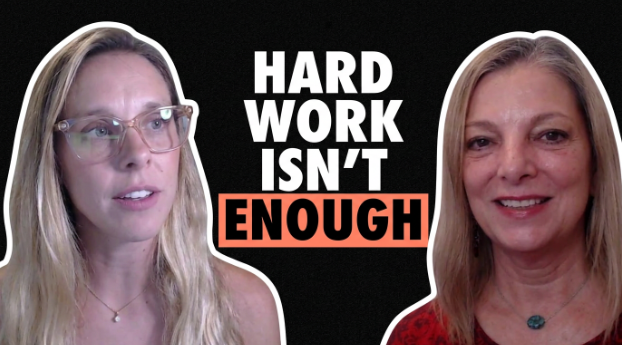
Building a successful private practice isn't just about working harder.
In this episode of The Dietitian Business Podcast, Maggy Doherty sits down with Katherine Dittman—founder of the 14,000+ member Dietitians in Private Practice Facebook community, host of RDs Thriving in Private Practice, and owner of the Compassionate Body Center—for an honest conversation about what really determines success in private practice.
Too often, we hear stories that credit success to hustle, strategy, and mindset alone. But what about luck? Timing? Market saturation? Financial circumstances? Health challenges? The mentors you meet? Katherine and Maggy explore how all of these factors shape a private practice journey… and why comparing your business to someone else's rarely tells the full story.
Whether you're just starting your practice, trying to grow in a more competitive market, or questioning whether you're on the right path, this episode offers both practical advice and much-needed perspective.
🔥 What You'll Learn in This Episode
1. The Role of Luck, Timing & Circumstance in Private Practice
Why two equally talented dietitians can experience completely different levels of success and why it doesn't always come down to effort.
2. How to Adapt When the Industry Changes
From the pandemic to venture-backed telehealth companies and increasing market saturation, learn how successful practice owners pivot instead of giving up.
3. The Difference Between Perseverance and Knowing When to Pivot
Not every marketing strategy, course, or business idea will work. Katherine shares how to decide when to keep going, when to tweak your approach, and when it's time to move on.
4. Why Business Literacy Matters More Than You Think
Marketing is important, but understanding finances, forecasting, bookkeeping, taxes, and business systems may have an even bigger impact on your long-term success.
5. How AI Is Changing Private Practice
Maggy and Katherine discuss the opportunities, limitations, and ethical considerations of using AI in nutrition counseling, content creation, and clinical decision-making.
6. Defining Success on Your Own Terms
Does success mean growing a group practice? Creating passive income? Seeing 12 clients per week? Having flexibility to prioritize your family? Learn why your definition of success should guide every business decision you make.
🧠 Practical Takeaways
Stop comparing your business to someone else's timeline.
Focus on what you can control—and recognize what you can't.
Invest in business education, not just clinical education.
Stay adaptable as the private practice landscape evolves.
Build a business that supports your life, not one that consumes it.
Define success based on your own values instead of someone else's version of growth.
Remember that slow growth doesn't mean you're failing.
💡 Episode Insight
Hard work matters—but it isn't the whole story.
The most successful private practice owners aren't always the smartest, the hardest working, or the luckiest. They're the ones who continue learning, adapt when circumstances change, understand the business side of practice ownership, and build a business that aligns with the life they actually want to live.
👥 About the Guest
Katherine Dittman is the founder of the Dietitians in Private Practice Facebook community with more than 14,000 members, host of RDs Thriving in Private Practice, owner of the Compassionate Body Center, a Certified Mindful Self-Compassion (MSC) teacher, and a registered dietitian specializing in eating disorders, mental health, substance use, self-care, and hypermobility.
📣 Join the Conversation
Have you ever felt like everyone else's private practice is growing faster than yours?
What has been the biggest challenge in building your business—marketing, confidence, finding clients, adapting to industry changes, or something else? Let us know in the comments.
👍 If this episode encouraged you or gave you a new perspective on private practice, be sure to like the video.
🔔 Subscribe for more business coaching, private practice strategies, and honest conversations about building a thriving nutrition business.
📤 Share this episode with another dietitian who needs the reminder that success isn't just about working harder.

Listen to “The Truth About Luck, Timing & Success in Private Practice with Katherine Dittman”


Episode Transcript
Maggy Doherty: Welcome to the Dietitian Business Podcast. I'm your host, dietitian and business coach, Maggy Doherty. In today's episode, I meet with two dietitians who started their own one-on-one nutrition counseling businesses, but then came together and created a new business providing community nutrition.
Recently, they pivoted their business to business-to-business and created an online course for dietitians to learn how to start and scale a community nutrition or corporate wellness program.
It's a really cool episode where we dive into their business, how they created it, and how they came about building this business together. And then we pivot and do some business coaching. We talk about how to prepare for maternity leave, what that looks like, and how maternity leave can actually provide an opportunity for your business to pivot, grow, and scale.
This is a really great episode. If you want to go into community nutrition and you're wondering what it looks like or maybe you need help, or if you're about to go on maternity leave and you want to know what that could look like for you, tune in. This is a really cool episode, and I can't wait for you to listen.
Maggy Doherty: Today's guests are two dietitians who've built something a little different. Alisa Englin and Ellen Petristino are the co-founders of Nourish and Thrive Nutrition Centers, where they've blended private practice, community partnerships, culinary nutrition, and education into a pretty cool and diverse business model.
Together, they've pioneered what they call the Community Dietitian Framework, helping dietitians expand beyond one-on-one nutrition counseling to create multiple revenue streams while also becoming the go-to nutrition experts in their community.
Today we're going to talk about how they built it, what they've learned along the way, how other dietitians can do the same, and answer some of their own business coaching questions. Alisa and Ellen, welcome to the podcast.
Alisa Englin: Hi, Maggy. Thank you for having us.
Maggy Doherty: I'm so excited. I mean, we scheduled this a while back, so I've just been looking forward to talking to you guys after skimming your website, which looks beautiful, and seeing all of y'all's offerings. So I'm excited to get into it today. Tell us a little bit about Nourish and Thrive. How did it begin? What do you guys do? Tell us about it.
Alisa Englin: What's super fun is Ellen and I actually met years ago. I was working at a hospital here in New Jersey and serving as a preceptor during Ellen's dietetic internship. So that's where we initially connected, and we just hit it off.
We later reconnected while working together at a local nutrition counseling center. We were doing one-on-one sessions with clients, and we started collaborating on community nutrition presentations at that center while running our own private practices on the side.
We very, very, very quickly realized that we loved working together. We loved creating programs as a team. And then COVID happened, right? So, as many of us had to pivot, we shifted to a lot of telehealth. We absolutely missed that energy. There is such an energy about being in person together.
When the in-person work started up again in 2022, we said, "Hey, let's open a center." So that's really where the Nourish and Thrive Nutrition Center came from.
The vision was super simple. We were going to run our individual private practices in the center and then build out a community nutrition and culinary education business together.
But what's really funny about that is there was absolutely no business plan. There wasn't a sit-down of, "Hey, this is what the next 10 years looks like," or five years, or even what the next month looks like. We just said, "We love doing this. We like working together. Let's figure it out."
What makes the Nourish and Thrive Nutrition Center really unique is when we go out into the community, our programs combine the nutrition education piece as well as live culinary demonstrations. So people are able to taste and see. And who doesn't love free samples and free food?
We absolutely love that aspect of going out into the community. We've connected with libraries and schools and corporations and community spaces. And as our community nutrition program grew, we had dietitians reaching out to us and asking, "How can you create these opportunities? What does being a community dietitian look like outside of just what we knew it as?"
So that is where we also built something called the Community Dietitian Framework, which we're excited to share a little bit more about as we go on here. So that's the backstory of Nourish and Thrive Nutrition Center in a nutshell.
Maggy Doherty: So it sounds like you guys both had your own private practices, your own businesses, and then put them under one roof. Did you end up merging them together, or are those entities still two separate businesses?
Ellen Petristino: Still today, we maintain our separate private practices, which is our main income stream. So Alisa sees her clients, insurance-based, and I see mine. And then together, under the umbrella of Nourish and Thrive, we go out into the community as this team of dietitians helping people.
We really focus on culinary skills. Most people know, "I need to eat more broccoli." They don't know how. They don't know how to shop for it or prepare it or cook it or eat it as leftovers. So that's where we come in, pairing the education with, "This is what you're going to cook tomorrow." So that's what we do together in that business.
Maggy Doherty: Cool. Got it. So there are kind of three businesses. Awesome. So how did you guys decide you wanted to do community nutrition? Was it something your clients were talking to you about? Did you see an opportunity in the marketplace? How did you get from one-on-one counseling to being within the community and creating these educational programs?
Alisa Englin: What's really nice as dietitians is we get the opportunity to wear a lot of different hats. The one-on-one is great. You're seeing one person's transformation. It's a very individualized, caring model.
And then there's something different about going out and presenting. It's a different energy. It's a different part of our job. Within going out into the community, there are so many different things that you can do with that too. Different folks that you're connecting with. If you're not super into the idea of doing a culinary demonstration, totally fine. You could just do nutrition education.
So it's just a different energy of being in front of a group like that that I tend to like. Ellen and I have discussed that it just switches it up from the one-on-one and brings in another element of what we do as dietitians to keep it fresh and keep it fun and do something different instead of just the burnout that tends to come with one-on-one after one-on-one after one-on-one.
Maggy Doherty: When did you guys realize that you were onto something with getting out in the community? When did you realize this could be a viable business venture?
Ellen Petristino: That's a good question. I think we were always very mission-driven. That kind of led us. We really wanted access. We wanted to be out in the community.
And I think over time, as our particular brand of community nutrition education—which, like we said, pairs education with culinary and then people get to taste—people got very excited about it. I think word of mouth began to spread.
As our word of mouth began to spread, we began to realize, "Oh my gosh, the possibilities here in our own community are phenomenal," between health departments and libraries and schools and senior centers. Everybody's looking for that quality, evidence-based nutrition education program that's also engaging, that people leave with actionable takeaways from.
I think it all started to become cohesive, like, "Yeah, we are onto something, aren't we?" around year one.
Alisa Englin: Yeah, absolutely. And it's so different what we can do as dietitians because we are culinary experts. We're the experts of food, but we also have MNT. We have food service. There are just so many facets of our careers that we get to bring out into our communities.
And the best part is it's uncharted territory. It's really kind of untapped. When we realized that we were kind of in the water by ourselves and that not a lot of dietitians were doing that, that's when we said, "Hey, let's get the word out to other RDs to become those go-to experts, to make a career out of it."
It doesn't have to be just, "I'm going to do a freebie program." You can have income from these opportunities.
Maggy Doherty: A lot of dietitians are trying to get into this corporate wellness space. Would you say the community nutrition work you're doing is corporate wellness, or are those two different? If a dietitian wants to go into community nutrition versus corporate wellness, how do you differentiate those two, or are they the same?
Ellen Petristino: I think they're the same. It's the same skills, the same structure of the program—a little bit of education, hands-on application with demonstration, and then experiential, experiencing the food. I think that translates very well into the corporate wellness world.
Alisa Englin: I did a lot of that prior to going into private practice full-time. I worked as a contractor for Johnson & Johnson and did a lot of corporate wellness with them. I also did corporate wellness for Blue Cross Blue Shield.
A lot of what I'm doing now is very similar and parallels programs I was doing in the corporate wellness space. One of the biggest things that Ellen and I do in our community wellness programs is make sure that there are different KPIs or executive summaries and information after programs that we're then handing to our community partners.
Oftentimes, corporate wellness wants to see that return on investment as well. So there are key elements within our community programs that translate beautifully into the corporate wellness world.
Maggy Doherty: That's awesome. I love that as business owners, you know what other business owners are looking for. When you're in business, you always hear the term KPI, or key performance indicators, and being able to show the business, "Hey, you paid us this, and here's how we helped you," or, "Here's the benefit that you got," is great. You're able to position your offerings that way and show what they're reaping downstream.
The other thing I was curious about with your business is, when I was skimming your website, I was like, "Wow, these ladies do so much." There's the one-on-one counseling. You have the Community Dietitian Framework. There are some courses. Walk me through all the different revenue streams you have today, which ones are working the best, and which ones didn't work and maybe you've expired.
Ellen Petristino: Our main revenue source is our one-on-one counseling practices. We've learned over time that we need to protect those hours and not let the other revenue streams interfere with that. So we began to create very structured "this is Nourish and Thrive time" and "this is our private practice time."
In terms of Nourish and Thrive, the biggest income stream is working with those community partners. It's that 90-minute education and culinary demonstration that we do with health departments and senior centers and all these places that have budgets and grants and money they need to spend, or gaps in programming that they need to fill, or key communities they need to reach that they don't have programming for.
That's our key revenue stream. And then our other revenue streams really emerged from that.
Once we started to build a name in our community, those health departments would say, "Hey, under our auspices, we have some libraries and some senior centers. Do you think you could do programming there?" Schools started coming to us within the school districts that had heard of us, and they would say, "Can you come into our school district and do programs for kids?"
So all of a sudden, K through six—and it's a different type of program, nutrition education and activities for kids—became a different revenue stream.
Then, as we collected emails and built our email list, we thought, "How do we provide value for the people who are listening to us, who are connected to us?" That's where our thoughts about creating curated content bundles came from.
Maybe it's around bone health or blood sugar management or heart health or detox, and we combine all types of actionable resources that people can purchase at a small entry-level price if they want to take a deeper dive.
And then, as Alisa alluded to, dietitians started coming to us and asking us, "How do you do what you do? How are you pricing your programs? How do you do a culinary demonstration?"
That's when we started turning to a business-to-business revenue stream. We said, "We're going to put everything we know, all of our experience, and all of the tools that we use—the executive summary, what a contract or scope of work looks like, how to hold a discovery call with a potential partner—and put this all into the Community Dietitian Framework course."
The great thing about that is we got five continuing professional education units from the CDR, which makes every dietitian so happy.
We wanted to support other people who are trying to do what we were doing. So every revenue stream kind of came out of just starting where our heart was, our mission of community education, and then our natural revenue streams emerged or grew from that.
Maggy Doherty: Okay, so I want to hear more about this business-to-business program that you guys created. It sounds really cool. It's officially launched?
Alisa Englin: Yes, absolutely. I remember we were working on it very diligently this time last year. We went through our beta program with our fellow RDs and got a lot of feedback. I want to say we officially launched around November or December.
Within the Community Dietitian Framework, we broke it down into five different sections. Everything starts with finding who you're speaking to. Who is your ideal customer avatar? What type of community dietitian do you want to be? From there, figuring out who your potential partners are.
In that first module, we walk dietitians through everything from reaching out—what does that look like? What are some best practices?
A lot of the Community Dietitian Framework was fun to put together because it was like, "Wow, remember when we tried this and this totally failed?" It was fun to say, "These are what we have found to be best practices. This is what's working."
The second module really gets into what happens after you're having those discovery calls, after you're sharing your offerings, and putting together what your offerings are. That's a big chunk of it too. The world is our oyster. We could do so many things, but what are you offering?
We help dietitians figure out the different tiers of their offerings—their signature programs, their more passive, lower-price-point items. Figuring out your offerings is huge.
Another module covers what the contract looks like with your community partner—the nuts and bolts of who's responsible for what, what a contract looks like, what the scope of work is.
We have all different templates, and truly, it's a soup-to-nuts program where it's plug-and-play. A dietitian can come in and say, "Okay, great. I can use this template, put my community partner's name in, put my name in, and send it off."
We try to make it as easy as humanly possible to get dietitians making money off of community programs within a month.
Another module is about culinary demonstrations. If culinary demonstrations are part of your programming, there's a lot that goes into that too. What do I need to bring with me? What are all the details from a food-safety standpoint? If I'm bringing samples, what does that look like? If I'm preparing meals, do I need a community kitchen?
Again, details like that that we might not be thinking about are all in that framework. It's about taking the guesswork out.
And then finally, that last module is the executive summary. How do I keep this partnership going? How do I provide value to these community partners? It's not just a single program. How do I keep the conversation going? How do I continue that income stream and keep it fresh?
So that's just an overview of what the Community Dietitian Framework is. As Ellen said, five CPEUs. Any way we can get CPEUs is great.
Maggy Doherty: You could even do a framework on how to apply for CEUs because I know that's a whole bag of worms.
Ellen Petristino: A little stressful, but I found somebody at the CDR—a person to ask every question to instead of going through the website—and he was phenomenal in helping us get through the process. He was an MVP.
Maggy Doherty: So, question for both of you. As you look at this program, what is the single best piece of advice that you feel like this program gives someone?
Alisa Englin: The idea is that dietitians are positioning ourselves as the go-to experts, taking this opportunity that is untapped. If we aren't showing up in our communities as a nutrition expert, somebody else who doesn't have our credential is, whether it's on the internet or someone who's really passionate about nutrition but doesn't have that RD credential.
What's really exciting—and what I would say is the opportunity here and the advice—is just to think a little bit outside the box.
We're kind of pioneering this community nutrition where normally in our minds, we think of WIC, we think of SNAP. This is opening the door to say, "Where are the opportunities? Where is there grant funding for wellness programs? How do dietitians step into that space?"
People get excited about that. So I think my piece of advice is really thinking outside the box and pioneering in these community spaces.
Ellen Petristino: And I would add, if an RD goes through our program, I hope their key takeaway is, if they're thinking, "I need a new revenue stream. I need to diversify," don't wait for perfect.
I think we emphasize that throughout. As dietitians, we want the perfect program, the perfect presentation to go out and market it. Our advice throughout is about how to build relationships and have conversations with community stakeholders. Learn what's needed, and then go and look at what you have in the bank and say, "I can really use this to help them fill the gap."
It's not waiting for perfect. It's understanding what's needed and then just going and doing it, because you're going to make mistakes. It's not all going to go smoothly.
We laugh throughout our program about how things go wrong, but we always approach it with, "It's going to be fine."
I got stuck in traffic for two hours for a presentation. I nearly missed the whole presentation. Alisa held the ground for us. But when we got there, we just rolled with the punches.
We're showing our partners and we're showing the audience that you can make this work no matter what. So "don't wait for perfect" is a key takeaway from our program.
Maggy Doherty: I love that. There are so many dietitians I've coached and talked to over the years who are type A and perfectionists. We want to get it perfect before we launch.
I talk about James Clear and Atomic Habits a lot. He has this part in the book that's something along the lines of: get it 60% there, and then the remaining 40%, you figure out on the go.
I see so many people stuck in decision paralysis and just being stuck. So having that advice that it doesn't need to be perfect is huge. Maybe you don't even need to finish the whole framework program to get started. Just start it, get going, and then you'll figure it out along the way.
I always feel like the best way we learn is through mistakes.
Ellen Petristino: I would add that our programs have improved over time because we solicit feedback. We didn't start with perfect. We were open to suggestions from the audience and from our partners, and then we just keep changing and evolving our programs over time to really meet what people are looking for and what they're excited about.
We have a lot of repeat attendees. We call them our fan base in the community because they connect to the program. So I think not striving for perfect actually helps you be more open to growing into what is truly working in your community.
Maggy Doherty: With the Community Dietitian Framework, is it a standalone course, or is there group interaction? Do you guys meet with people? What can people expect when they go through it?
Alisa Englin: The course itself is a self-paced course where dietitians go through it at their leisure. In addition to that, we have a Facebook community, the Community Dietitian Framework Collective.
That's where we go live once a month and we call those our coaching calls. We have a specific topic that's relevant to that month or relevant to what we've experienced, and we're sharing really quick tips and tricks and little tidbits that take the concepts from the Community Dietitian Framework and give even more real-life experiences.
We love hearing from other dietitians about what they're working on. Down the road, we would love to create a little bit more of a business coaching model, but that's kind of simmering in the back of our minds as the Community Dietitian Framework grows.
Maggy Doherty: Very cool. I love that. Speaking of business coaching, did you guys get any business coaching or advice as you built out this program, or did you just put your two heads and your experience together? Did anyone help you make it or give you feedback along the way?
Ellen Petristino: There was one key person who was really impactful, especially for me. I'm a second-career dietitian, and she helped raise me as a dietitian. I don't know if you've heard of her. Her name is Jeannie Petrucci. She's a registered dietitian out in Far Hills, New Jersey.
She started as a culinary educator and became a dietitian, so she had a very culinary focus. That really helped form ours. She was very helpful as a mentor and as a sounding board for both of us in terms of building our business.
And I do think that connects to a really important piece of information, one that I've always strongly believed in as a dietitian: Who do you surround yourself with?
Whether you're alone and you're in private practice or you're working in a hospital, are you surrounding yourself with other colleagues who are inspiring you or who are lifting or elevating you?
Because that really does help you grow, and it also helps you feel comfortable moving out of your comfort zone.
I've been out of my comfort zone for the past three years, but I have Alisa there by my side who inspires me and shows me the way and mentors me.
I think that's really important—that we don't have to be alone. We don't have to be silos. We have to draw on our community.
And actually, that was a big reason why we created the Community Dietitian Framework, because we want dietitians to know you're not alone. Anybody who wants to reach out to us with questions can always reach out. We will always respond. We are always here to support people when they're trying something new.
Maggy Doherty: I love talking about how you want to surround yourself with people who are influential. There's this quote that I love: "If you're the smartest person in the room, you're in the wrong room."
You want to be in a room with other people who are further along, who've already made those mistakes. What's great is when people step into this Community Dietitian Framework, they're here to learn from you guys, and then you're also in a room where you're learning from other people as well.
Alisa Englin: You bring up such a good point, Maggy. Even though we have all these experiences, nobody has all of the answers.
Even when we're hearing about what someone is doing in their community, or when we got feedback from our beta group members and they're like, "Hey, this would actually be super helpful," or, "Can you add this resource?" Absolutely.
Things are always going to be changing and evolving, and the only constant in life is change. So just rolling with it a little bit more and not taking ourselves too seriously. Having fun throughout the process too.
As dietitians, it's such a big pond but a little pond at the same time. There are a lot of us, but we're a lot of like-minded practitioners who love to help. We went into this field not necessarily for the money. We're empaths.
But there is an opportunity to create something really wonderful for yourselves, whether you're in private practice or you're interested in community nutrition, while building your community within your community.
Maggy Doherty: I'm so excited to see this and learn more and hear about people's experiences. I think the most important thing that we can do as leaders in the community is recognize a gap, fill that gap, and then help other people fill that gap where they are.
You guys can't do community nutrition across the whole U.S. or across the whole state, and being able to teach other people how to do what you've done is super cool. So I love that.
I'm also so jealous that you guys have each other as a duo. One thing I see a lot of solo private practice owners struggle with is that they're the only one. They are the smartest one in the room.
Once you become a group practice or you have a partnership, having someone else to help you figure it out is just so nice compared to going about it alone. It's so cool that you guys have your businesses where you're, quote-unquote, alone, and then the business that you guys are together. Two heads are always better than one.
Ellen Petristino: Or the other way is also, when we've struggled a little bit with the tech aspect of it, to turn to each other and not say, "This is the answer," but to say, "It's going to be all right. We are going to figure it out at some point."
It's somebody to take you down from a 10 to an eight.
But I think if you're in solo practice, it's just finding that group of people that you want to surround yourself with, that is your phone-a-friend to help you when you begin to doubt yourself: "I can't do this. This is overwhelming."
As a dietitian, we wear way too many hats. You just need somebody to ground you again.
Maggy Doherty: Love that. Well, let's go down that road and pivot a little bit. I know that you guys have each other to ask questions, but I think you said you maybe had some business questions that I could give you some perspective on or see what we can figure out today. So what business questions are on y'all's minds?
Alisa Englin: Exciting news, real time as we are recording this podcast: I am pregnant and expecting in a few months.
A lot of the overarching theme of some of the questions that we have for you today is: How are we creating leverage and continuity when someone's stepping away from the business or it's looking different than the model that we've created?
So the question is, in preparing for this season of change with my maternity leave, if you were in our position, how would you navigate this? Are we focusing on maintaining the current business model, or would you use this as an opportunity to potentially redesign different aspects? What should we be evaluating first?
Maggy Doherty: When I went on maternity leave, and when I see other dietitians go on maternity leave, it forces us to think outside the box.
One of my favorite things that I see in other dietitians' journeys is when they go on maternity leave, they no longer can do one-on-one nutrition counseling because you are trading time for money and you don't have that time anymore.
So I've seen a lot of people accidentally become group practice owners. They go on leave, they hire someone to see their clients, that person works out, and then there are more clients and they hire.
I think maternity leave provides this unexpected opportunity to figure out how to run a business without us there.
It provides an opportunity to hire someone for your first, second, or third time, where you can hire someone to see your clients so that income is still coming in and those clients are still getting help.
And then it forces you to think, "What are ways that I can generate revenue and continue to help people where I'm not required to be present?"
I'll see people come out with courses, programs, maybe pay-as-you-go advice, or maybe it's just an email of nutrition counseling advice.
It sounds like you guys have already built the framework where, because your Community Dietitian Framework doesn't require your face-to-face time, you're able to have that continue to go. And Ellen can take over those video calls.
Or maybe you do want to escape for an hour a month while you're on leave to do them. Everyone's different with how they want to go about leave.
So I think going on leave forces you to think outside the box on how you want to continue to provide care and generate revenue without being there in person.
I could see it being the next evolution of your business. How does Ellen run it? Does she need to hire someone else? Does the focus shift from one-on-one counseling to really focusing on this framework? Because that could be what keeps the business afloat while you're out.
Alisa Englin: To piggyback off of that question, discussing creating those different revenue streams that aren't dependent on us physically being present in the community doing those 90-minute culinary demos—which is basically the majority of our income currently—if you were looking at our business, where would you see the biggest opportunity to create revenue that's not dependent on us being there?
We talked to you about having these email campaigns that have a resource bundle attached to them. Are there any ideas that you have that we can look into for this next quarter?
Maggy Doherty: The first thing I think of is bringing on other dietitians to fill those shoes.
Really, the number one way to scale is creating a layered leadership team or hiring people to do the job that you were doing, so you can continue to bring in income and continue to provide the service.
We could put it all on Ellen and she could do everything on your leave. But one, your business is not going to grow. And then she's probably going to get so stressed carrying the weight of everything that things are going to crumble and quality won't be as good. So that's probably not the best option.
But if you guys were to know any dietitians or recruit for dietitians, market, advertise, and try to find someone who can, one, see your clients, and two, be Ellen's secondhand woman and continue to give those presentations, that creates another option.
Or maybe because Ellen is taking over more of the leadership and management things, you bring on two dietitians who are taking that part over.
Maybe your business starts to evolve where you hire other dietitians to see all or some of your one-on-one nutrition counseling clients, as well as you start to hire dietitians to give these presentations.
At that point, you're creating more of a business where there's this expression: if you are taken out of it and it collapses, it's not a business.
For a business to be scalable and sellable, we have to be able to pull you out and it needs to continue to run.
Right now, if we were to pull both of you guys out, it collapses. Your program could still kind of go because it's a course. But if you had dietitians seeing clients and starting to do those presentations, you're now creating a real business that isn't relying on you two.
What's great is when it doesn't rely on you, you can go on maternity leave. You can go on vacation. You can take some more time off.
I'll never forget when, in my group practice, I hired enough dietitians that I wasn't seeing clients and I was just managing dietitians. Then I hired managers to manage the dietitians, so I was just managing the managers. I was able to step away from the day-to-day, and stress just decreases.
Ellen Petristino: Wow. That's awesome. I have a question that piggybacks on that. We do have a 1099 contractor. She's a new RD, so she's just getting her legs under her and she's doing 1099 contract work for us in addition to her full-time job.
We have her right now on a marketing schedule where she'll create the draft of scripts for us. If we're doing a Facebook forum for our Community Dietitian Framework, we give her a calendar of the topics and say, "Okay, just draft the script." Then we can take it from there.
She'll draft email series for us that we send to our email lists. She'll draft social media posts. We don't do too much social media marketing, but she'll do that.
How else, while Alisa is out, can we leverage her during this time where we need a bridge? Alisa is really the one who manages her and communicates with her, so I probably could take that over while Alisa is out. But how else can we leverage her?
As someone who's managed people, what's your optimum way of managing contractors?
Maggy Doherty: I think the first thing is you guys sitting together and really writing down: What are all the things Alisa does?
And with those things, what can be done before maternity leave? There can be some batch content that can be created. What can be delegated to you, Ellen, or the contractor you have? What can wait until you're back?
It's getting this bird's-eye list of: What are all the things you do? What can wait? What can you do? What can Ellen do? What can be delegated?
I think that's where you start with it.
Then it's taking that conversation to the contractor and seeing what bandwidth the contractor has. Sometimes you could have all these things that would be great for this person to do, but they don't have any more hours to give.
So it'd be figuring out now: Do you guys need to start planning to hire someone else?
What you don't want is for Alisa to be out and then, Ellen, you're managing this person, trying to hire someone else, training them, and having to message Alisa and say, "How do you do X, Y, Z?"
The other thing that I found really helpful for my own leave is I ended up creating, when I went on leave back in 2022, my first company manual.
I basically brain-dumped everything that was in my head that I knew how to do, and I documented it. So when I stepped away, my managers were able to look at it and say, "Okay, here are the steps that I follow."
That enabled me to step away. Fast-forward several years, and it's a 40-page manual of all these other policies that have been created.
I think documenting how stuff is done is also really helpful to do before you step out on leave. And is this your first leave?
Alisa Englin: This is my first leave, yes.
Maggy Doherty: Well, congratulations.
Alisa Englin: Thank you.
Ellen Petristino: I think that manual is helpful. I guess we've naturally been going in that direction. We create standard operating procedures for things as we go, but they're individual. They live in separate files all over the place. The thought about filling that out and putting it into one document is a good thought for us to move forward.
Alisa Englin: What's really sticking with me, Maggy, is what you shared about if you step away from your business and the business crumbles, then it's not a business. That was so powerful. My mind is blown.
Getting the manual makes so much sense to me, where somebody can come in and say, "This is what they do," and just follow the steps. This is what the day-to-day kind of looks like. So I love that idea. Thank you.
Maggy Doherty: Absolutely.
Ellen Petristino: Our last big takeaway question is: You've heard the story of how we've built Nourish and Thrive. You've heard about how we go out into the community and our unique brand of culinary education and nutrition education.
We've found, as we said, there aren't a lot of leaders in this field out there for us to model ourselves on.
So as you're looking at our businesses from your 10,000-foot view, what do you think is our biggest untapped opportunity? If you were sitting in our seats today, what are three moves you'd make in the next six months to a year?
Maggy Doherty: That's a great question. I love that. Just from what I know right now—if we were to sit down in a real business coaching session, I'd really see your numbers and what your marketing material looks like and your own KPIs and where referrals are coming from, what's working and what's not.
But from what I've heard right now, I think the biggest untapped opportunity is hiring.
I think having more dietitians who can see your individual nutrition counseling clients and grow that side is an opportunity. Maybe you don't want to see fewer clients. Maybe you love the number of clients you see. But if you were to hire a dietitian who also wanted to see clients, now instead of helping 10 or 20 clients a week, you can help 30 or 40.
And then, again, you're diversifying your revenue streams, where now this nutrition counseling revenue stream makes up a bigger part of your business.
The more revenue streams you have in your business, the more protected you are. If there is a recession, one thing is that insurance-based nutrition counseling is kind of recession-resistant. You may notice that if you're only private pay, you'll have fewer private-pay nutrition counseling clients.
That's where diversifying your revenue streams can be really helpful.
So I think one is growing the nutrition counseling side with contractors or W-2 employees.
Two, that same thing on your community nutrition education side: being able to teach someone else how to do those workshops. You guys teach and mentor and sit back, and someone else is doing it.
As you hire people for those parts of your business, you really lend yourself the opportunity to scale and grow. Then your focus can shift more into how to bring in more business.
For me, I don't like to do things that other people can do.
When I had my group practice, I stopped liking to see clients because if I could hire someone to see the clients, then I didn't want to do that anymore. Then I was managing dietitians. Then someone else learned how to manage, and I didn't want to do that anymore.
So you can grow into the spot where you focus on things that only you guys can do.
There are other dietitians who can see clients and do those workshops. It doesn't have to be you. But if you love that and it fills your cup, absolutely, we still want you there.
I'd say those are the two biggest untapped opportunities.
And then the next one would probably be expanding beyond your city—the next suburb, the next city near you, the next state.
In order to do that, we can't have you guys driving three hours to the next city. But also, a town one or two hours away isn't going to know about you if you guys aren't reaching out to them.
That's another way to take your program, what's worked in your city, and apply it to another city. But again, to apply it to another city is where those contractors and other dietitians would come in.
Alisa Englin: Right. That makes so much sense. That's a lot to noodle on for sure.
What's really standing out for me is the element of time. If we're doing a lot of one-on-one sessions, how do you manage your time? We've come a long way over these last few years of figuring out how to manage our time.
But if you're able to plug people in—other dietitians—and if they're able to do, as you said, something somebody else can do, delegate that task. Then that frees us up for the expansion and that bigger picture of bringing in more of the sales.
Maggy Doherty: And also, as you focus on growing the Community Dietitian Framework, it doesn't take your time because you're not selling your time. You're selling a course.
As you focus more on the marketing there, you're not having to trade your time for money. So I think that's another great opportunity that you guys are already down the road to exploring, but continuing to push and market and grow that, and enhance it in different ways to keep the dietitians in the programs for longer or reach new dietitians.
Ellen Petristino: Beautiful. Wonderful. Some really key takeaways. Thank you.
Alisa Englin: Thank you so much.
Maggy Doherty: This has been such a fun conversation, learning about y'all's business and people hearing about really all the different things we can do as dietitians and how a business can grow—not only from figuring out how to do community nutrition, but helping other people figure out how to do it, and just the downstream effects of starting and scaling and diversifying a business.
So if our listeners want to learn about your program, learn about your business, how can they find you, follow you, and learn about you guys?
Alisa Englin: Lots of different ways to connect with us and a lot of great resources as well. Maggy, in the show notes, can folks expect to see some of the different links and stuff?
Maggy Doherty: Yeah, great.
Alisa Englin: So, a couple things for dietitians. Hi! We absolutely want to connect with you.
If this conversation is really resonating with you, please connect with us. We have a couple of free resources that are really helpful with just getting the ball rolling, especially if today's conversation is resonating.
We have something called the Revenue Reimagined Workshop, where we're really talking about how to diversify your different revenue streams. It's a recording of a workshop we did with some great resources on how to diversify your revenue streams right there in your community.
We also have the 30-Day Program Runway, which is basically a mini version of what you can expect in the Community Dietitian Framework. If you're saying, "Hey, this month I'm a go-getter. I want to start making money in my community," that's a great resource as well.
Those links are available to you in the show notes.
The Community Dietitian Framework virtual program has so much value and five CPEUs. That's where we're teaching dietitians how to really become that go-to nutrition expert in your community.
We would love to connect with you in our Facebook community as well, the Community Dietitian Framework Collective.
And always, always, always feel free to DM us on Instagram or send us an email. All of our contact information will be available in the show notes as well.
Maggy Doherty: Amazing. I love that. Well, I appreciate the conversation and getting to know you guys better. Thank you so much for coming on, and we will talk again soon.
Resources
Connect with Katherine:
Website: https://www.compassionatebodycenter.com
Facebook Group: Dietitians in Private Practice
Other Episodes You Will Love!
The State of Private Practice with Jennifer McGurk: What’s Working, Changing, and Coming Next?
How to Build Multiple Revenue Streams as Dietitian with Katie Dodd
From Clinician to CEO: How This Dietitian Grew Her Group Practice from 1 to 6 Dietitians | Guest Interview
Heyya!
Want private practice tips, tools, and discounts?
Join my monthly newsletter today