

What Amy Plano Has Learned from Seeing Thousands of Dietitian Businesses
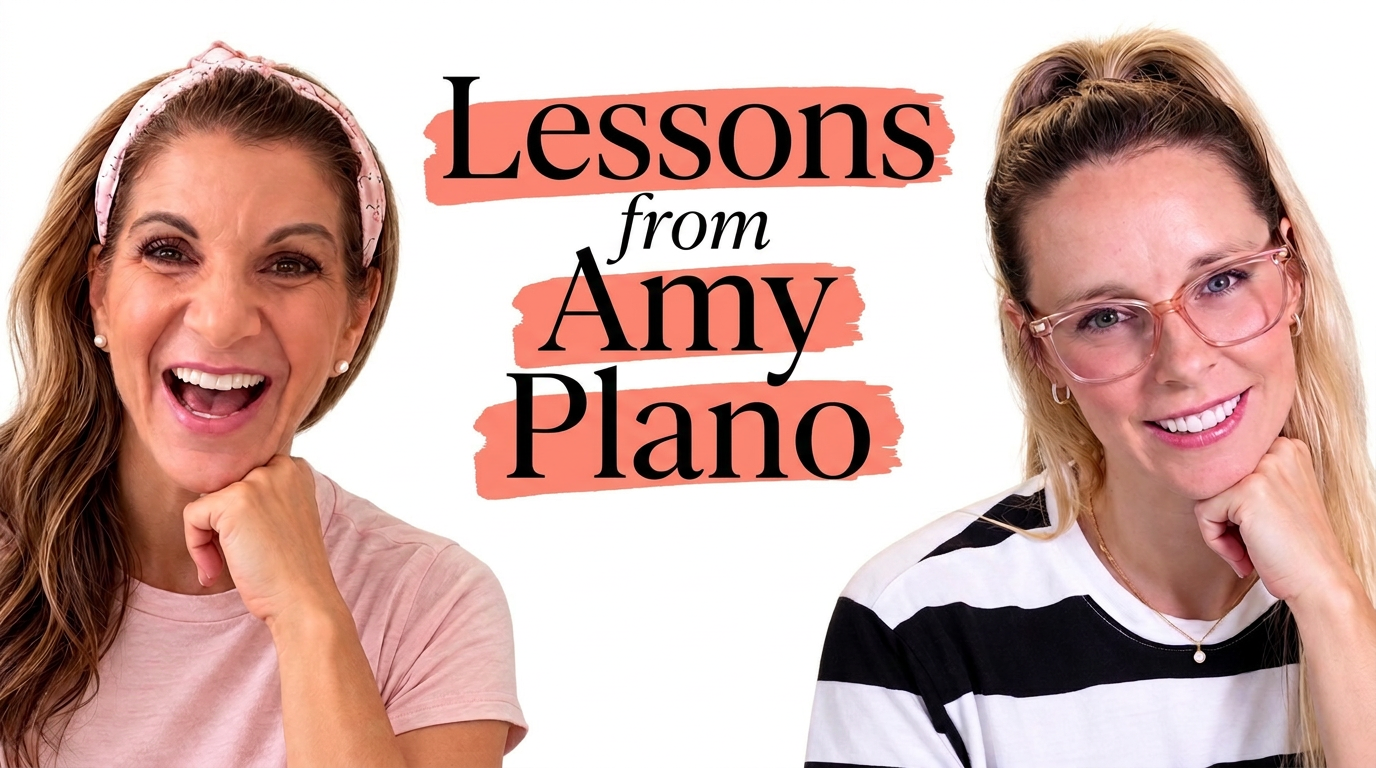
What does it really take to build a successful, profitable dietitian private practice?
In this episode of The Dietitian Business Podcast, Maggy Doherty sits down with Amy Plano, also known as The Reimbursement Dietitian, to discuss the realities of entrepreneurship, insurance reimbursement, and scaling a private practice.
Amy has spent nearly two decades building businesses in the dietetics space, from launching her own insurance-based private practice in 2008 to expanding into group practice ownership, business coaching, credentialing, and billing software.
With a front-row seat to hundreds of dietitian business owners, Amy shares the biggest mistakes she sees dietitians making, what her most successful clients do differently, and the advice she'd give anyone starting or scaling a practice today.
In this episode, we discuss:
The evolution of an entrepreneur: How Amy went from solo private practice owner to building multiple businesses serving dietitians.
The biggest mistakes dietitians make: Why perfectionism, fear of failure, and misconceptions about insurance hold business owners back.
What successful dietitians do differently: The importance of mindset, personal accountability, resilience, and taking ownership of problems.
The changing landscape of private practice: How insurance, hiring, telehealth companies, and market competition are reshaping the industry.
Starting a private practice from scratch: How to decide between doing everything yourself and investing in professional support.
Growing from solo to group practice: Why hiring employees requires stronger systems, leadership, and operational knowledge.
The reality of entrepreneurship: Why even experienced business owners face unexpected challenges and why success requires playing the long game.
One of the biggest takeaways?
Successful dietitian business owners aren't necessarily the ones who make the fewest mistakes. They're the ones who acknowledge problems, take responsibility for finding solutions, and keep moving forward...
Whether you're considering starting a private practice, navigating the challenges of an existing business, or preparing to hire your first dietitian, this conversation offers practical lessons and a refreshing perspective on what it takes to succeed.

Listen to “What Amy Plano Has Learned from Seeing Thousands of Dietitian Businesses”


Episode Transcript
Maggy Doherty: Welcome to the Dietitian Business Podcast. I'm your host, dietitian and business coach, Maggy Doherty. In today's episode, we have a guest interview with Catherine Dittman, who's a fellow registered dietitian in private practice and founder of that incredible Facebook group, Dietitians in Private Practice, that has over 14,000 dietitians. We get an amazing perspective after she's had hundreds of conversations with successful private practice dietitians.
We talk about the role of luck, timing, and circumstance in building a private practice, and how we sometimes hear stories about hard work, strategy, and mindset. They're not the whole picture. And sometimes it's having the right mentor, the right business coach, the right relationships, the right financial support, or the right temperament to be able to deal with adversity. We talk about the quality of adaptability and perseverance in being a successful entrepreneur.
Also, if you're discouraged because your private practice isn't growing as quickly as you hoped, this episode's gonna give you the motivation you need. Tune in, listen up, and this is a really good one.
Catherine Dittman: Yeah, yeah.
Maggy Doherty: If you're a dietitian in private practice, there's a pretty good chance you found yourself in her Facebook group asking a question, searching for help, or helping another dietitian. She's built one of the most supportive and free online communities in our profession, and I'm so excited to have her here today. Catherine is the founder of the Dietitians in Private Practice Facebook group with more than 14,000 members. It's crazy. She's the host of RDs Thriving in Private Practice, owner of the Compassionate Body Center, a certified mindful self-compassion teacher, and a registered dietitian who specializes in eating disorders, self-care, mental health, substance use, and hypermobility. Please welcome Catherine Dittman.
Catherine Dittman: Thank you so much, Maggy. This is so much fun. Yeah, I appreciate this invitation and that great introduction.
Maggy Doherty: You know, it was fun writing your introduction. I was going to the Facebook group, and I couldn't believe how many thousands of dietitians are in that Facebook group.
Catherine Dittman: Yeah, yeah. It has really taken on a life of its own. I feel really lucky that I had this idea, and I started it just to be more of a community for local dietitians working with eating disorders in maybe Northern California. And it sort of grew, and it grew, and it grew. And now it's just sort of this self-sustaining, really supportive community that every now and then we have to do some interventions if someone's getting out of line. But for the most part, I would say people are participating well, sharing appropriately, and giving great, great support to their colleagues.
Maggy Doherty: Yeah. And so when you originally started that Facebook group, it was just intended to be for a small group of specialized dietitians in your city.
Catherine Dittman: Yeah, yeah. I really wanted us just to have a place where we could, I don't know, talk about local issues and maybe share local resources. But the magic of Facebook at the time, I guess it just got shunted to lots of people. And so I did a lot of attending to it in the beginning, where I was trying to do a lot of posts and increase engagement. But now at this point, it really is kind of self-sustaining.
Maggy Doherty: Yeah. There's so many posts that go on every day. I even posted yesterday. What I love about the group is people will go to ask clinical questions and also business questions and some insurance questions. And I haven't been in client care for several years now and just got back into it. And I had a client who was on all of these supplements. And since I'm not in a group practice anymore, I was like, I can post in this Facebook group. And I got phenomenal advice from like ten different dietitians within like 24 hours.
Catherine Dittman: Yeah, yeah. You're right. It did start out as being like, let's just keep it to business questions. And then slowly people would start to share more clinical questions. And the engagement was really strong and was good feedback. So we just started to expand that because, realizing that a lot of us, if we're in solo practices, we might not have as much colleague interaction outside our own specialty. And so it's just nice to be able to have a place where we can have sort of an all-inclusive way to share those resources.
Maggy Doherty: Absolutely. So you and I were going back and forth trying to figure out what we may want to talk about today. And I was re-looking at my notes, and what I loved is exactly what you said. You said, "One theme I find myself returning to is the role of luck, timing, and circumstance in building a private practice. We often hear stories that focus on hard work, strategy, and mindset. And while those things matter, they're not the whole story. Meeting the right mentors, developing relationships, having financial or social support, navigating health challenges, and even aspects of our temperament shape what's possible."
And you said you think it'd be valuable just to have an honest conversation about building a business without falling into that "anyone can do it if you try hard enough," or that pure cynicism. So I just love that and wanted to start there. What have you noticed within yourself or your practice or all the dietitians you've seen posting or you've talked to about this?
Catherine Dittman: Yeah, yeah. I think this is something that has taken me some time to really understand in my own career path because, for some of us, we might have a stronger negativity bias than others, or more sort of compare and despair and see other people's good fortune without giving our own credit for our own good fortune, or discounting it.
And so on reflection of my own career path, I mean, I had some really lucky, lucky breaks, let's say. For example, I'm in San Francisco, and back when I finally got registered and started working in eating disorders, there was a brand-new treatment center that opened up right near the university. I applied, I got the diet tech job. Great, right? The field I wanted to work in. I felt really, really lucky.
At the time, the dietitian left. She's still my friend. The dietitian left, and I stepped right into that position. I'm like, well, that's a really lucky break too, right? Also at the time, there weren't so many dietitians working in eating disorders. I think I could have counted on one hand the number of us that were actually in the region, right? And then maybe we were up to maybe ten. But now the market is fairly well saturated.
So I would say that when you're entering into a market that is maybe the right amount of saturation, like there's a need, but there's a lot of work available, you're really lucky, right? Whereas someone who's starting out right now and is trying to break into the field, and the jobs are all filled, and you've got all this competition, especially now with the VC, private equity, telehealth companies that are there, it might feel like, wrong place, wrong time. Did I make a bad decision?
And then at the same time, I remember feeling like, here I am, single girl trying to make it in the city, right, in San Francisco, and feeling a lot of financial stresses and thinking, so-and-so, my colleague over here, well, they're married, and they're on their husband's health insurance, and I'm paying for all of that kind of stuff.
And so it's like, wait a minute. We all have things, like our lucky breaks and our obstacles to overcome. And trying to compare who's got it easier, who has it better, "If only I was like this, it would be easier," I think is part of that negative mindset that starts to make it much, much more difficult for us to really figure out, what does success even mean for me in my own business? What do I really want my business to look like? What kind of business owner am I?
Maggy Doherty: Yeah, it makes me think back on my own journey. So I became a dietitian in 2017, and then I started my private practice in 2019. At the time, I was married and was able to hop on my partner's health insurance. And at the time, I didn't even view that as luck. It was just like, I don't have to worry about health insurance. This is great. Now I can get on his, and I can start my own business.
And then 2019 wasn't forever ago, but there weren't many dietitians in the North Texas area who accepted insurance. And there weren't many eating disorder dietitians that accepted insurance in the North Texas area. And I think I had my practice going for three to six months before I had to hire another dietitian.
Fast forward to this year—two years ago, I restarted a nutrition counseling practice. I did not have a husband to get on their health insurance. I had to navigate getting on marketplace insurance, which was a whole other consideration that I never had to think about, where it's like, do I really want to start this own practice again? Because now I have to get on marketplace health insurance.
And then there's now so many more dietitians in the area, and with the telehealth companies, with insurance. It's just so crazy seeing from 2019 to 2024 what I took for granted and what made it really easy to get the private practice going in the first place versus now seeing a couple more hurdles.
Catherine Dittman: That is such a great example. You're seeing both sides of it, right? Yeah, absolutely. And let's not forget the perfect example of both luck and adaptability. So when the pandemic hit, this is the theme that has kept coming up over and over again in the interviews that I did with some of our colleagues in RDs Thriving, was how they handled their needing to pivot in their business during the pandemic.
And so while people who may have been in a different profession were being completely upended, maybe even losing their whole career for six months, two years during that time, those of us that were able to pivot to telehealth quite easily, or were just starting our business, if we built it on that or were able to pivot, some of us really thrived during that time. For me, those were two of my best years in terms of revenue, right? Because it was just such an easy pivot for me.
Things then changed, right? Things then changed because then telehealth for everyone. So that means in a state like California, for example, where we don't have licensure, that means I'm competing with every California dietitian.
Maggy Doherty: Mm-hmm.
Catherine Dittman: And every U.S. dietitian that wants a piece of the pie over here, right? So that's a whole different sort of structure. And it is what it is. We're not going to change that anytime soon. But just recognizing where things have been easy, where things have been a little bit like, that's frustrating, that's too bad, and weathering the storm, sticking it out, I think has been maybe sort of like a North Star, let's say. Just being able to see it through. Things are always going to change.
Maggy Doherty: Mm-hmm. What are some stories either that you've gone through yourself or that you've heard in these interviews? And for those who don't know, Catherine does interviews with dietitians who are thriving in private practice, where you get to hear their stories. So with those stories, what's an example with adaptability where maybe someone wasn't able to pivot, or they did pivot to a different industry or offering or something? What are some of these pivots and adversity that you've heard about and seen people navigate, and what you would tell them or do differently with them?
Catherine Dittman: Yeah, yeah. Let me speak in general terms because I don't want to single anybody out here, but two examples come to mind. So one of them would be somebody that has chosen social media as their main marketing avenue. And in some of these conversations, the business owner would say, "I've had so many lead magnets. Some are absolute flops, and some of them are still bringing in new clients to this day."
And so that ability to continually try new things and not get discouraged and say, just because this thing didn't work now doesn't mean that it won't work in the future. Or just because this model doesn't work doesn't mean I can't tweak it and try it again, right? It's sort of this perseverance quality that some of them would have.
Now on the flip side of that, it might be someone who invests a ton of time building out a course or in one particular media strategy, and it's just not working. And knowing when to absolutely abandon that and try something else versus, okay, how can I tweak this so that it actually will work? That's a conundrum. I can't answer that question for somebody. I'm not a business coach. But they might say, "Then I took this to a business coach, and we figured out how to make it work, and then it started working," for example.
But it's those kinds of things, knowing when to persevere versus when to tweak versus when to completely abandon ship, is that skill I think is wild.
Maggy Doherty: Mm-hmm. Yeah, I think as you talk about a quality or characteristic of someone that's gonna make them successful in private practice as an entrepreneur, it's that perseverance where, when they try something that doesn't work, okay, let's try something else, or get curious about why it didn't work and figure it out. And that's a characteristic that's really hard to nurture or to develop or to train someone on. I think that's what sets someone who's really successful apart from someone who may not be as successful.
Catherine Dittman: Yeah. And I wonder if even now, talking about knowing what we individually mean when we talk about success is also something to get pretty clear on. Because I know that my idea of success has changed a lot.
Maggy Doherty: Yeah.
Catherine Dittman: Currently, success is, can I have a sustainable practice that gives me the freedom to guard my own time and my own energy, right? Where I'm not spending all my time running the business. And so that might mean not always trying to meet the next revenue goal and saying, "This is actually fine. This is actually fine now." Where I think in the past it was always like, it's never enough. Success will never be until I hit some particular goal. So that, to me, it's knowing what I value in my own life and how the business can support that.
Maggy Doherty: How'd you get there? What's the magic trick? Honestly.
Catherine Dittman: It was kind of by necessity. It was by necessity, recognizing that up until—I hate to single out these telehealth companies, but I think they really have changed the landscape for a lot of us. But recognizing that how I might have to do things in order to be competitive, I didn't want to do it, right? I just didn't want to do it.
I wanted to be able to have the more organic referrals from my network, see people in person when possible, because you can't if you're a telehealth company, not take insurance, and be at peace with that, to be a private-pay clinician, and understand that I'm gonna have fewer clients, but I'm gonna have more time to do the other things that I want to do in my life.
Maggy Doherty: Yeah. Definitely, as I've done interviews with multiple clinicians and done business coaching, it's been really crazy over the past two years to really see how the telehealth companies have affected individual practice owners as well as group practice owners. And what's crazy with the group practice owners is it's gotten so much harder to recruit and find and hire clinicians because there's less out there, and it's harder to compete with the pay.
And then for our individual dietitians, there's less clients out there because the clients are getting spread thinner. But I love what you said: "Hey, I don't want to compete, and I have this offering, and this thing's working." So as telehealth has come in, how has your business adapted? And how has your business evolved through your values and view of success changing, as well as industry trends?
Catherine Dittman: So the primary thing is that in all of my networking, I make sure people know that I see people in person. And turns out a lot of people at this point do want to have that option. They like to have the hybrid option where primarily they'll come in person, but if they just can't make it, then they don't have to skip their session. So that's one thing.
Adding the additional specialty of working with hypermobility spectrum disorders and Ehlers-Danlos and all of that has given me another niche, because that is still fairly specialized amongst dietitians, now that there are more of us working in the intuitive eating or Health at Every Size, eating disorder space.
And just a quick story to how this came about is I started to notice in my practice, people would come for an eating disorder, and then little by little they'd have these symptoms. I'm like, "Can you do this with your hands? Can you do that?" And like, "You're hypermobile. That's what's going on here. That's why you've got these symptoms. Let's send you to a specialist." And they go to the specialist, and all of a sudden I'm like, hey, I've got a new specialty here.
So they came to me, and I was able to see them, and then they went and found more resources for that and got a diagnosis. But that's how it's like seeing something and then creating more of a component of my business that would cater for that.
Maggy Doherty: So with how your business looks today, what are your different revenue streams that you have or different components of your business, and how have those evolved recently?
Catherine Dittman: Yeah. I always forget, and I don't know why I forget this because it's such an important part of my work, is I do some consulting work for a local mental health and substance use clinic. And it's consulting, so I do a health group, and I see individuals. So that's part of it.
So that is really, really helpful. That is a nice little additional revenue stream. I have been partnering with a colleague of ours, Andrea Lieberstein, who you may know does the mindful eating training. She's been doing this for years. And so we've been working on creating a mindful self-compassion training specifically for dietitians, because if there's one thing that has helped my own clinical work, it's been learning self-compassion in a real way.
So we'll be offering this again in the fall. At this time, we're planning on offering it again in the fall. So that would be another one. And that's really it.
Maggy Doherty: And then your one-on-ones that you do as well.
Catherine Dittman: Mm-hmm. Yeah. So for me, a healthy caseload is 12 to 15 per week. More than that, I'm gonna lose my mind. Less than that, I start to get worried.
Maggy Doherty: Yeah. So I want to go back to the stories that focus on hard work, strategy, and mindset. That's part of the story, but not the whole story. What are stories that you've heard of hard work, strategy, and mindset that really have helped some practices move forward or grow or scale?
Catherine Dittman: First thing that comes to mind, and I hope this is a good example of this, but someone who takes on the task of writing a book. That is hard work, right? And it may not be the case that the book itself is some hit bestseller and it's this huge source of revenue for them, but we all know that when someone writes a book, it gives them some credibility to the consumer and to colleagues. Like, you wrote a book. Well, you must know a lot about this thing, right?
So I think that kind of hard work has many, many ways of paying off. And I know some have gone through traditional publishing, others have gone through self-publishing, but that takes so much work. Any of us that have written lengthy papers or a thesis or dissertation know what that process is like. So I think that's the first thing that comes to mind.
What else would be building a course successfully, building a course and then the marketing and getting it out there. I think we have to know ourselves there because some people are excellent self-promoters, and they're really good at talking about the thing that they're passionate about and working on to anybody that will give them the time of day.
And then there are other people that are a little bit more reserved and might have a more difficult time getting something off the ground word of mouth, or blasting it on all the social media channels to get people to know. So there's this sort of sense of a dog with a bone that just won't let it go. It's just like, "No, I'm after this. I'm gonna do it." So there's hard work and perseverance kind of working together there.
Maggy Doherty: Yeah. It reminds me of my interview that I did right before this. So it should be the episode that's the one before this. I interviewed Katie Dodd, and she had just released her book. And it was so interesting talking to her about what it actually looked like to write a book, which is the commitment of sitting down and writing it. And then it was so funny. She was telling the story of how she did the audio for the audiobook, and that was just a whole other thing of learning that part.
But I've always had a dream of writing a book. So it's cool to hear when other people have done it, and probably really cool hearing different stories of people writing a book. And again, I feel like a course is so similar to a book, where a lot of passion and knowledge have to go into it to be able to produce that end result.
Catherine Dittman: I agree with you there. And since we're talking about the value of hard work, I think it's also worth talking about how do we make the things that can be made easier as easy as possible so that everything doesn't feel like it's hard work, right?
Maggy Doherty: Hmm.
Catherine Dittman: If I could say one helpful thing to anybody that is trying to build their private practice, it's not just business coaching, which has so much value, but it's business literacy. Know how to run a business. Know how to either keep your own clean books or hire someone that will. If you don't do your taxes, have someone do your taxes and help you with that.
Figure out how to do revenue and expense forecasting. Figure out a reasonable starter marketing strategy. Know how to conduct a discovery call. Maybe you don't have your numbers on the top of your head, but know where you can find the numbers that indicate the health of your business. Understand how to separate your business finances from your personal finances.
All of these things should be required for us to figure out how to do. How do you set up an LLC? Do you set up a PLLC? Do you set up an LC? I can't answer that. And those are things that only your CPA in your own state can answer. You know what I mean? So there's so many ways that we can create systems and make sure that our business is running in a healthy way that can free us up to do the other things that, for most of us, are a little bit more fun, and maybe put our hard work there.
Maggy Doherty: And so how do you recommend people find that knowledge, outsource that knowledge, or become business literate?
Catherine Dittman: Good question. I did take a course a couple of years ago that was really helpful. I don't know that it's right for everybody, but there are a lot of different courses out there. The one that I took was through an organization called Cultivate Advisors. They were really good at what they were doing. I don't know that it's right for everybody, but it was a monthly group business education kind of course, and that really, really helped.
Maggy Doherty: Awesome. That's good to know. I always love getting knowledge and resources from within our profession because it's so niched down to our profession. But there's so much value in getting information or resources or courses or books outside of our industry, where that person, as opposed to being a dietitian, they are an accountant and know all the tax stuff, or it is a marketing person who knows all the marketing stuff. So I love that you learned your business literacy through a business group.
Catherine Dittman: Yeah. That meant a lot to me to do because I had done a ton of business coaching—not a ton, but a fair amount. And it wasn't really getting me what I needed, which was the nuts and bolts that I didn't know at the time was what I really needed.
Maggy Doherty: Yeah. That's great. I love that. And so the other things that we were talking about is navigating health challenges. So how navigating your own health challenges can affect your business and that role of luck, timing, and circumstances. And one thing that I've seen is a lot of dietitians are females that get married and have kids. So with health, becoming pregnant or postpartum or those things changing. But what are some ways you've seen, whether it be pregnancy or not, dietitians' health issues changing their route and where they may go in private practice?
Catherine Dittman: That is a good question. And I'm glad you're asking that because I was thinking about this earlier, in fact. Here are my thoughts. These are just my thoughts. But yes, it's a female-dominated profession. And I think that it might be the kind of profession that attracts a lot of women because there's a potential for a lot of flexibility, for a lot of different types of job opportunities. And so it feels like it might meet those ever-changing needs as we go through different life stages.
So that's been my suspicion for a while. Of course, people enter the profession for lots of reasons, but I think that might be one reason why it's attractive. Because there's a way to be more full-time and then more part-time, or work per diem at a hospital, or work part-time at a program, or have part-time program, part-time private practice. You can scale up, you can scale down, right? And it can match whatever our energy needs or family commitment demands might necessitate, these dipping in and dipping out kinds of things.
Maggy Doherty: Mm-hmm.
Catherine Dittman: And then along with that, if we could really reduce business owners to two basic types, you've got the one type that's your what you might think of as entrepreneur, who's like, "I'm a dietitian. I'm gonna have a business, and I'm gonna grow this business. I'm gonna have employees. I might even grow it to the point where I'm gonna sell it one day," right? Like a typical entrepreneur path.
And then there are other people where it's like, "No, I just want my own time, and I don't want to be managed. I don't want to be trading my time away to somebody else," so to speak. Or be able to take off for two months if I feel like it, that kind of thing. Not that we really can if we've got clients that are depending on us.
So we kind of have to know what we're about and not feel like there's one way to own a business, one way to be considered an entrepreneur. You don't have to necessarily have a lot of employees, although that affords a whole different type of experience, as you know.
Maggy Doherty: Yeah. It was funny. I was on TikTok, and my TikTok, the algorithm is all therapist business stuff, which is great. But there was a reel that came up, or a TikTok, and a therapist, it was like reasons why you should not start a group practice if you want to scale. I thought it was so funny because a lot of times when you think of scaling a private practice, it's going from one person to multiple people.
And her stance was, hey, instead of hiring people and all the headaches and challenges that come from hiring people, diversify your own revenue with passive income, courses, blogging, whatnot. And it brings back that idea that what's so cool about dietitians' private practice, there's so many different things you can do in private practice that's not just one-on-one.
And someone could make the same amount of income that someone does that turned into a group practice. There's many roads that lead to Rome. And what's best for one person isn't what works for another. And where someone's skills really work with managerial stuff and leadership, someone may be better on the creative side.
Catherine Dittman: Right. Absolutely. Yeah. Again, this comes back to knowing ourselves, right? Knowing what skills we excel at, which ones we might want to cultivate and grow, some that are just natural. Some people are just really natural networkers. I have one colleague who I've been amazed at how she just connects and talks and goes to everything and sets up lunches and coffee dates. And I'm like, that'll exhaust me. It'll absolutely exhaust me. And she just enjoys it, even if nothing comes of it. She's just that kind of person.
Maggy Doherty: Yeah, it reminds me of one dietitian I'm thinking of who just loves to network and build relationships, and she's just so good at it. And then I think of another dietitian who's like, "I will market any way you tell me, but I just don't want to be on social media. I hate it. I don't want that to be my presence." And then you have someone else who's gonna thrive being on social media.
Catherine Dittman: Right, right. Yeah. And I'll say that with creating content, we're sort of at this strange crossroads where I think everybody started to get used to using some large language model slash AI platform to do their content creation. And now it's sort of like my entire feed is clearly AI-generated content. It's like, okay, time to pivot. We cannot all be sounding like Claude or ChatGPT anymore. This is not gonna work. But for a while it was like, great, this is so much easier. And no.
Maggy Doherty: And that was only, I swear that's been the past three months, very, very recent. We're talking on—today is July 8th, 2026, that we're talking. But even three months ago, I was using AI to create some social media posts. I'm like, these look cute, these look cool, these look unique. Posted them. And then I think it was just a couple weeks ago that I was going through, and I'm like, AI, AI, AI, AI.
And then I saw a post in your Facebook group where someone had said something like, "What do we think about creating your own content with AI versus not?" And there were a lot of people that were like, don't use AI, do it yourself, because AI now just loses a little bit of credibility. But it's so funny where I swear it was just for a couple months it was so cool, and then it was like, it's so obvious when it's AI.
Catherine Dittman: Yeah, it's pretty disappointing, to be honest. Because it's like, all right, back to the drawing board. And again, now we're back to, okay, this is where the hard work has to come in. That's not something that we can just outsource to a machine unless the machine can improve. And it might. Maybe six months from now, it'll be a different conversation, and AI will have our own voice even better. But that remains to be seen.
Maggy Doherty: Have you recently had any conversations with dietitians on how they're using AI in their practice?
Catherine Dittman: Not really, not outside the Facebook group itself. I'm very interested in what's gonna happen with, on one hand, the ethics of AI notetakers and the potential implication that we are inadvertently just training these machines to take our jobs. Which I personally don't think will happen, but I would not put it past the people holding the money to not try. They'll probably try.
Maggy Doherty: Absolutely. That's the other really interesting trends in our field over the past year, with telehealth companies and then AI, the two biggest things that have changed in private practice or dietitians as a whole. And it's how do we evolve and adapt around those things and leverage the good parts and differentiate ourselves where we can.
Catherine Dittman: Yeah. I will say that a safe way, safe meaning HIPAA-compliant and also not gonna train the model, to use AI to improve clinical skills can be to present a case that we're struggling with, or help in estimating nutritional needs or approaching needs, because it'll do it really, really fast. Doing role-play for some counseling skills on a certain topic, where it's literally role-play. You're not sharing your own information, that kind of thing. So I think those are really useful ways to help us engage in our own practices with a little bit more ease.
Maggy Doherty: How do you use AI in your own practice right now?
Catherine Dittman: Calculating needs, when necessary. If it's a complicated case where there are lots of things going on, or just talking through a clinical picture and potential next steps. I use OpenEvidence as a resource quite frequently.
Maggy Doherty: Uh-huh.
Catherine Dittman: Sometimes I will have it do a little bit of an audit of my own clinical skills. Like, how am I doing with my motivational interviewing, for example, and just see what it says and have it score it a little bit. So that's fun.
Maggy Doherty: That's really cool. I haven't heard someone using it to enhance their own skills. Obviously, we use it to enhance our knowledge, but I like how you use it to train yourself to be a better clinician.
Catherine Dittman: Yeah, yeah. So that's fun. I mean, I'm in San Francisco, so it's hard to completely reject AI here.
Maggy Doherty: I was in San Francisco two weeks ago, and I could not believe how many ads were up for AI. Everywhere I looked was an AI ad. And then half the advertising, I couldn't even understand what was being sold with the AI platform.
Catherine Dittman: I don't know either. Yeah, they have their own language. But every other time I'm out, I run into somebody, they work for one of these companies, and you just can't avoid it. And I would say it's mostly positive here because I think that's how people are making money.
Maggy Doherty: Yeah. Well, I want to pivot into one of my last questions for you. We've talked about a couple different skills and characteristics that make someone successful. If a dietitian was listening today who's trying to start a private practice or trying to grow it or trying to make it successful, and they're feeling discouraged because it's not growing as quickly as they hoped, what would you tell them? What would you want them to hear?
Catherine Dittman: Yeah. I'm going to resurrect the idea of business literacy. I think that is probably the most uninspiring thing, but probably the thing that's going to have the biggest support long-term.
Maggy Doherty: Mm-hmm.
Catherine Dittman: The other thing would be there's nothing wrong with building a practice really slowly alongside an existing job. And in fact, thinking back to some of the stories that I heard from our other colleagues in my interviews with them, a lot of them have been in dietetics for 20, 30 years. They still have a regular job, and then they do their private practice two days a week on the side, and that's what works for them.
So however it works is gonna work. There's no one right way to have a business. I would also encourage somebody to be really, really honest about their advantages and have some appreciation for that, as well as notice, okay, here's a place where it is possible that it's not just luck. This is something where skill cultivation could help me create more opportunity.
Whether that's getting better counseling skills, which depending on what we're doing, I think is probably—if I had one big complaint for dietetics education, that's the biggest lack. And the fact that it's not more emphasized, it's something that we have to seek out on our own later.
Maggy Doherty: Yeah. I agree with you there.
Catherine Dittman: Mm-hmm. Yeah. Because not all of us are gonna end up in food service. A lot of us are gonna end up in counseling.
Maggy Doherty: And I feel like more and more people want to have their own private practice.
Catherine Dittman: Yeah. And finding the model that works for you. I will say that I probably tried to mirror a psychotherapy private practice model more than a medical practice. So things where it's fee-for-service. I don't have packages. There's no program. We're just meeting consistently over time, three to six months, if not longer. I honestly have been seeing some of my clients for, I was just realizing, almost ten years now, some of them.
So there are ways of doing this where you can have really good client retention and then also not be so, like I was in the beginning, so devastated if someone decided that they didn't want to continue, like it was my fault.
Maggy Doherty: Yeah.
Catherine Dittman: And not realizing we're just not right for everybody. It's kind of like dating. We go through lots of dates and realize we're just not right for each other.
Maggy Doherty: Yeah. And I like the point that you bring up of how your business, it's a flat rate for this one hour. And I think sometimes we see all these different business owners doing packages and memberships and courses and da-da-da-da-da. You can make a really simple offering and start with that simple offering of a one-on-one for an hour.
And if people naturally start asking for more, you create that from the demand. But I see a lot of people who think it needs to be really complicated. Just start basic.
Catherine Dittman: Yeah. I started with one or two people while I was working my butt off at treatment programs, and then at some point was ready to take the leap. So we'll know when it happens, and it's scary.
Maggy Doherty: Well, I love this conversation with you. It's so cool to be able to talk to you with having insight from so many dietitians in private practice, from the interviews and from seeing the comment threads in Facebook groups. So I appreciate you coming on and sharing your knowledge and your perspective. And if anyone listening wants to follow you, find you, what Facebook group do they need to join? Where are you at? What's your website?
Catherine Dittman: So we're at Dietitians in Private Practice. It's not RDs in Private Practice, Dietitians in Private Practice. And I think we're the only one. And then my website is thecompassionatebodycenter.com.
Maggy Doherty: Thank you so much. I loved hanging out with you, and thanks for coming on.
Resources
Connect with Amy Plano:
Instagram: @reimbursement_dietitian
Website: https://reimbursementdietitian.com
Billing software: https://goodbilling.ai
Other Episodes You Will Love!
The State of Private Practice with Jennifer McGurk: What’s Working, Changing, and Coming Next?
How to Build Multiple Revenue Streams as Dietitian with Katie Dodd
The Truth About Luck, Timing & Success in Private Practice with Katherine Dittman
Heyya!
Want private practice tips, tools, and discounts?
Join my monthly newsletter today